Your digging level
Description
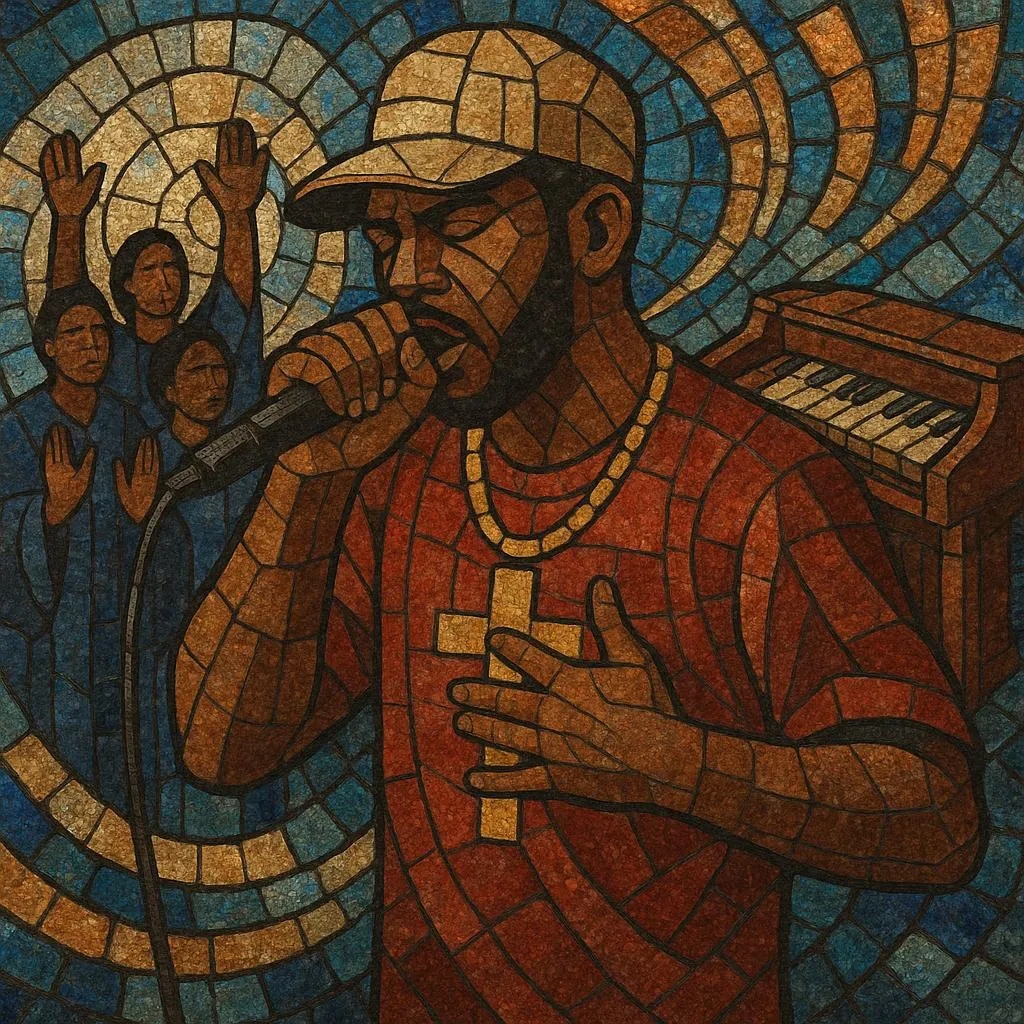
Gospel rap is a branch of hip hop that centers explicitly Christian themes—testimony, scripture, and social justice through a faith lens—while retaining the rhythmic, lyrical, and production foundations of rap.
Musically it blends hip hop beats (from boom‑bap to trap) with gospel sonorities: choirs, Hammond organ, hand‑claps, call‑and‑response hooks, and church‑influenced chord progressions. The result ranges from hard‑hitting street narratives redeemed by grace to melodic, praise‑heavy anthems designed for congregational energy or personal reflection.
Culturally, gospel rap emerged from African‑American church communities in the United States and has since globalized, spawning local scenes and languages while keeping its core aim: communicating the Christian message with hip hop’s immediacy and craft.
History
Early precedents formed in Black church contexts in the United States as pastors, youth leaders, and pioneering MCs experimented with rapping biblical messages over drum machines and funk breaks. These first recordings and performances proved rap could carry devotional content without abandoning hip hop’s flow and cadence.
Through the 1990s, independent crews and labels built a national network—touring churches, community centers, and festivals. The scene established stylistic breadth: East Coast boom‑bap apologetics, West Coast G‑funk testimonies, and Southern bounce all appeared, but with clean lyrics, explicit theology, and choir‑led hooks. Christian retailers and radio gave the movement a distribution foothold outside mainstream hip hop.
With better production values and artist entrepreneurship, gospel rap entered mainstream charts. National tours, award recognition, and high‑profile collaborations pushed the genre beyond a niche. Labels specializing in Christian hip hop professionalized A&R, branding, and marketing while artists refined songwriting and message clarity without sacrificing craft.
Streaming and social platforms accelerated international growth. Localized sub‑scenes emerged in Latin America, Europe, and Africa, often combining regional rhythms with gospel rap’s ethos. New fusions—trap‑leaning worship anthems, drill‑inflected testimonies, and Afro‑fusion praise—show the genre’s adaptability while maintaining its core: orthodoxy in message, excellence in musicianship.
Today, gospel rap sits on a spectrum from congregational praise bangers to gritty personal narratives, united by spiritual aim, community accountability, and hip hop’s evolving sound palette.