Your digging level
Description
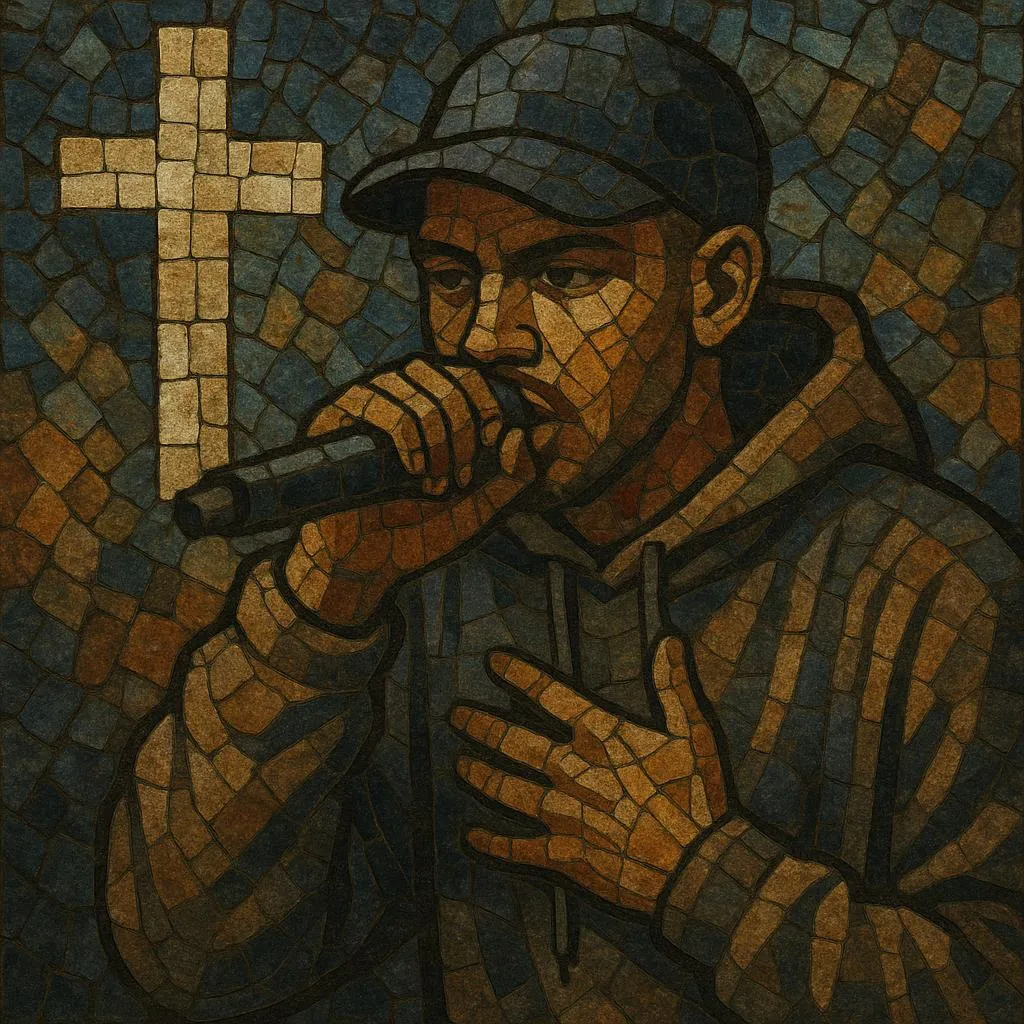
Christlicher Rap is Christian hip hop performed primarily in the German language and rooted in the German-speaking (DACH) faith communities.
It blends the stylistic palette of contemporary hip hop and trap (808s, syncopated hi-hats, autotuned hooks) with explicitly Christian themes: personal testimony, prayer, worship, social concern viewed through a biblical lens, and everyday discipleship. Compared to mainstream Deutschrap, it typically avoids nihilism and gratuitous provocation, aiming instead at encouragement, outreach to youth, and church-adjacent cultural spaces.
The sound varies from high-energy festival anthems with melodic choruses to sober boom-bap confessional tracks, and it frequently incorporates worship-pop refrains, gospel choirs, or scripture-inspired call-and-response.


History
German hip hop matured in the 1990s, and the first wave of German-language Christian artists began experimenting with rap as an evangelistic and youth-culture medium. Small church events and youth conferences provided early stages; recorded output was modest and largely independent. Musically, these pioneers borrowed from U.S. Christian hip hop while translating themes and cadences into German.
The 2010s saw a broader acceptance of rap across youth ministries and free-church networks in Germany, Austria, and Switzerland. Streaming platforms, YouTube, and social media allowed niche artists to find audiences beyond local congregations. Collaborations with worship collectives and appearances at large Christian festivals (e.g., nationwide youth congresses and citywide church events) normalized rap as part of the Christian contemporary music ecosystem. Production values rose, trap aesthetics spread, and singles began charting within Christian charts and playlist ecosystems.
Artists diversified across substyles—trap bangers for outreach, boom-bap testimony tracks, and pop-rap crossovers for congregational contexts. Lyrically, the scene balanced unabashed confessional faith with relatable coming-of-age topics, mental health, identity, and social justice from a Christian framework. Cross-border ties within DACH strengthened, and collaborations with gospel choirs and worship-pop singers became common. The result is a recognizable, yet stylistically flexible, German-language Christian rap culture.