Your digging level
Description
Afro‑Cuban music is the family of Cuban musical traditions rooted in the practices of West and Central African peoples brought to the island during the transatlantic slave trade, and transformed through centuries of interaction with Iberian (Spanish) musical culture.
At its core are richly layered percussion ensembles, call‑and‑response singing, and timeline patterns (claves and bells) that underpin ceremonial repertoires (e.g., batá for Santería/Lukumí, Palo/Mayombe, Abakuá) as well as secular forms like rumba (yambú, guaguancó, columbia) and comparsa/conga. Spanish poetic forms, language, and harmonic sensibilities merged with African rhythmic organization to create the fulcrum of Cuban music—an aesthetic that later radiated across the Caribbean and the world.
History
Enslaved peoples from West and Central Africa arrived in Cuba between the 1500s and the 1800s. They formed cabildos (mutual‑aid and ethnic associations) that safeguarded languages, dances, and musics—Yoruba/Lukumí batá and bembé, Kongo‑derived Palo, Carabalí Abakuá drum traditions, and Arará/Fon‑Ewe rites. These repertoires fused with Catholic processions, Spanish verse, and urban life, laying the groundwork for distinctly Afro‑Cuban musical practices.
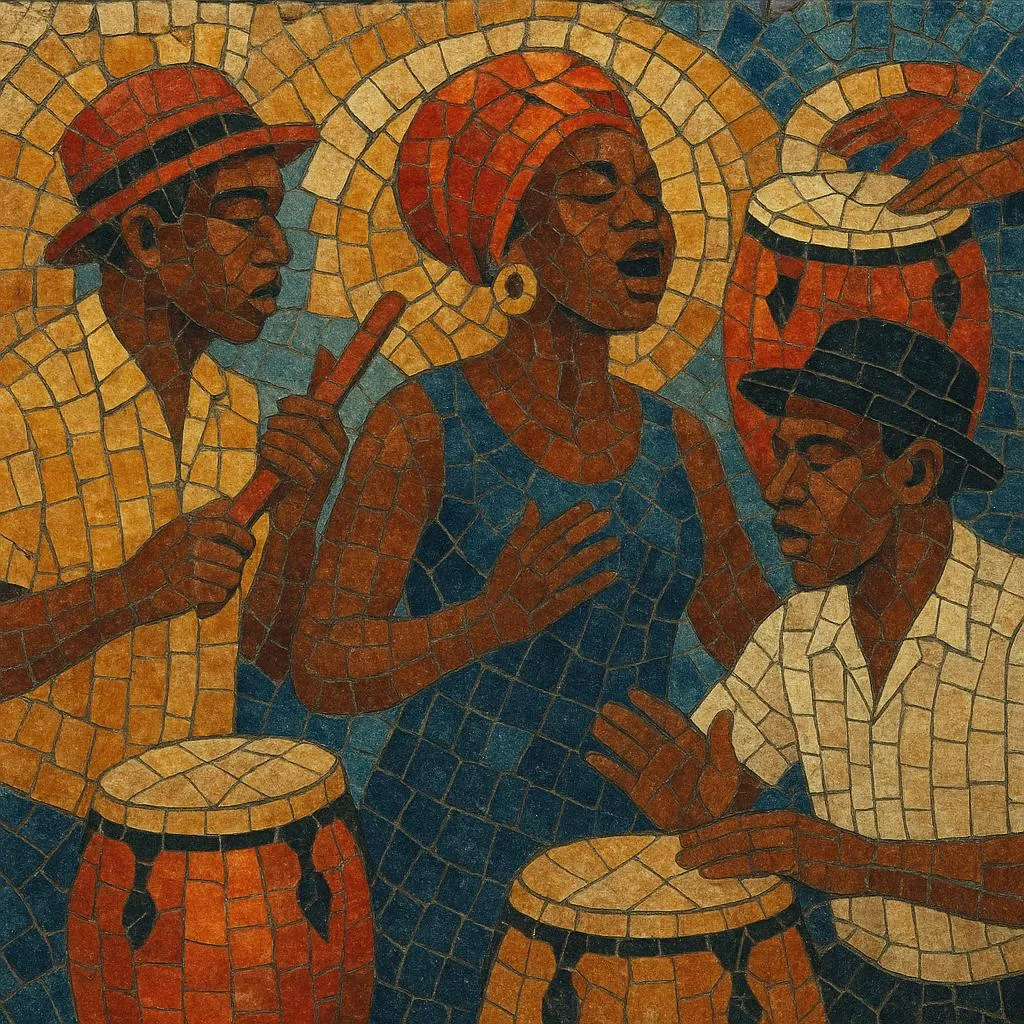
As slavery ended and cities expanded, secular Afro‑Cuban forms flourished, especially rumba in Havana and Matanzas. Rumba’s subdivisions—yambú (elderly/social), guaguancó (partner dance with the “vacunao” gesture), and columbia (solo male, competitive)—crystallized ensembles of tumbadoras (congas), cajones, palitos, claves, and chekerés around the timeline known as rumba clave.
The 1910s–30s saw the Afrocubanismo movement in arts and letters amplify Afro‑Cuban culture as central to Cuban identity. Sacred batá drumming moved from strictly liturgical spaces toward staged contexts, while comparsa/conga carnival traditions grew. Parallel creole dance musics (son, danzón) absorbed Afro‑Cuban rhythms and phrasing, helping project Afro‑Cuban aesthetics into national and international dance floors.
From the 1940s–50s, Afro‑Cuban rhythm and instrumentation powered new dance crazes (mambo, cha‑cha‑chá) and reshaped jazz through Afro‑Cuban jazz/Latin jazz, propelled by figures like Chano Pozo and Mongo Santamaría. Afro‑Cuban percussionists became in‑demand session players across the Americas, embedding clave‑based logic into global popular musics.
After the Cuban Revolution, professional folklore troupes such as the Conjunto Folklórico Nacional de Cuba (1962) codified and staged ritual and rumba repertoires. Meanwhile, community ensembles in Havana and Matanzas—e.g., Los Muñequitos—continued to refine rumba vocabularies and maintain living links to cabildo‑based practices.
Global interest surged in the 1980s–2000s via recordings, festivals, and pedagogy. New hybrids (songo, timba) retained Afro‑Cuban rhythmic DNA, while religious and rumba traditions persisted in neighborhoods and temples. Today, Afro‑Cuban music remains a dynamic continuum—from liturgy and patio rumbas to conservatory stages and international collaborations—still anchored by clave, call‑and‑response, and polyrhythm.