Your digging level
Description
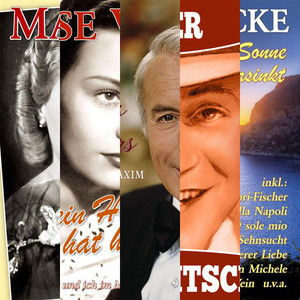
Vintage Schlager refers to the classic, mid‑20th‑century form of German‑language popular song that flourished from the late 1940s through the 1960s in Germany (with parallel scenes in Austria and Switzerland).
It favors instantly singable melodies, diatonic harmonies, and polished, orchestral arrangements drawn from ballroom idioms (waltz, foxtrot, tango) and light jazz/swing. Tempi are moderate, rhythms are clearly articulated for easy dancing, and the vocal delivery is warm, lyrical, and vibrato‑guided.
Lyrics center on romance, simple everyday joys, wanderlust, and gentle escapism—offering optimism and comfort in the postwar era. Compared with later disco‑era Schlager, the vintage style sounds more acoustic, string‑sweetened, and theatre‑influenced, with clear lineage to operetta and cabaret.
History
Schlager’s DNA reaches back to turn‑of‑the‑century operetta, salon songs, and cabaret, where memorable “hits” (Schlager) were built on theatrical melody, clear diction, and light orchestration. Between the World Wars, dance‑band swing, tango, foxtrot, and waltz aesthetics further shaped the sound. Despite political turbulence and censorship, the notion of a sentimental, straightforward popular song persisted.
After 1945, audiences across German‑speaking countries looked for solace and optimism. Radio networks, record labels, and variety shows standardized a plush, string‑and‑rhythm‑section sound. Vintage Schlager emerged as a reassuring product: romantic themes, unambiguous harmonies, and ballroom‑friendly grooves (3/4 waltz, 4/4 foxtrot), often with modest jazz brushwork and woodwind or accordion color.
The style dominated charts and televised music programs, creating household‑name singers and bandleaders. Hits circulated beyond Germany into Austria, Switzerland, the Benelux, and Scandinavia (informing local counterparts such as Finnish iskelmä). The production model—studio orchestras, star vocalists, clean arrangements—became the Schlager template.
By the late 1960s, rock, beat, and later disco stylings pushed Schlager toward new textures. Even so, the classic (“vintage”) era remains a reference point: it shaped Eurovision sensibilities, Oktoberfest repertoires, and later retro‑Schlager revivals. Its melodic and arranging conventions continue to inform German pop and folk‑pop hybrids.
Draw from ballroom feels:
•Waltz (3/4) with a lilting, “oom‑cha‑cha” bass‑chord pattern.
•Foxtrot (moderate 4/4) with a soft swing on hi‑hat/brushes and walking or two‑beat bass.
•Light tango accents for dramatic verses.