

Your digging level for this genre
Description
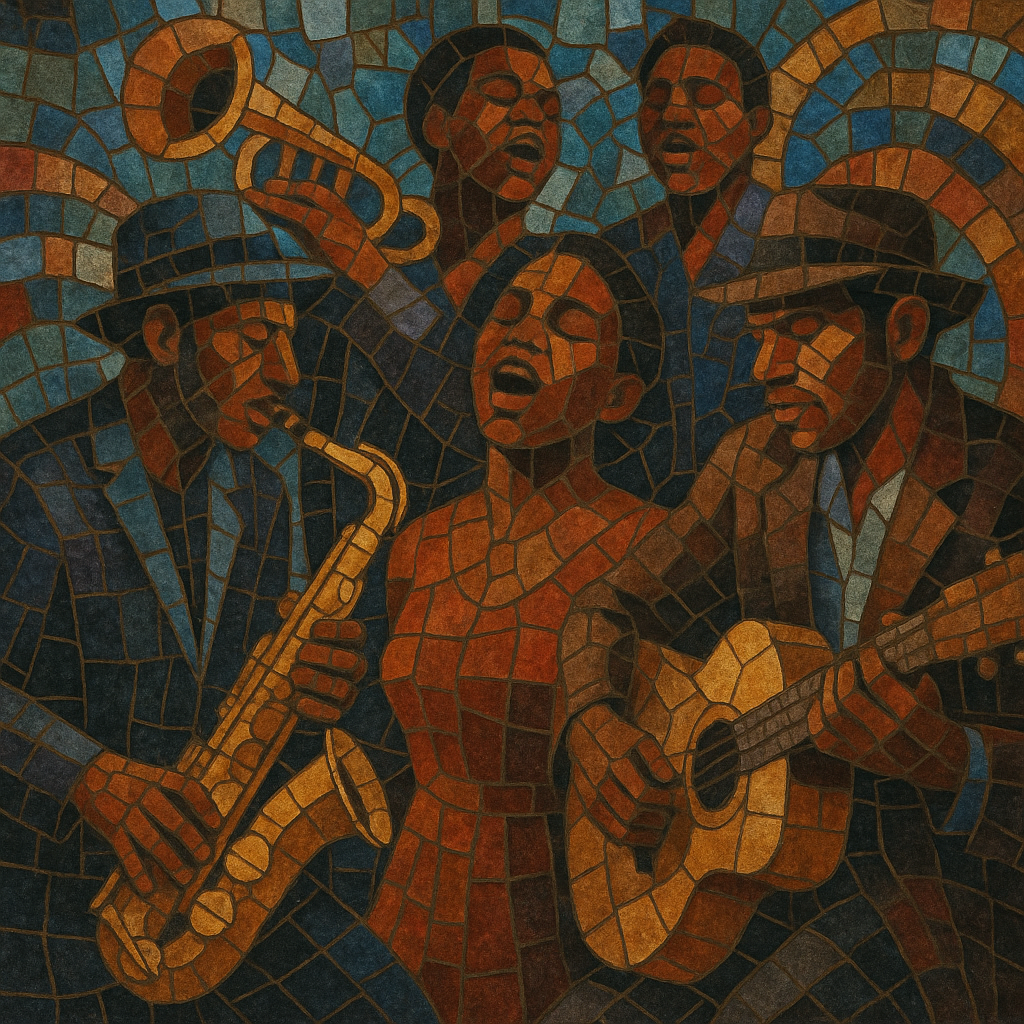
Rhythm and blues (R&B) is an African American popular music style that arose in the 1940s from the fusion of blues harmony, jazz phrasing, gospel-inflected vocals, and a danceable backbeat.
Classic R&B is characterized by strong grooves, shuffle or straight 4/4 feels, horn section riffs, call-and-response between lead and backing vocals, and song forms that often draw on the 12-bar blues or AABA structures. Small combos and horn-driven bands feature drums accenting the backbeat (2 and 4), walking or boogie bass lines, piano or guitar comping, and saxophone or guitar solos.
Over time the term "R&B" broadened: in the 1950s it powered rock and roll; in the 1960s it fed into soul; and in the 1980s–present it also refers to contemporary R&B that blends soul, funk, pop, and hip hop elements.
History
Rhythm and blues grew out of the postwar African American musical landscape, where blues harmony, jazz rhythm sections, and gospel vocal practices converged in dance-oriented settings. Independent labels and urban scenes in cities like New Orleans, Chicago, Los Angeles, and New York fostered jump blues and boogie-based bands that emphasized a heavy backbeat and horn riffs. In 1949, trade publications adopted the term "Rhythm & Blues" (replacing earlier race record classifications), formalizing a rapidly evolving style.
By the early 1950s, R&B dominated Black radio and jukeboxes. Artists and bandleaders popularized sax-driven instrumentals, shouters, and smooth vocal groups. The music’s rhythmic drive and catchy hooks crossed over to wider audiences and directly incubated rock and roll. Vocal harmony offshoots flourished in doo-wop, while Southern, New Orleans, and Chicago studios each stamped regional flavors on the sound.
As R&B evolved, it fed into and overlapped with soul (emphasizing gospel intensity and sophisticated arrangements), and later funk (centering interlocking grooves and syncopation). Meanwhile, R&B’s songwriting, rhythmic approach, and recording practices shaped British and American rock movements, blues rock, and roots rock. The term R&B remained an industry and radio staple, even as substyles proliferated.
From the 1980s onward, "R&B" often denotes contemporary R&B—a blend of soul, pop, funk, and hip hop production. Yet the classic 1940s–60s R&B template—backbeat-driven drums, bluesy changes, call-and-response, and horn punctuation—remains foundational in popular music, live band culture, and modern retro-soul revivals.
