Your digging level
Description
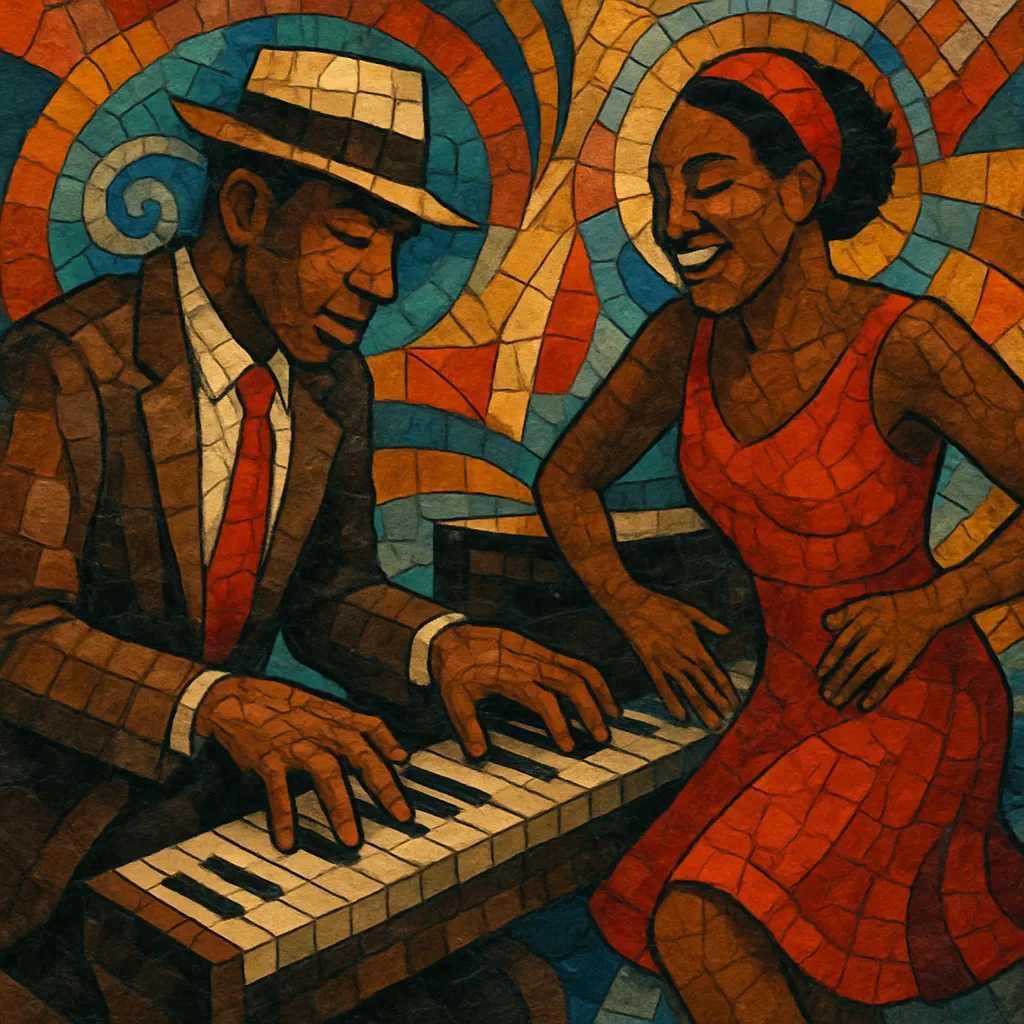
Boogie-woogie is a highly rhythmic, piano-centered branch of the blues distinguished by its driving “eight-to-the-bar” left-hand ostinato and improvised right-hand riffs. While it shares the 12‑bar blues framework and blue-note vocabulary, it places an unusually strong emphasis on groove, forward motion, and danceability.
Typically performed at brisk tempos, the style features a rolling, repeated bass pattern in broken octaves (or a walking single-note line) that locks into a shuffle or 12/8 swing feel. Over this foundation, the right hand plays syncopated licks, triplet figures, crushed grace notes, tremolos, and call‑and‑response motifs, often quoting and varying short, catchy riffs. The result is a propulsive, celebratory sound designed for social dancing and energetic performance.
History
Boogie-woogie coalesced in African-American communities of the U.S. South during the late 19th century, especially around railroad, logging, and lumber-camp towns where pianos were found in barrelhouses and dance halls. Drawing on country blues song forms, work songs, spirituals, and the rough-and-ready barrelhouse piano tradition, early practitioners developed a distinctive left-hand ostinato—later nicknamed “eight-to-the-bar”—that could keep dancers moving even without a full band.
By the late 1920s the style had migrated to urban centers like Chicago and Kansas City, where it reached records and wider audiences. Its tight connection to rent parties and dance culture, combined with the 12‑bar structure and driving bass, made it both accessible and exhilarating. The music’s public profile rose sharply in the late 1930s, aided by prominent concerts and recordings that showcased virtuoso pianists. Soon big bands adapted boogie patterns into full horn-section riffs, and the craze spilled into swing, country & western, and gospel settings.
After World War II, boogie-woogie’s rhythmic template fed directly into jump blues and the newly emerging rhythm & blues. Its motoric bass lines and backbeat-ready phrasing were foundational for early rock and roll and rockabilly, while country players adopted “boogie” feels into honky-tonk and western swing. Even as piano-led boogie-woogie waned as a chart force, its DNA remained pervasive across popular music.
The 1960s brought renewed interest through blues and traditional jazz revivals, and festivals dedicated to the style helped sustain an international community of boogie-woogie pianists. Today, the genre thrives in clubs and concert halls worldwide, prized for its blend of virtuosic keyboard technique, earthy blues vocabulary, and irresistibly danceable groove.