Your digging level
Description
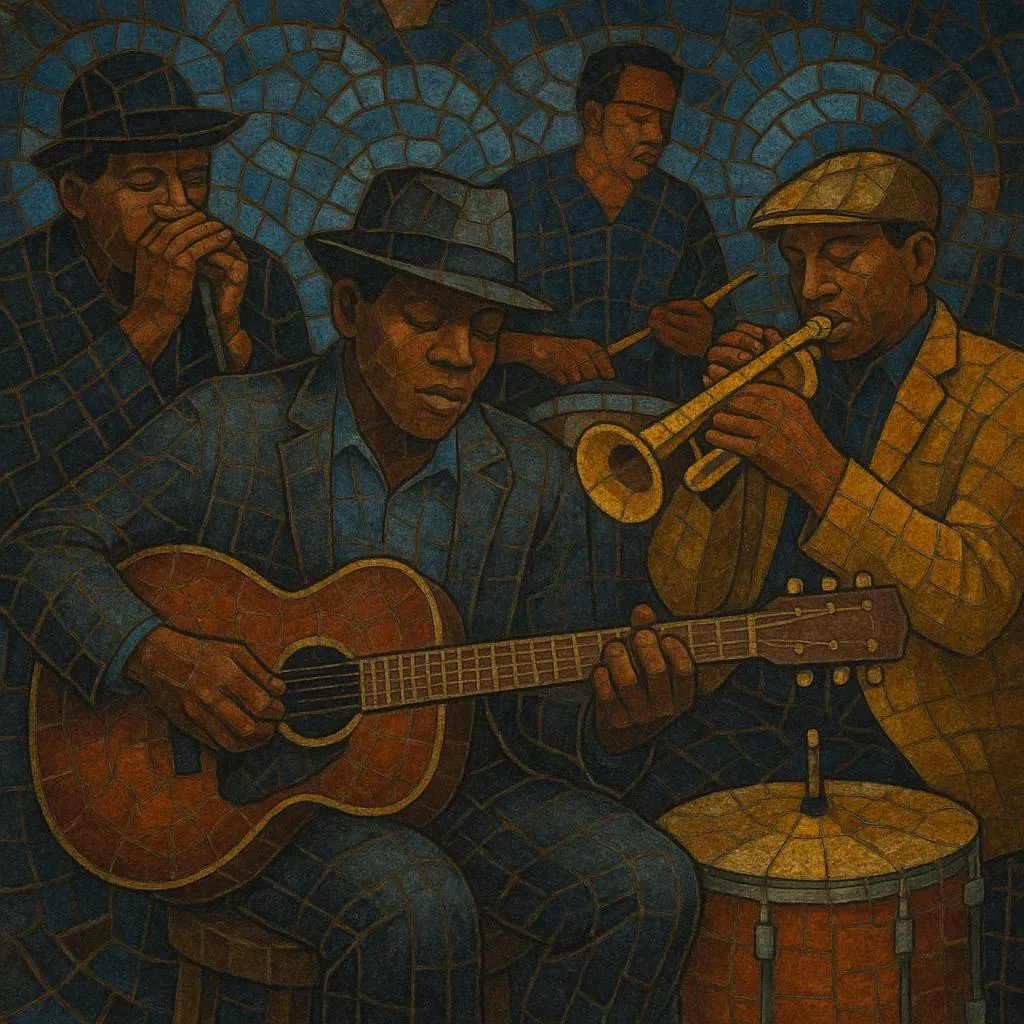
Blues band is an ensemble-centered form of postwar blues built around small combos—typically electric guitar, harmonica, bass, drums, and often piano or a horn section. It emphasizes the groove of the rhythm section, call-and-response between voice and instruments, and compact, emotive solos.
Rooted in the migration of rural blues to urban settings, the style codified the amplified shuffle, slow drag, and boogie feels that came to define Chicago and other city scenes. Standard 12‑bar forms, dominant‑7th harmony, and the blues scale remain core, but arrangements are crafted for a group’s dynamics: riffs, stop‑time figures, turnarounds, and instrumental features tailored to band interplay.
As the blueprint for countless club acts and touring ensembles, the blues band sound became the conduit through which the blues directly shaped rock and soul.
History
Postwar urbanization brought Southern blues musicians to cities like Chicago and Detroit. Amplification allowed guitars and harmonicas to cut through club noise, and small combos replaced solo or duo country blues formats. House-band lineups—guitar, harp, piano, bass, and drums—crystallized around danceable shuffles, slow blues, and boogies.
Record labels documented tight, riff-driven bands behind charismatic singers and instrumentalists. Arranged intros, stop‑time breaks, and horn‑like guitar/harp lines gave the blues a focused, performance-ready identity that thrived in bars and on juke joints’ bandstands.
U.K. musicians absorbed American records and learned in band contexts, formalizing the “blues band” as a portable, club-hardened unit. Their success re-exported the idiom to the U.S., feeding the rise of blues‑rock and re-energizing American club circuits and festivals.
Working ensembles carried the tradition into rock venues and college towns. Blues‑rock virtuosic guitar heroes and roots‑minded bands kept the format visible, while independent labels and festivals built a sustainable ecosystem for touring blues bands.
Modern blues bands balance tradition and innovation—mixing shuffles, soul-blues textures, and occasional rock bite—while the core remains: a groove-conscious ensemble built to move a room, spotlight the singer’s story, and trade expressive, economical solos.