Your digging level
Description
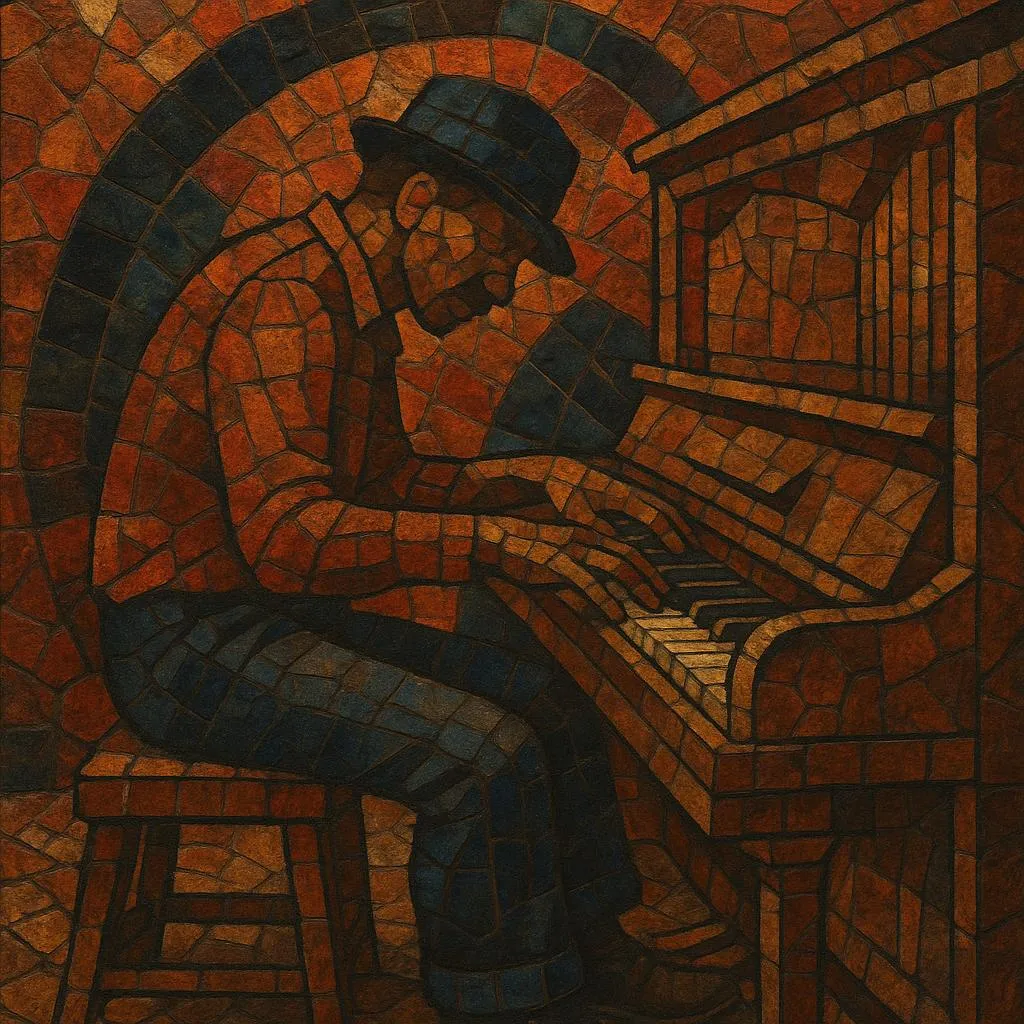
Barrelhouse piano is a raucous, percussive style of early American piano blues associated with rough-and-ready "barrelhouses"—cheap saloons and dance spots that served liquor straight from the barrel. To cut through noisy rooms and often out‑of‑tune instruments, players struck hard, kept time with a stomping left hand, and used a freewheeling, improvisatory right hand. The approach favored drive and grit over refinement.
Technically, the left hand lays down a pounding, train‑like beat (walking figures, repeated basses, and chordal stomps) while the right hand spins syncopated melodies and riffs; many performers eschewed pedal use entirely to keep the attack crisp and loud. The style emerged alongside ragtime but leaned far more toward blues feel and groove, and it became an acknowledged precursor to boogie‑woogie and later dance‑oriented blues.
History
Barrelhouse piano arose in the American South and urban Black neighborhoods where barrelhouses, juke joints, and honky‑tonk bars hired solo pianists to energize dancers. In these venues—raucous spaces serving liquor from casks—the music prioritized volume, rhythmic punch, and earthy blues expression. The style developed contemporaneously with ragtime but favored blues forms and a driving, locomotive left hand.
Performers typically avoided the sustain pedal, relying on a forceful touch and independence between hands: a heavy beat in the left hand and melodic, syncopated right‑hand figures. This practical approach fit the acoustic realities of saloons and logging‑camp bars, and it set the stage for the later codification of boogie‑woogie piano.
Early commercial recordings that evoke the barrelhouse method include sides by Clarence "Pinetop" Smith, Meade "Lux" Lewis, Cow Cow Davenport, and Jimmy Yancey; St. Louis pianist "Barrelhouse" Buck McFarland carried the tradition into mid‑century, later documented during the folk‑blues revival.
By the 1920s–30s the feel and vocabulary of barrelhouse piano fed directly into boogie‑woogie, jump blues, and R&B, helping to power dance floors and, ultimately, rock and roll’s piano language. Compilations and reissues have framed the style as a crucial link between early blues piano and later popular dance musics.