Your digging level

For this genre
0/8
🏆
Sign in, then listen to this genre to level up

Description

Honky-tonk piano is a lively, percussive style of piano playing associated with American saloons and dance halls, characterized by a bright, tinny attack and a slightly out-of-tune or "tacked" upright sound.

Its core vocabulary mixes ragtime’s oom-pah left-hand patterns with bluesy right-hand licks, brisk two-step or four-beat dance feels, and simple I–IV–V harmony colored by blue notes.

Although it overlaps with ragtime and early boogie, honky-tonk piano emphasizes a rough-and-ready barroom timbre and propulsive, crowd-pleasing rhythms suitable for dancing and sing-alongs.


Sources: Spotify, Wikipedia, Discogs, Rate Your Music, MusicBrainz, and other online sources

History

Origins (late 19th century–1910s)

The honky-tonk piano sound grew out of the barrooms and dance halls of the American South and Southwest, where pianos were poorly maintained and often went out of tune. Players embraced the clanky, nasal timbre of these uprights—sometimes enhanced with thumbtacks in the hammers (a “tack piano”)—to cut through noisy rooms. Musically, the style drew on ragtime’s steady oom-pah bass and syncopated treble, early blues phrasing, and cakewalk dance rhythms.

Between ragtime, barrelhouse, and early boogie (1920s–1930s)

As ragtime evolved in informal settings, pianists adapted to rougher bar circuits (“barrelhouses”), leaning into harder accents, right-hand riffs, and driving bass figures that foreshadowed boogie-woogie. The saloon-ready honky-tonk sonority also entered Western dance music; in Texas and Oklahoma, energetic piano became a staple in early Western swing bands.

Country honky-tonks and mass-market “saloon piano” (1940s–1950s)

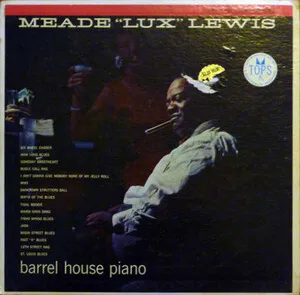
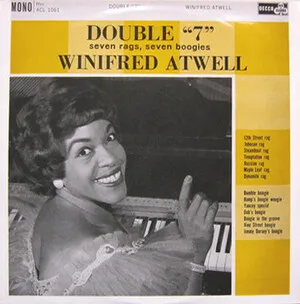
With the rise of honky-tonk country, the barroom piano aesthetic—bright, percussive, and blues-tinged—fit perfectly alongside steel guitar and fiddle. Pianists such as Moon Mullican brought a rowdy, dance-forward approach to hillbilly boogie and Western swing. At the same time, record labels popularized the sound through hit “honky-tonk piano” albums, showcasing ragtime standards and novelty pieces on tacked uprights and emphasizing the nostalgic saloon vibe.

Popular revival and lasting influence (1960s–present)

Television variety shows and nostalgia revivals kept the style in the public ear, while rock ’n’ roll and rockabilly pianists absorbed its attacking touch and barroom swagger. Today, the honky-tonk piano timbre remains a go-to color in film and television for period saloon scenes, and is easily recreated with tack-piano preparations or sample libraries, sustaining its lively, dance-hall legacy.

How to make a track in this genre

Instrument and sound
•   Use an upright piano and aim for a bright, percussive timbre. Lightly detune opposing strings or use a tack (thumbtack) preparation on the hammers to get the classic “tinny” attack. •   If using virtual instruments, choose a tack or honky-tonk upright patch, add mild chorus for detune, and boost presence around 2–4 kHz to emphasize the hammer bite.
Rhythm and feel
•   Establish a steady two-beat or four-beat dance pulse. Left hand alternates bass notes/octaves with mid-register chords (oom-pah), or uses a stride-style leap for extra drive. •   Keep tempos brisk (e.g., 90–130 BPM for two-step, faster for showpieces), with either straight ragtime subdivision or a light swing depending on the tune.
Harmony and vocabulary
•   Favor diatonic I–IV–V with frequent secondary dominants (V/V), turnarounds, and ragtime-style circle-of-fifths motion. Major keys (C, F, G, D) are common. •   Add blue notes (♭3, ♭5, ♭7) and chromatic approach tones in the right hand. Use repeated-note figures, grace notes, crushed notes, tremolos, and glissandi for flair.
Right-hand figures and form
•   Mix melodic paraphrases of the tune with syncopated fills, broken octaves, and call-and-response against the left hand. •   Structure pieces as 16- or 32-bar strains (ragtime format) or 12-bar blues for simpler numbers. Insert short breaks where the right hand answers with flashy licks.
Ensemble context
•   In country/Western swing settings, pair the piano with upright/slap bass, snare on 2 and 4 (or a train beat), fiddle, and steel guitar. Keep the piano bright and forward in the mix to cut through.
Recording and performance tips
•   Mic the piano close to the hammers for attack; add room ambience for period feel. Slight, uneven detune between strings enhances authenticity. •   End pieces with a cadential tag or a dramatic tremolo/glissando to match the showman tradition.

Top tracks

Locked
Share your favorite track to unlock other users’ top tracks
Influenced by
Has influenced
Challenges
Digger Battle
Let's see who can find the best track in this genre
© 2026 Melodigging
Melodding was created as a tribute to Every Noise at Once, which inspired us to help curious minds keep digging into music's ever-evolving genres.
Buy me a coffee for Melodigging