Your digging level
Description
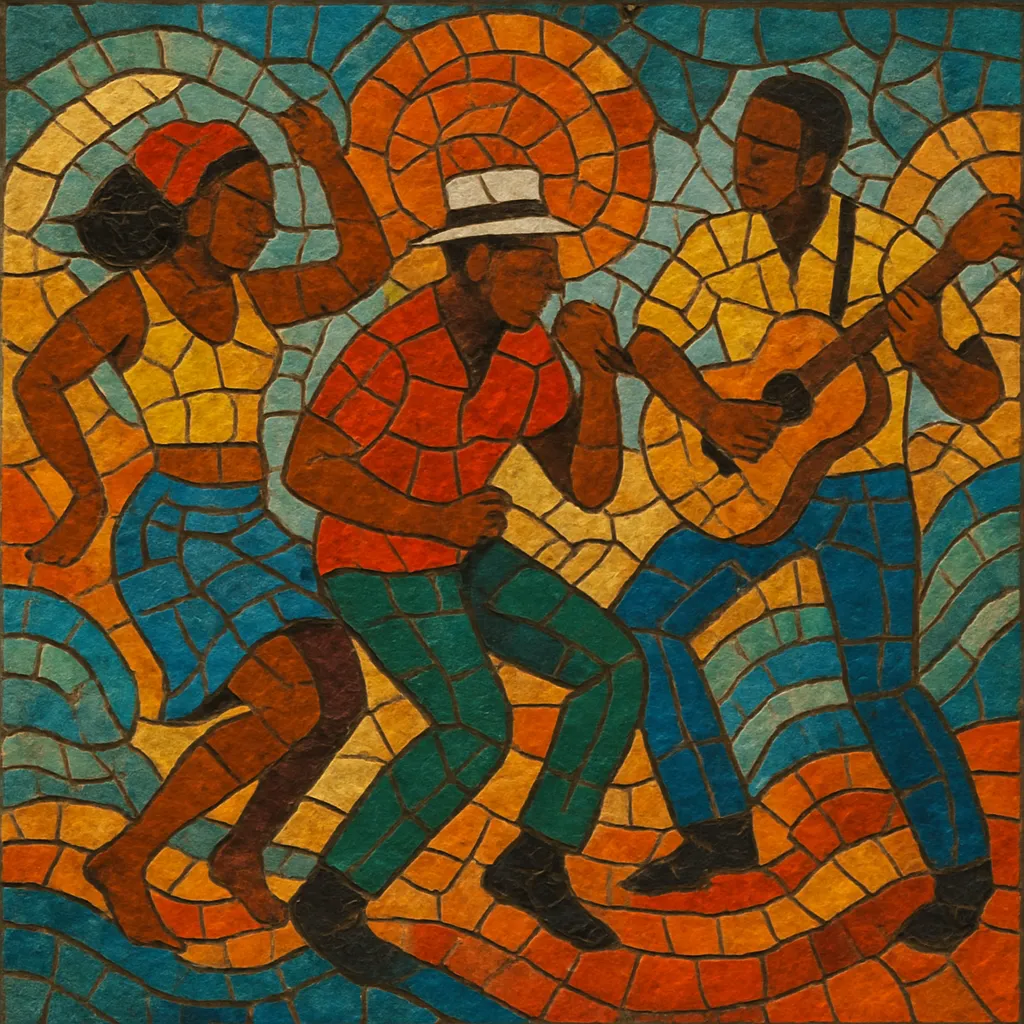
Ndombolo (also spelled dombolo) is a high‑energy Congolese dance music born from the 1990s soukous scene. It accelerates the classic Congolese rumba/soukous template, pushing the tempo, sharpening the rhythmic drive, and foregrounding hip‑swaying, pelvis‑led dance moves.
Musically, ndombolo is marked by propulsive drum‑kit and conga patterns, bright interlocking electric guitars that launch into long, fast seben breaks, elastic bass lines, and catchy call‑and‑response vocals—often in Lingala with French catchphrases. Atalaku (hype‑men) add spirited shouts and dance commands that stoke the crowd. The overall sound is upbeat, percussion‑driven, and tailor‑made for the dancefloor.
By the mid‑1990s and 2000s the style dominated clubs across Central, Eastern, and parts of Western Africa, becoming a pan‑African dance craze and a reference point for subsequent urban dance‑pop styles.

History
Ndombolo emerged in Kinshasa and the Congolese diaspora (notably Paris and Brussels) in the 1990s as a faster, dance‑intensified branch of soukous. It built on the foundation of Congolese rumba—already shaped by Afro‑Cuban rumba and son—while absorbing the late‑1980s kwassa kwassa dance feel and the long, guitar‑driven seben sections popularized by touring soukous bands.
By the mid‑1990s, leading Kinshasa bands and singers pushed tempos upward (often ~120–150 BPM), spotlighted interlocking guitar figures, and made the atalaku (hype‑man) a central feature. Videoclips and cross‑border touring helped transform ndombolo into a regional sensation. Although the dance’s provocative hip movements sparked periodic broadcast bans in several countries in the early 2000s, these controversies only amplified the music’s profile and cemented its identity as a club‑centric form.
Ndombolo’s bright guitars, kinetic drums, and call‑and‑response hooks spread rapidly across Central and East Africa and into West African club circuits. Producers and bands in Côte d’Ivoire, Angola, Tanzania, Kenya, and beyond borrowed its fast percussion, crowd‑stoking interjections, and extended dance breaks. The style became a key reference for later African urban dance genres and remains a staple at parties and weddings, while contemporary Congolese pop stars blend ndombolo with R&B, Afrobeats, and club electronics.
Today, ndombolo stands as a cornerstone of modern Congolese popular music: a dance‑first evolution of soukous that helped shape the vocabulary of 21st‑century African dance‑pop.