Your digging level
Description
Ohangla is a traditional music-and-dance style of the Luo community of western Kenya, performed for life-cycle and communal events such as weddings and funerary rites (including Tero Buru).
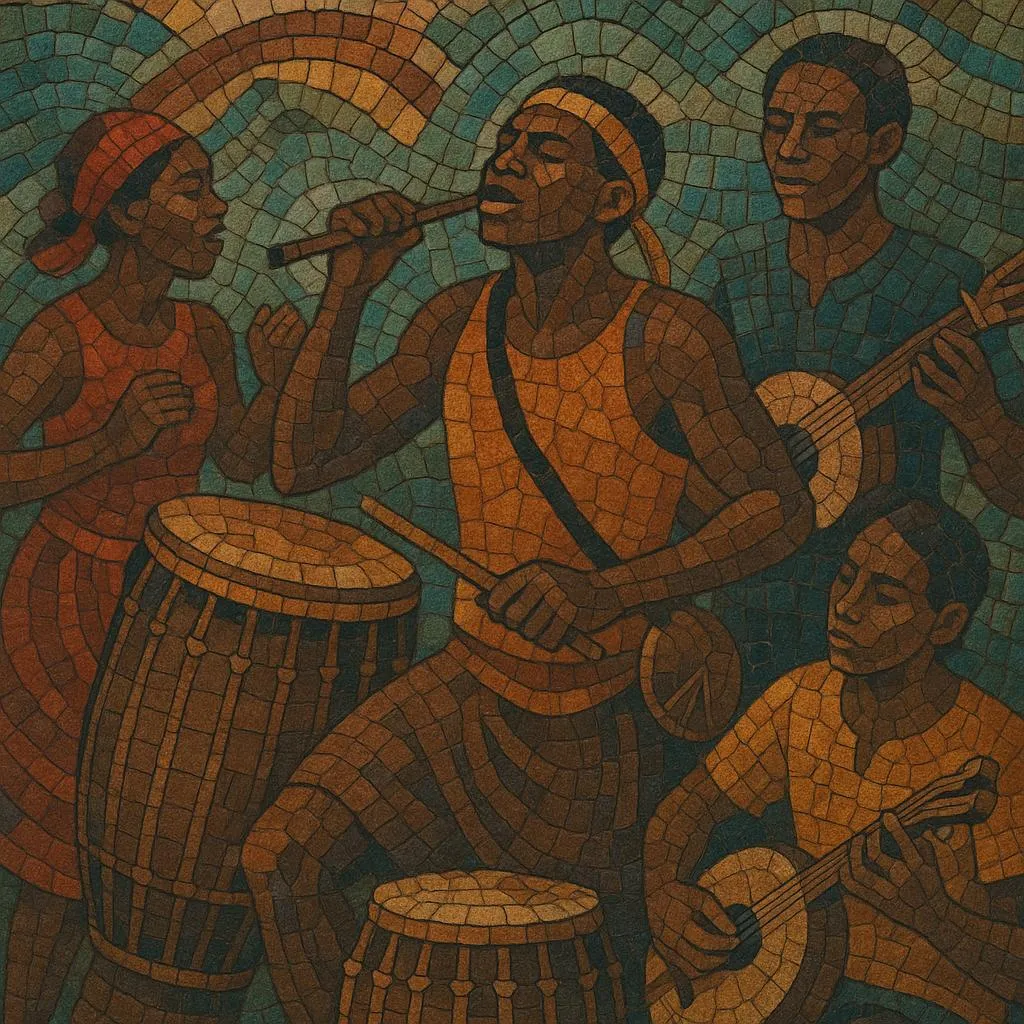
It is characterized by a battery of drums—often eight or more played with sticks—anchored by a cylindrical, shoulder‑slung lead drum, and supported by aerophones (flute/whistle) and string timbres from the nyatiti lyre; in modern practice, a kinanda (keyboard/accordion) and bass guitar are also common.
Vocals are typically in Dholuo and follow call‑and‑response structures, oscillating between praise, social commentary, flirtation, and earthy humor. Historically fast and driving, the music is purpose‑built for dancing and collective participation, with punctuating ululations and leader interjections.
History
Ohangla emerged within Luo communities in the early 20th century, consolidating older drum‑dance practices into a named ensemble tradition. It served pragmatic social functions: energizing wedding festivities, marking communal mobilizations, and accompanying aspects of funeral observances such as Tero Buru. The form’s participatory call‑and‑response singing and kinetic drum cycles made it a preferred vehicle for praise and topical messages.
Classic ohangla coalesced around multiple drums (including a shoulder‑slung lead drum), whistles or flutes, and the nyatiti (eight‑string lyre), with dance leaders directing dynamics and tempo. The repertoire favored fast tempi and text play—often employing witty, sometimes risqué double entendre—which elders in some areas deemed adult‑only content.
As rural musicians engaged urban audiences from the 1970s onward, ohangla adapted to amplified spaces, adding kinanda (keyboard/accordion), electric bass, and PA systems. In parts of the early 1980s, community elders pushed back against perceived vulgarity, briefly curtailing some performances; yet the style persisted in social halls and itinerant shows. From the late 1990s into the 2000s, artists professionalized ohangla bands, codified stagecraft, and released widely circulated recordings.
Since the 2000s, ohangla has become a vibrant commercial live genre in Kenya’s lakeside region and Nairobi clubs. Modern bands retain the drum core but incorporate keyboard riffs and bass ostinatos, occasionally borrowing lilt and arrangement ideas from Congolese soukous/ndombolo and from Luo benga. Lyrically, artists balance praise songs, moral commentary, romantic narratives, and playful innuendo, sustaining ohangla’s role as communal dance music while expanding its media presence.