Your digging level
Description
Louange is the Francophone stream of contemporary Christian praise music rooted in sub‑Saharan Africa and the wider French‑speaking world. Songs are typically in French (often mixed with Lingala and other regional languages) and pair gospel harmonies with the danceable guitar grooves of Central and West African popular styles.
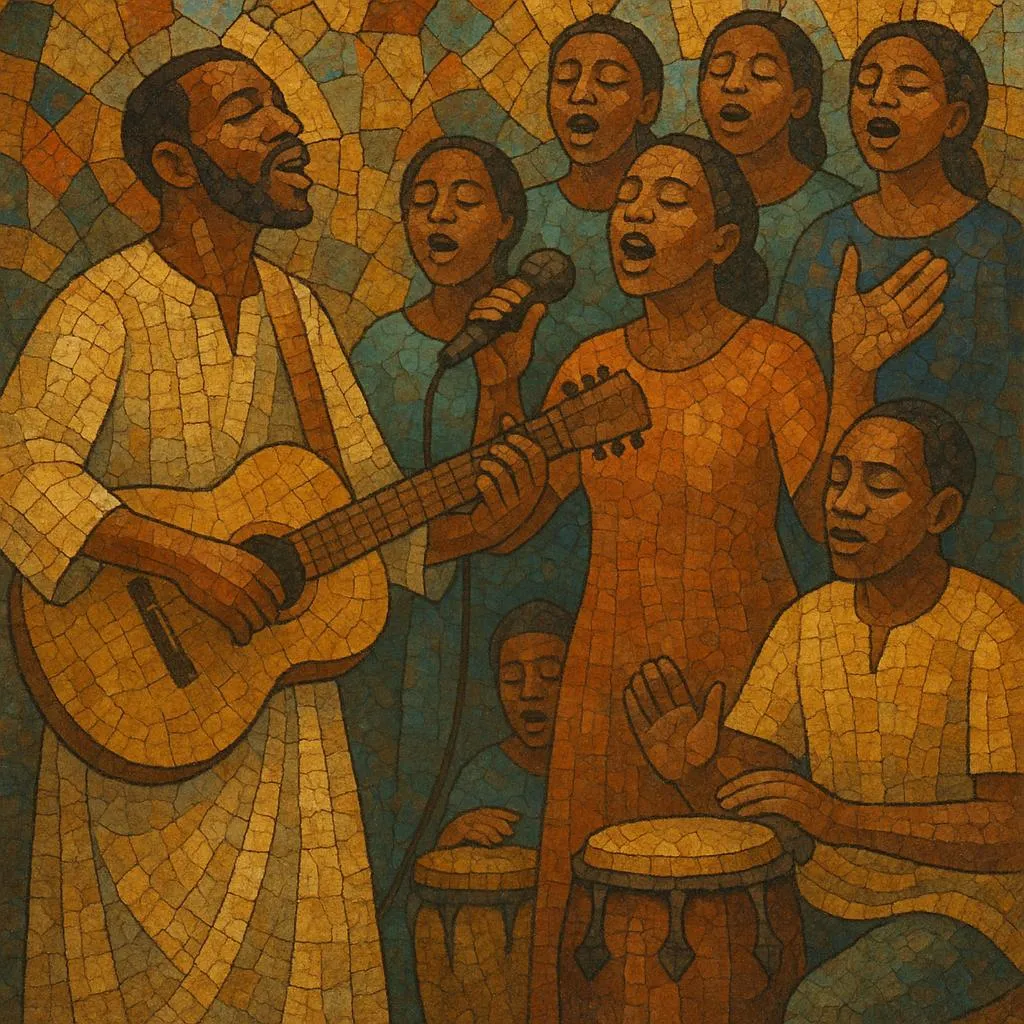
Arrangements commonly feature call‑and‑response between a lead singer and choir, bright interlocking guitars inspired by soukous/ndombolo, buoyant bass lines, and percussion that encourages congregational movement. Lyrically, louange is testimonial and Scripture‑saturated, emphasizing praise, thanksgiving, and communal worship.
While used in church services, louange also thrives in concerts and recordings, where extended vamps, key changes, and crowd participation create a celebratory, uplifting atmosphere.
History
Louange emerged as congregational praise in Francophone Africa modernized its musical language. Choir traditions and American/Caribbean gospel met Central African dance music—especially Congolese soukous and, later, ndombolo—producing worship songs that were both liturgical and festive. Early pioneers in the Democratic Republic of the Congo and Côte d’Ivoire popularized French‑language praise with electric bands and choirs.
With the growth of urban mega‑churches and ministries, louange spread across Central/West Africa and the Francophone diaspora (France, Canada, the Caribbean). Professional studios, live DVDs, and televised services helped standardize the sound: lead vocal + choir, rhythmic guitars, kinetic percussion, and extended praise “vamps.” Ministries formed large ensembles and choir collectives, touring between Kinshasa, Abidjan, Paris, and Montreal.
Streaming and social media carried louange worldwide. Producers blended the core worship approach with Afropop, Afro‑house, EDM, amapiano, and hip‑hop, while lyrics remained overtly devotional. Contemporary artists release both live worship albums and studio singles, maintaining the danceable, congregational core while embracing modern pop aesthetics.
Louange today denotes a repertoire and approach—celebratory, participatory praise in French—rather than a single fixed beat. Its church‑to‑concert fluidity, multilingual choruses, and African dance grooves distinguish it within global praise & worship.