Your digging level
Description
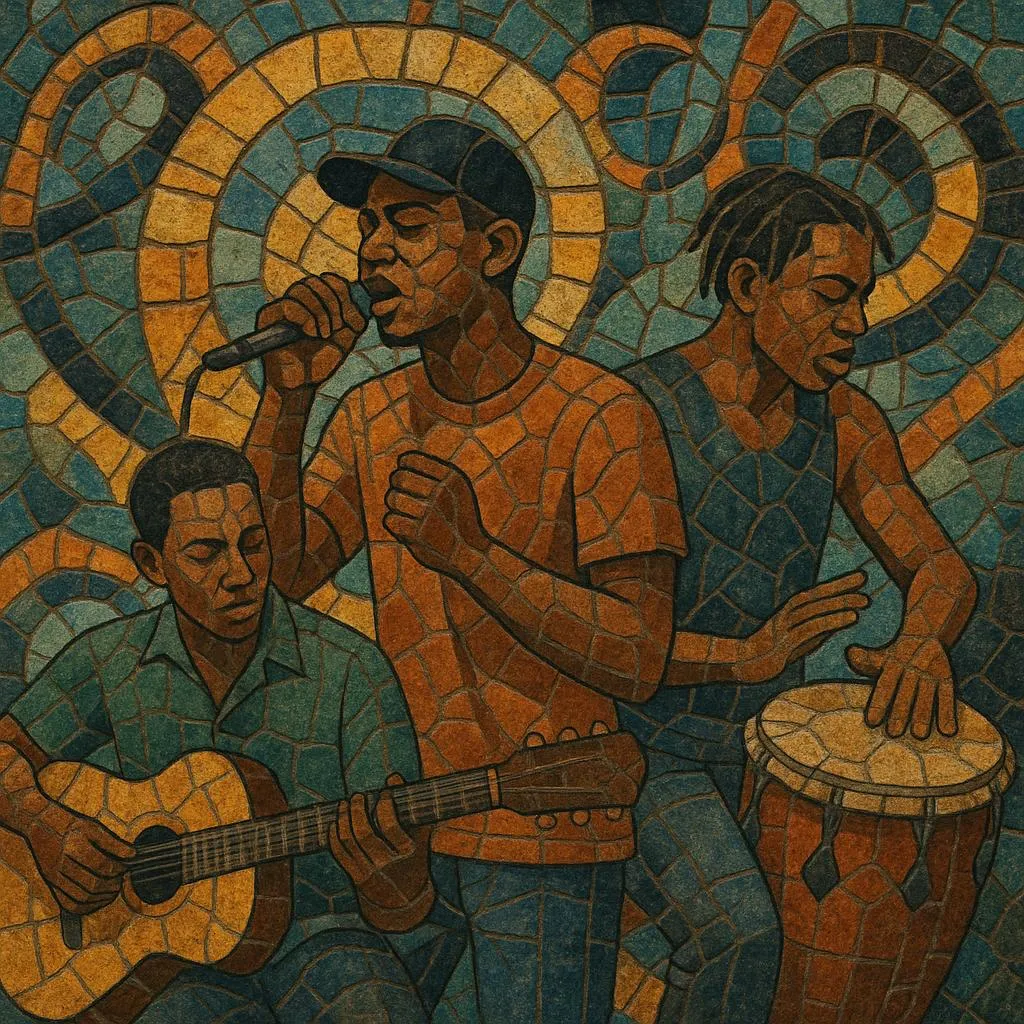
Musique urbaine Brazzaville refers to the contemporary urban sound emerging from Brazzaville, the capital of the Republic of the Congo. It fuses Congolese dance idioms (notably soukous/ndombolo guitar "sebene" and call‑and‑response hooks) with Francophone hip hop, dancehall, and pan‑African Afrobeats production.
Songs are typically in French, Lingala, and Kituba (Monokutuba), often switching fluidly between languages. The music favors bright, melodic guitar lines over punchy programmed drums, 808 bass, and club‑ready synths; choruses are designed for massive audience participation and dance challenges. Fashion, street slang, and the La Sape ethos (dandyism) are embedded in the imagery and lyrical attitude, giving the style a distinctly Brazzaville urban identity.

History
Brazzaville has long been a center of Congolese popular music alongside Kinshasa. The urban wave took shape in the 2000s when local rappers, singers, and DJs began blending soukous/ndombolo’s fast, guitar‑driven dance aesthetic with hip hop flows and dancehall toasting. Affordable home studios, CD piracy stalls, and community radio in neighborhoods such as Poto‑Poto and Bacongo helped early tracks circulate widely.
Throughout the 2010s, a new generation professionalized the sound: tighter beats, Auto‑Tune‑assisted hooks, and high‑energy choreography tailored to clubs and street parties. Ties to Paris and other Francophone hubs (via the Congolese diaspora) brought French rap cadences and Afrobeats drum patterns, while YouTube and Facebook became primary outlets. The scene absorbed elements from neighboring Ivorian coupé‑décalé and pan‑African club styles, yet kept the local DNA of sebene guitar and Lingala/Kituba refrains.
With smartphones and streaming, singles cycles accelerated. Viral dance clips, street DJ edits, and WhatsApp distribution pushed songs into regional charts. Producers incorporated amapiano‑style log‑drums and deeper bass textures without abandoning the Congolese rhythmic lilt. Thematically, the music balances romance and nightlife with sharp social observation, and visuals foreground Brazzaville’s fashion‑forward youth culture and La Sape aesthetics.