Your digging level
Description
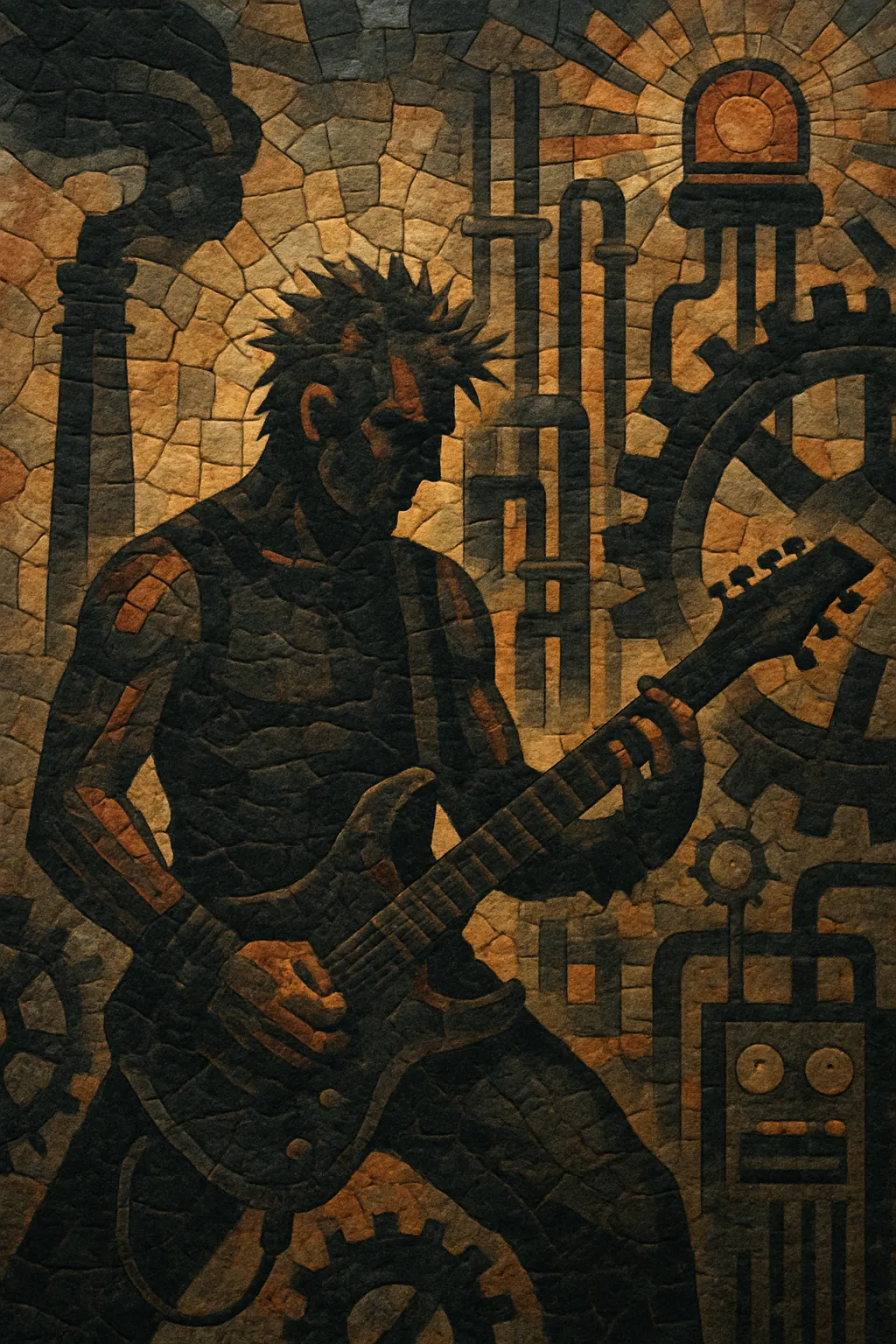
Industrial metal is a fusion of the mechanized, abrasive textures of industrial music with the weight, riff-driven power, and aggression of heavy metal.
It emphasizes machine-like rhythms, down-tuned guitars, harsh or processed vocals, and extensive use of sequencers, drum machines, and sampling.
The sound often evokes dystopian, anti-authoritarian, and techno-skeptical themes, with a tight, repetitive groove that feels both robotic and visceral.
Hallmarks include palm-muted chug riffs synchronized to quantized beats, distorted bass and synth layers, and production that foregrounds hard-edged, metallic timbres and found sounds (e.g., factory noise, machinery, alarms).


History
Industrial metal coalesced in the late 1980s as artists began grafting the harsh electronics, sampling, and mechanical pulse of industrial music onto the riff-driven power of metal. Early touchstones include Ministry’s shift from synth-based industrial to guitar-centric brutality on The Land of Rape and Honey (1988) and The Mind Is a Terrible Thing to Taste (1989), and Godflesh’s Streetcleaner (1989), which established a template of detuned, monolithic riffs over drum machines and bleak, cavernous production. KMFDM, Pitchshifter, and Killing Joke (proto-industrial metal via post-punk/industrial rock) further crystalized the hybrid’s ethos.
The genre broke wider in the early-to-mid 1990s. Ministry’s Psalm 69 (1992) reached major audiences; Nine Inch Nails’ Broken (1992) injected metallic intensity into industrial rock; White Zombie’s La Sexorcisto (1992) and Astro-Creep: 2000 (1995) popularized a groove-forward, sample-laden style; and Fear Factory’s Demanufacture (1995) fused precise, machine-locked riffs with cyber-dystopian concepts. In Germany, the related Neue Deutsche Härte movement (e.g., Rammstein’s Herzeleid, 1995; Sehnsucht, 1997) brought martial rhythms, baritone vocals, and theatrical staging into the mainstream. Marilyn Manson’s Antichrist Superstar (1996) helped embed industrial-metal aesthetics in 1990s alternative culture.
By the 2000s, industrial metal’s presence diversified. Acts like Static-X and later Rob Zombie projects blended danceable, EBM-tinged beats with groove-metal riffing, while others integrated djent, metalcore, or EDM textures, paving pathways toward cyber metal and electronicore. Although the genre’s mainstream peak was mid-1990s, its influence persists in modern metal production (quantized drums, sample layering, re-amped guitars), live show design (lighting, multimedia), and cross-genre collaborations. Contemporary artists continue to refresh the formula with updated sound design, modular synthesis, and cinematic soundscapes without losing the genre’s signature mechanical heft.