Your digging level

For this genre
0/8
🏆
Sign in, then listen to this genre to level up

Description

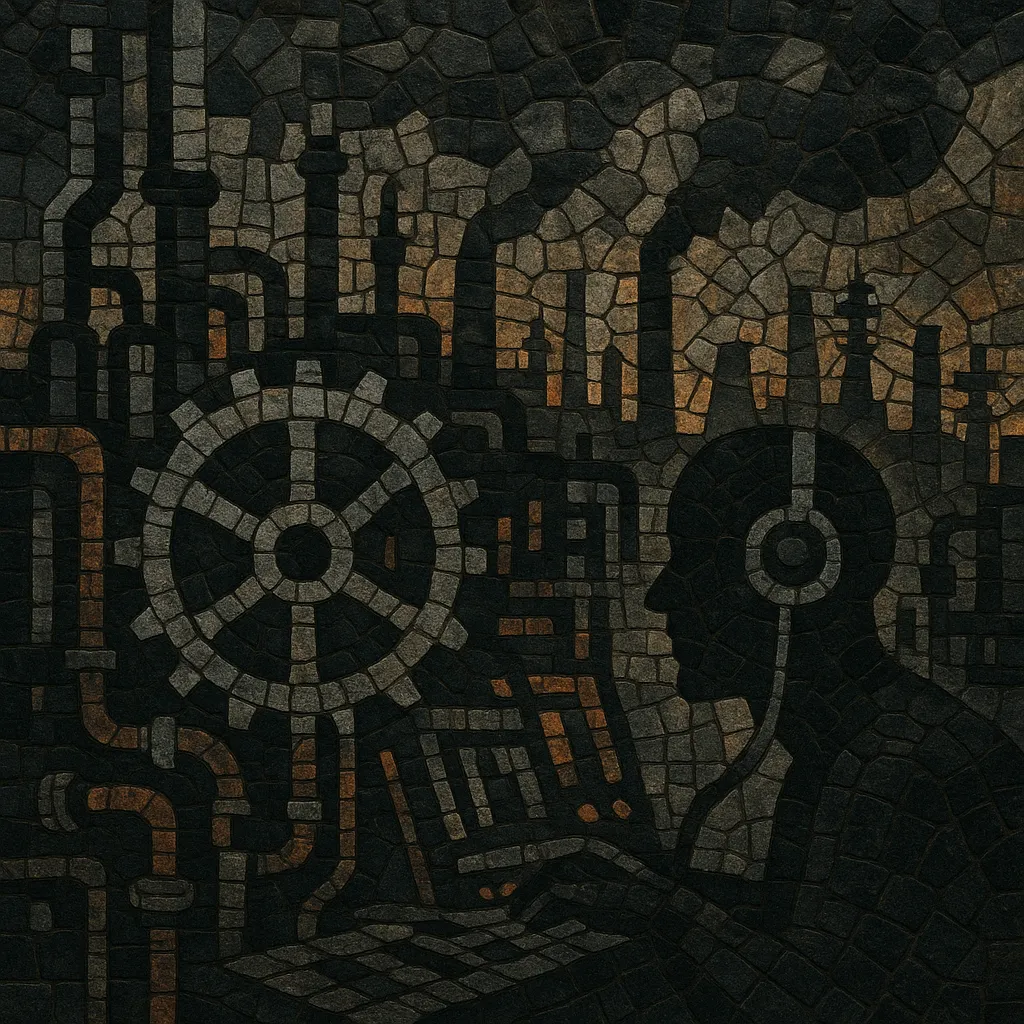
Electro-industrial is a dark, beat-driven offshoot of post‑industrial music that fuses the body‑music propulsion of EBM with the abrasive textures, tape/sampler collages, and dystopian atmospheres of industrial.

Typically set in minor keys, it emphasizes rigid 4/4 rhythms, sequenced basslines, layered synthetic percussion, and heavily processed vocals (whispered, shouted, or distorted). Sound design is central: bitcrushed drums, metallic hits, granular noise, ring modulation, flanging, and gated reverbs build a mechanized, cybernetic ambience often aligned with cyberpunk, surveillance, and transhumanist themes.

While club‑ready and “dancing,” it preserves an experimental edge, prioritizing mood and texture over traditional pop harmony.


Sources: Spotify, Wikipedia, Discogs, RYM, MB, user feedback and other online sources

History

Origins (early–mid 1980s)

Electro-industrial emerged in the early 1980s as artists in Belgium and Canada, informed by industrial tape/sampler practices and the martial, sequenced drive of EBM, began pushing toward a darker, more textural electronic sound. Acts from the Benelux and Canadian scenes pioneered a template of cold, minor‑key sequences, noise inflections, and distorted/spoken vocals that distinguished it from both synth‑pop and first‑wave industrial.

Consolidation and global spread (late 1980s–1990s)

By the late 1980s and early 1990s, electro‑industrial coalesced as a recognizable style: harder than EBM, more club‑functional than many industrial experimentalists. Independent labels, 12‑inch singles, and club nights in Europe and North America helped standardize its sound—4/4 kicks, syncopated 16th‑note basslines, metallic percussion, and sample collage—while touring networks and compilations spread the style across Germany, the US, and beyond.

Hybridization and club ascendancy (2000s)

In the 2000s, electro‑industrial cross‑pollinated with harsher, digitally clipped production aesthetics, feeding into scenes often labeled dark electro and aggrotech. Simultaneously, some producers folded in trance/techno sheen, while others maintained the grittier, mid‑tempo churn and cinematic sampling that defined the genre’s classic era.

2010s–present: Continuity and revivalism

A new generation of artists and reissues sustained interest, with modular and software tools enabling detailed sound sculpture while staying faithful to the genre’s core: mechanized groove, dystopian thematics, and vocal abrasion. The influence of electro‑industrial now surfaces in darksynth, witch house, and strands of industrial rock/metal and club‑oriented bass music.

How to make a track in this genre

Tempo, meter, and groove
•   Use steady 4/4 at roughly 100–130 BPM (can range from mid‑tempo 90s to faster 140s for intensity). •   Build a driving, metronomic pulse: kick on the quarter notes or a stomping two‑on pattern; snares/claps on 2 and 4 with gated/plate reverb; 16th‑note hi‑hat grids with occasional off‑beat opens and metallic accents.
Sound design and instrumentation
•   Core tools: drum machines (or drum plugins), step sequencers, subtractive/FM/wavetable synths, hardware or software samplers, distortion/saturation units, and noise sources. •   Prioritize texture: bitcrush and clip drums lightly, layer metallic hits (field recordings, factory/impact samples), use ring mod, flanging, phasers, and band‑pass filtering sweeps to create motion. •   Basslines: sequenced, syncopated 8th/16th patterns with occasional octave jumps; keep them gritty but defined (mids emphasized, sub controlled). Sidechain or duck pads subtly to the kick for clarity.
Harmony and melody
•   Minor modes (Aeolian, Phrygian) and chromatic movement; sparse chords (dyads, power‑intervals) rather than lush harmony. •   Use ostinatos and modal pedals to sustain tension; resolve sparingly. Melodic motifs should be short, cold, and repetitious.
Vocals and lyrics
•   Process vocals aggressively: distortion, overdrive, bit‑reduction, vocoding, telephone EQ, slapback or short room reverbs. •   Delivery ranges from whispers to snarls/shouts; double or layer with whispered takes for presence. •   Lyrical themes: dystopia, body/technology interfaces, surveillance, psychological conflict, environmental collapse—delivered with terse, image‑rich lines.
Arrangement and structure
•   Common form: intro (noise/pad + filtered loop) → verse (reduced kit + bass ostinato) → chorus (full kit, added lead or hook sample) → breakdown (noise collage, FX, spoken sample) → rebuild and final drive. •   Automate filter sweeps and noise beds to avoid static loops. Use fills: glitch edits, reverse cymbals, gated breaths, and abrupt mutes.
Mixing and production tips
•   Keep the midrange articulate (where metallic hits and vocals live); carve low‑mids to prevent mud. •   Parallel saturation on drums and bass for body; high‑pass pads/noise to leave room for the kick. •   Master for punch and density but preserve transient definition; a touch of analog‑style bus compression can glue the mechanized layers.

Main artists

Top tracks

Locked
Share your favorite track to unlock other users’ top tracks

Upcoming concerts

in this genre
Influenced by
Has influenced

Download our mobile app

Get the Melodigging app and start digging for new genres on the go
© 2026 Melodigging
Melodding was created as a tribute to Every Noise at Once, which inspired us to help curious minds keep digging into music's ever-evolving genres.
Buy me a coffee for Melodigging