Your digging level

For this genre
0/8
🏆
Sign in, then listen to this genre to level up

Description

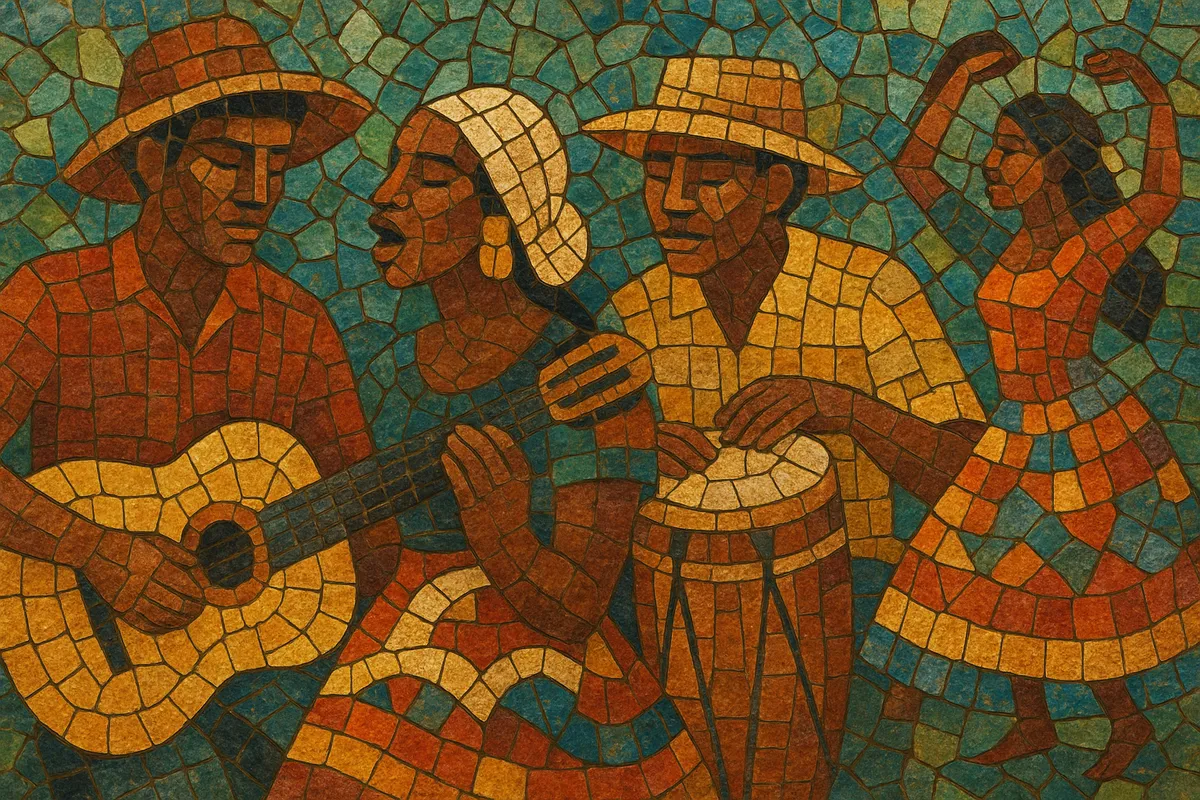
Brazilian folk music is an umbrella term for the country’s regional and traditional musics that grew from the encounter of Indigenous, African (mainly West and Central African), and Iberian (especially Portuguese) cultures.

It encompasses rural song, dance, and ritual genres such as baião and forró in the Northeast, viola-caipira traditions in the Southeast and Center-West, Afro-Brazilian drumming and chant in maracatu and jongo, circle-dance genres like ciranda and coco, and many others associated with religious festivals, work songs, and oral poetry.

Marked by call-and-response vocals, propulsive percussion, syncopated grooves, and narrative lyrics, Brazilian folk music remains a living tradition that informs Brazilian popular music while preserving local identity and heritage.


Sources: Spotify, Wikipedia, Discogs, Rate Your Music, MusicBrainz, and other online sources

History

Origins and cultural matrix

Brazilian folk music crystallized during the 18th–19th centuries as Indigenous musics, Portuguese song and dance forms, and African rhythmic practices intermingled across colonial Brazil. Early urban salon-song genres like modinha and the Afro-origin lundu became touchstones, while in rural areas the viola caipira (ten‑string guitar) anchored song traditions tied to migration, ranching, and devotionals.

Regional formations
•   Northeast: Baião, forró, xote, xaxado, coco, maracatu, and ciranda drew on African-derived percussion (zabumba, alfaia, pandeiro) and call-and-response singing. Poetic dueling (repente/embolada) thrived alongside cordel literature. •   Southeast/Center-West: Música caipira with viola caipira, cateretê, toadas, and folias de reis emphasized storytelling, modal inflections, and open tunings. •   North/Amazon: Carimbó and related rhythms blended Indigenous patterns, Afro-Brazilian percussion, and Portuguese dance figures. •   South: Milonga, chamamé/chamamé brasileiro, and música gaúcha reflected Iberian and platine influences through guitar- and accordion-based ensembles.
20th-century dissemination and feedback with popular music

From the 1930s–1950s, radio and records projected folk styles nationwide. Luiz Gonzaga popularized baião and forró, while Jackson do Pandeiro highlighted coco and syncopated Northeastern grooves. Urban scenes absorbed folk idioms, feeding choro, samba, MPB, and later tropicália and mangue beat.

Preservation, research, and contemporary revival

Folklorists (e.g., Mário de Andrade) and cultural movements cataloged and revitalized regional forms. Since the late 20th century, master practitioners (mestres) have led community groups, festivals, and educational projects, while contemporary artists and bands rework traditional grooves with modern instrumentation, keeping transmission active in both local rituals and national stages.

How to make a track in this genre

Core instrumentation
•   Rhythm: zabumba (low drum), triangle, pandeiro, ganzá, agogô; alfaia and caixa in maracatu; handclaps and stomps in coco/ciranda. •   Strings: viola caipira (10-string), acoustic guitar (violão), rabeca (fiddle), occasionally accordion (sanfona) for baião/forró and gaúcho styles. •   Afro-Brazilian timbres: atabaques and call-response choruses in religious/ritual contexts; berimbau and palmas for capoeira songs.
Rhythm and groove
•   Favor 2/4 and 4/4 meters with syncopation; baião uses a characteristic zabumba pattern (low beat on 1, syncopated offbeat accents) with a steady triangle ostinato. •   Xote employs a gentle, shuffling 4/4; coco and ciranda rely on cyclical, participatory grooves, often driven by call-and-response. •   Maracatu (baque virado) layers interlocking drum phrases with a swinging, forward-leaning feel.
Harmony and melody
•   Simple diatonic progressions (I–IV–V, ii–V–I) with modal color from open tunings on viola caipira; frequent use of drones and pedal tones. •   Melodies are singable, pentatonic or diatonic, using narrow to moderate ranges suited to communal singing.
Lyrics and form
•   Verses tell stories of rural life, migration, drought, devotion to saints, love, and humor; incorporate regional vocabulary and cordel/repente poetic forms. •   Use refrain-based strophic forms for participation (ciranda/coco) or verse duels (embolada/repente) with improvised rhymes.
Arrangement and performance tips
•   Keep textures transparent so rhythm and voice lead; spotlight call-and-response between soloist and chorus. •   Use percussion to articulate groove while strings outline harmony; add accordion or rabeca for melodic counter-lines. •   Encourage audience participation (claps, refrains, simple dance steps) to honor the communal essence of the style.

Top tracks

Locked
Share your favorite track to unlock other users’ top tracks
Influenced by
Has influenced
Challenges
Digger Battle
Let's see who can find the best track in this genre
© 2026 Melodigging
Melodding was created as a tribute to Every Noise at Once, which inspired us to help curious minds keep digging into music's ever-evolving genres.
Buy me a coffee for Melodigging