

Your digging level
Description
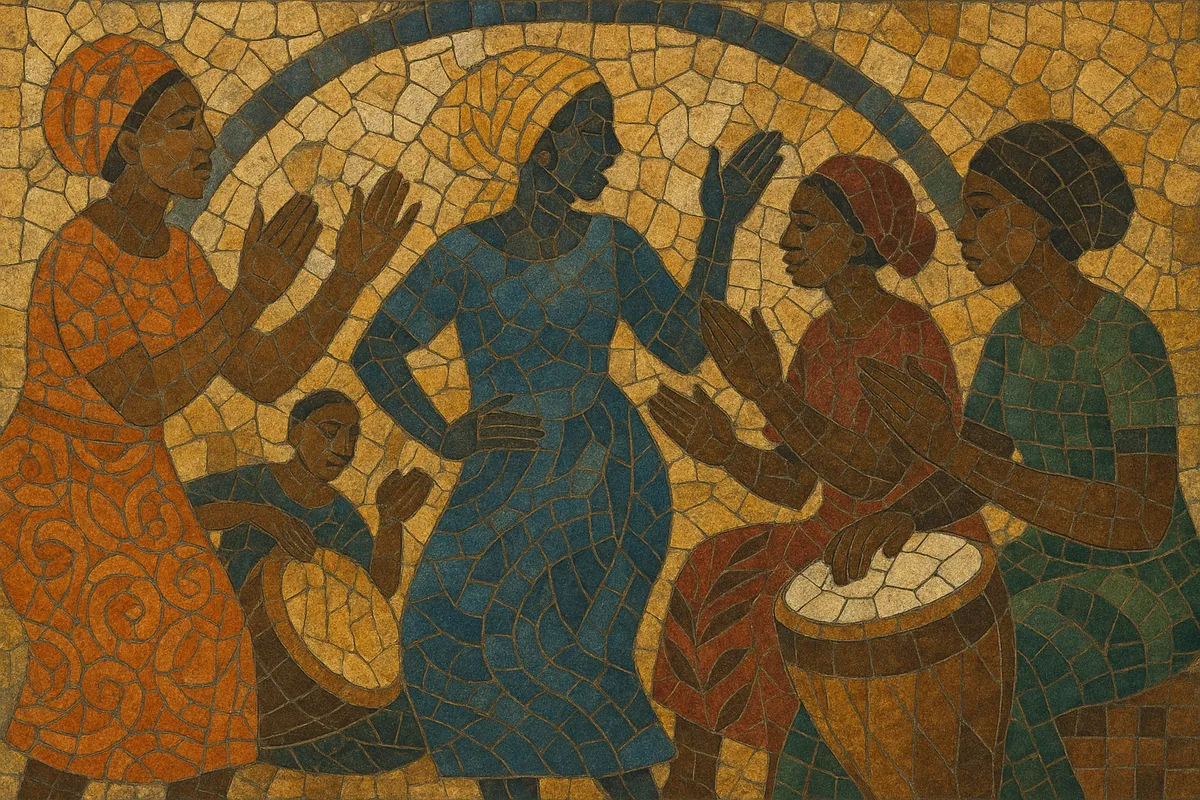
Unakesa is a lay (non-ritual) song-and-dance tradition of the Fulni-ô people of northeastern Brazil. Performed outside of sacred contexts, it is a community-facing expressive form that features group singing, call-and-response, hand percussion (especially rattles/maracás), and coordinated dance figures.
Unlike restricted ceremonial practices, Unakesa is presented in public cultural settings, festivals, and educational demonstrations, helping to transmit Fulni-ô language (Yatê) and collective memory. Its tempo is typically moderate and duple, supporting circular or processional dance patterns that emphasize communal participation over solo virtuosity.
History
The Fulni-ô (speakers of the Yatê language) live primarily around Águas Belas in Pernambuco, Brazil. Their musical life encompasses both highly restricted ceremonial practices and open, community-facing forms. Unakesa belongs to the latter: a lay song-and-dance practice that can be shared with outsiders and used for public cultural presentation.
While the practice itself is understood by the community to be ancestral, the earliest sustained written and audio documentation comes from the colonial and post‑colonial eras (from the 16th century onward) as outside observers began describing northeastern Brazil’s Indigenous musics. More reliable documentation emerges in the 20th century through ethnographic work and institutional archives (e.g., cultural and museum initiatives and later field recordings), which distinguish public forms such as Unakesa from sacred, restricted repertories.
In the late 20th and early 21st centuries, Unakesa has increasingly served as a vehicle for language and cultural transmission, youth education, and intercommunity diplomacy. Performances at Indigenous festivals, schools, and cultural centers preserve choreographic patterns, responsorial singing, and percussion practice while foregrounding Yatê texts and Fulni-ô identity. As a lay tradition, Unakesa also interfaces with broader northeastern Brazilian cultural circuits, standing as a visible emblem of Fulni-ô continuity in a plural musical landscape.

%2C%20Cover%20art.webp)
