Your digging level
Description
Música gaúcha tradicionalista is the traditional music of Rio Grande do Sul, Brazil, cultivated in Centros de Tradições Gaúchas (CTGs) and by the Movimento Tradicionalista Gaúcho (MTG). It celebrates the pastoral life of the pampas, the mate (chimarrão) ritual, horsemanship, and regional identity, using song, dance, and instrumental forms passed down through generations.
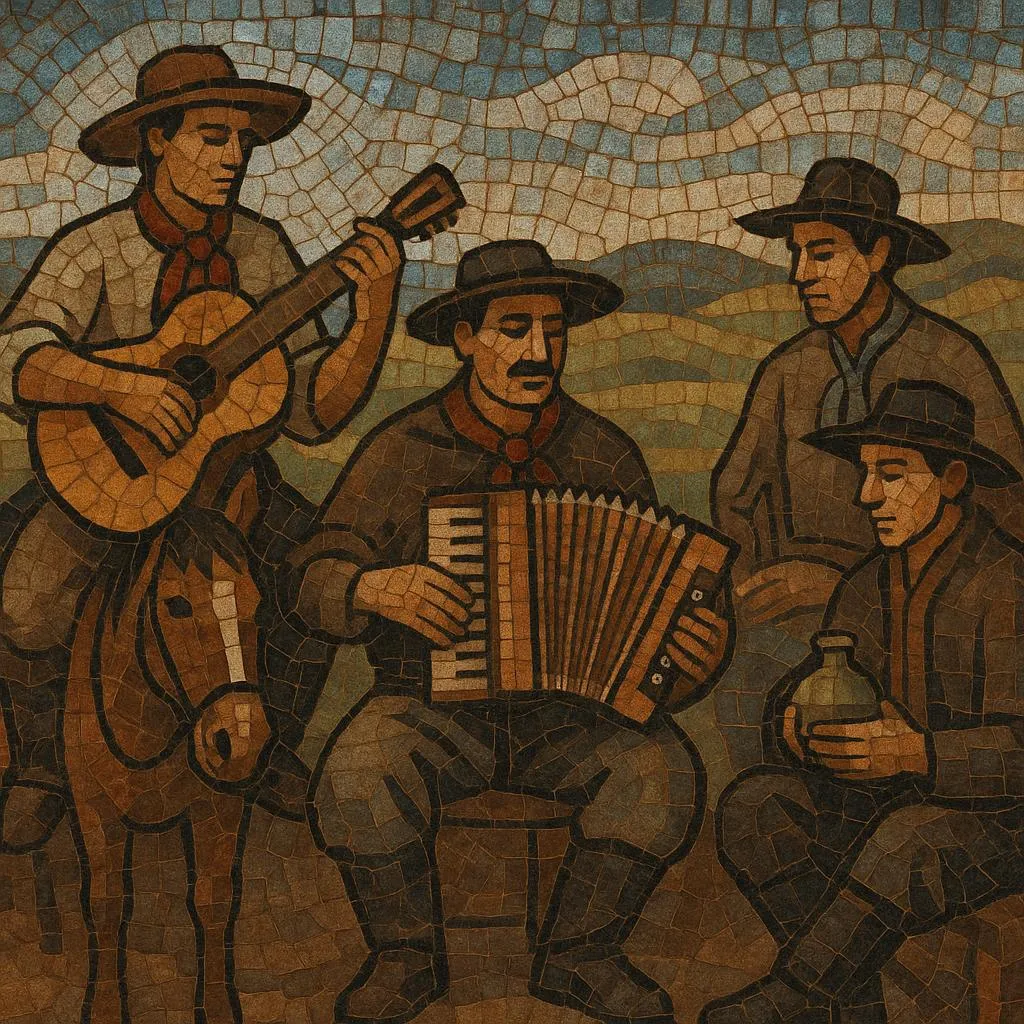
Its core sound blends Iberian and Central-European dance rhythms with Río de la Plata folk idioms: vaneira/vanerão and rancheira (polka-derived), xote/schottische, valsa (waltz), milonga and chamamé, alongside local forms such as chula and bugio. Typical instrumentation features button accordion (gaita-ponto), acoustic guitars (violão), fiddle, and upright or electric bass, with light percussion (often bombo legüero) and occasional harmonica. Vocals tend toward narrative balladry and payador (improvised verse) traditions, balancing dance-floor energy with nostalgic, rural lyricism.
History
Gaúcho musical culture formed on the southern Brazilian pampas through encounters among Portuguese-Azorean settlers, Spanish-platine traditions (from neighboring Argentina and Uruguay), Indigenous Guaraní, and Afro-diasporic communities. Dance forms such as polka, schottische, and waltz arrived via European immigration, while milonga, payada, and later chamamé crossed the borderlands. By the early 20th century, accordion- and guitar-led ensembles popularized these hybrids at rural bailes (dances) and on regional radio.
In 1948, students in Porto Alegre founded CTG 35, crystallizing a broader Traditionalist movement (MTG) dedicated to safeguarding gaúcho customs—dress, dance, poetry, and music. Throughout the 1950s–60s, groups like Irmãos Bertussi and vocal icons such as Teixeirinha and Gildo de Freitas helped fix a recognizable stylistic core: accordion-driven dance rhythms, narrative singing, and regional themes. In 1971, the Califórnia da Canção Nativa festival in Uruguaiana inaugurated the "nativista" festival circuit, encouraging new compositions in traditional forms and strengthening a professional ecosystem for composers, payadores, and conjuntos.
From the 1980s onward, virtuosi such as Renato Borghetti modernized timbres and arrangements while remaining rooted in vaneira, milonga, and chamamé. Family ensembles (e.g., Os Fagundes) and baile bands like Os Serranos and Os Monarcas carried the dance tradition across CTGs and regional circuits. In the 1990s–2000s, a parallel pop-dance stream (Tchê Music) highlighted contemporary production and stagecraft, even as the Traditionalist current retained its identity through festivals, rodeios, and CTG pedagogy. Today, new generations (e.g., Luiz Marenco, Joca Martins, Shana Müller) sustain the repertoire, cross-pollinating with neighboring platine scenes and reaffirming gaúcho pride in song.