Your digging level
Description
Paracana (often written in Portuguese as “Paracanã”) refers to a traditional folk-dance music from the Amazonian state of Pará in northern Brazil. It blends Indigenous Amazonian song traditions with Afro-Brazilian percussion practice and Luso-Brazilian (Portuguese) song forms, yielding a communal, circular dance with strong call-and-response vocals and trance-like drum ostinatos.
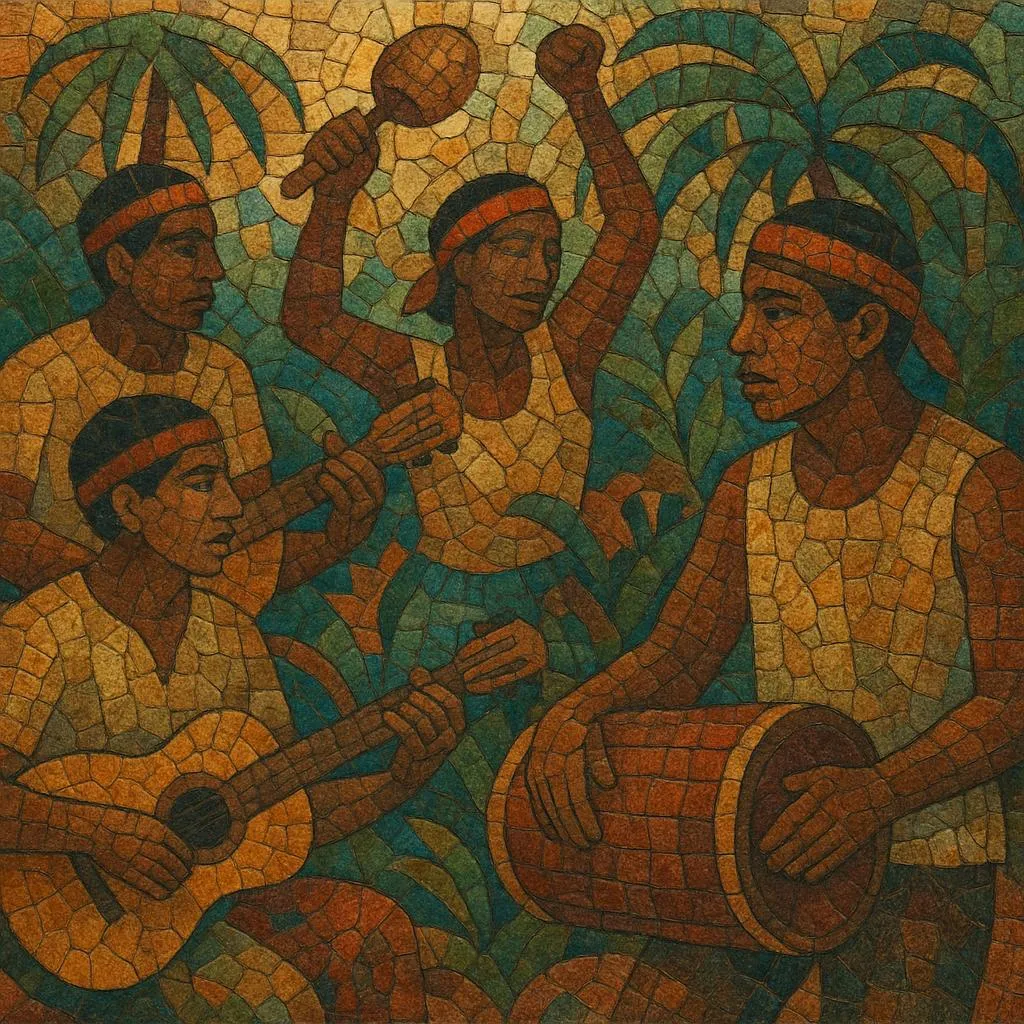
The music typically centers on earthy drums (akin to the curimbó log drum), rattles, and hand percussion, with guitar or small melodic instruments doubling simple, catchy motifs. Rhythms emphasize off‑beats and swaying syncopations that drive a celebratory, participatory dance—music conceived as a social ritual as much as a performance.
History
Paracana grew out of the ritual and festive practices of Indigenous communities of the lower Amazon (present‑day Pará), absorbing Portuguese colonists’ song forms and Afro‑Brazilian percussion aesthetics. Like neighboring carimbó circles, gatherings featured circular dances, responsorial singing, and drum-led grooves that accompanied seasonal feasts and communal rites.
Through the 20th century, regional cultural movements, radio, and folkloric troupes in Belém helped codify and showcase Pará’s dance‑music styles. Paracana was presented alongside carimbó, lundu marajoara, and related Amazonian genres, often sharing musicians, instruments, and repertory while maintaining its own choreographic patterns and song refrains.
As Pará’s scene modernized, paracana’s grooves and call‑and‑response practice continued to inform local popular forms. The pulse and celebratory feel fed into the DNA of Pará’s broader sound world—sitting in the same family tree that would eventually feed lambada, tecnobrega, and other Pará‑born fusions—while remaining a community dance cherished at festivals, cultural centers, and folk events.