

Your digging level
Description
Rock rural is a Brazilian folk rock style that emerged in the 1970s.
It blends the instrumentation and songwriting approach of rock with rural Brazilian musical traditions, especially caipira and sertanejo elements, while also absorbing traits from MPB and country rock.
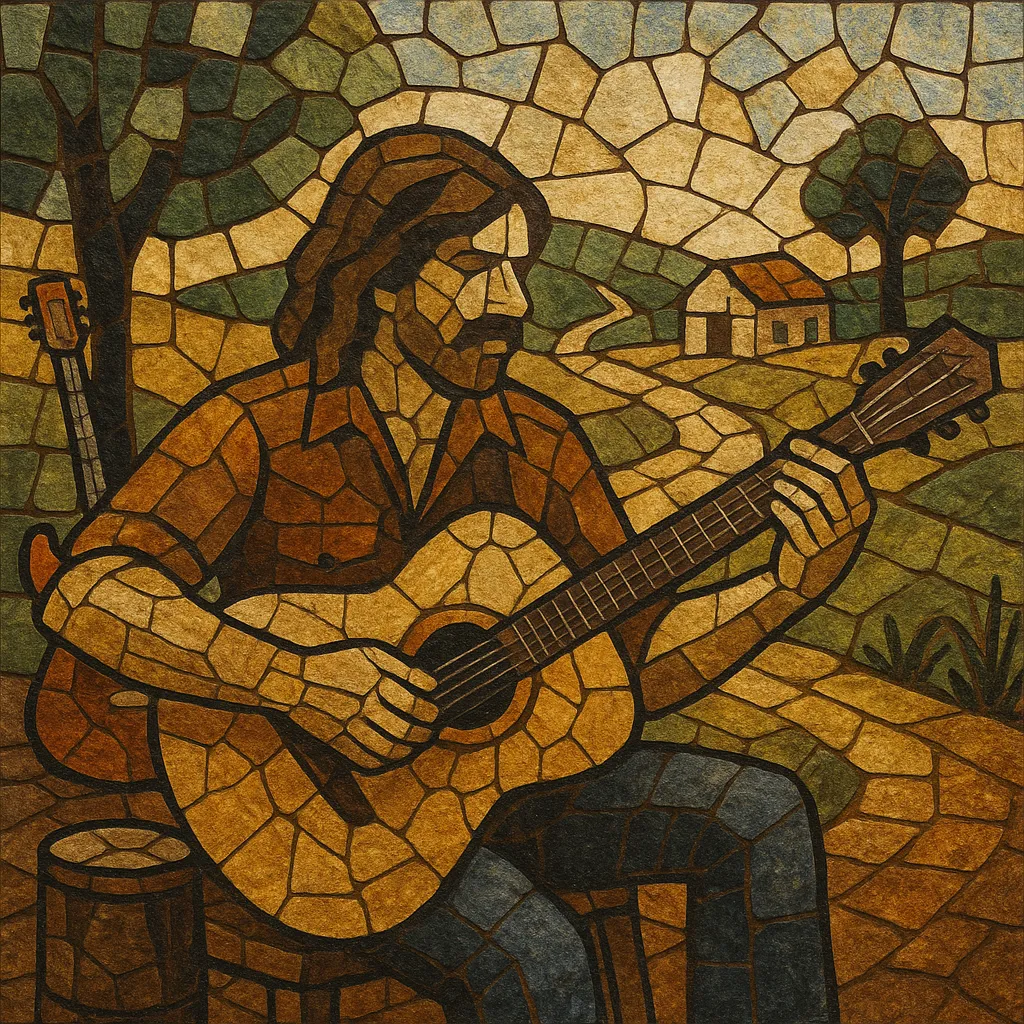
The genre is generally associated with acoustic textures, viola caipira references, pastoral imagery, introspective lyrics, and a strong connection to the Brazilian countryside, even when performed by urban musicians.
Its sound often balances rustic simplicity and sophisticated songwriting, combining folk-derived melodies with soft rock arrangements, poetic lyricism, and an emphasis on landscape, memory, identity, and everyday rural life.
History
Rock rural emerged in Brazil during the 1970s as artists began to connect the language of folk and soft rock with Brazilian rural traditions. It developed in a cultural environment where MPB was already encouraging the fusion of regional identity, poetic songwriting, and contemporary popular music.
The genre drew from caipira and sertanejo roots, but it was not simply traditional rural music played with electric instruments. Instead, it reimagined countryside aesthetics through the lens of modern singer-songwriters and folk-rock-oriented arrangements.
The style became especially associated with musicians such as Sá, Rodrix & Guarabyra, who helped define the expression "rock rural" and gave it a recognizable artistic profile. Their music presented the countryside as both a lived space and a symbolic landscape, joining rustic Brazilian references with harmonized vocals, acoustic guitars, and rock-influenced production.
Other artists connected to adjacent currents in Brazilian music also contributed to the broader atmosphere in which rock rural flourished, including singer-songwriters who valued pastoral themes, regional textures, and hybrid acoustic-electric arrangements.
Rock rural stood apart from harder forms of Brazilian rock by favoring subtle grooves, melodic accessibility, and lyrical reflection. It shared affinities with country rock and folk rock, but its Brazilian identity came from the use of sertanejo and caipira references, MPB-style harmony and poeticism, and the evocation of interior landscapes, roads, farms, dust, migration, and memory.
Rather than functioning as a mass-market rural style, it occupied a more authorial and album-oriented space, often appealing to listeners interested in sophisticated songwriting and regional-cultural synthesis.
Although rock rural was most clearly defined in the 1970s, its legacy continued through later Brazilian folk-pop, singer-songwriter traditions, and rural-urban hybrid music. Its importance lies in showing that Brazilian rock could dialogue deeply with the country’s interior traditions without losing modernity.
In retrospect, rock rural helped expand the vocabulary of Brazilian popular music by bridging folk rock, MPB, and sertanejo-derived sensibilities in a distinctly Brazilian way.
Build the music around a meeting point between Brazilian rural traditions and 1970s folk rock.
The overall feel should be organic, melodic, and lyrical rather than aggressive. Favor a warm, pastoral atmosphere with arrangements that sound rooted in landscape, travel, memory, and the countryside.
Start with acoustic guitar as the central instrument.
Add elements commonly associated with Brazilian rural music, especially viola caipira when possible, or emulate its role through picked acoustic patterns.
Use light electric guitar, bass, and restrained drum set in a soft rock or country rock manner. Keyboards, harmonica, flute, accordion, or subtle percussion can work well if they support the rustic atmosphere rather than overpower it.
Vocal harmonies are especially effective, often in duos or trios, to evoke communal singing and a folk-derived sensibility.
Keep the groove moderate and natural.
Most songs work well in steady 4/4 with a relaxed pulse, but rhythms can borrow from folk ballad traditions, soft country rock, MPB phrasing, and regional Brazilian accompaniment styles.
Avoid overly dense drumming. Let rhythm breathe, with emphasis on strumming patterns, picking figures, and flowing bass movement.
Use accessible tonal harmony, but enrich it with MPB-style chord color when appropriate.
Major and minor key progressions both work, often with gentle sophistication: added tones, suspended chords, secondary dominants, and smooth voice leading can help the music sound distinctly Brazilian rather than like generic Anglo-American folk rock.
Cadences should feel natural and song-centered. The harmony should support the lyric and melodic atmosphere more than technical display.
Write singable, memorable melodies with a reflective character.
Melodies often move in a conversational way, close to speech-song at times, but should still contain a lyrical arc. Folk-like contours, modal inflections, and pastoral simplicity can all be effective.
Write in a poetic and image-rich way.
Common themes include the countryside, roads, rivers, dust, migration, memory, longing, nature, work, freedom, identity, and the relationship between rural and urban life.
The tone can be nostalgic or contemplative, but it should avoid caricature. Good rock rural lyrics treat the rural world with dignity, emotional depth, and symbolic resonance.
Prefer clean, spacious arrangements.
Do not overproduce the track. Let acoustic textures remain audible and intimate. Even when electric instruments are present, they should complement the rustic core.
Aim for balance between folk intimacy and soft rock breadth. The song should feel both grounded and expansive.
Sing with clarity and emotional sincerity rather than theatrical excess.
A natural vocal delivery works best, especially when paired with harmonies. Instrumental playing should feel tasteful and rooted, with enough refinement to reflect MPB influence but enough simplicity to preserve the rural atmosphere.


Top albums
Best playlists



