

Your digging level
Description
Colombian Andean music (Música andina colombiana) is a family of song and instrumental styles from Colombia’s Andean highlands, centered on rhythms such as bambuco, pasillo, guabina, torbellino, and bunde.
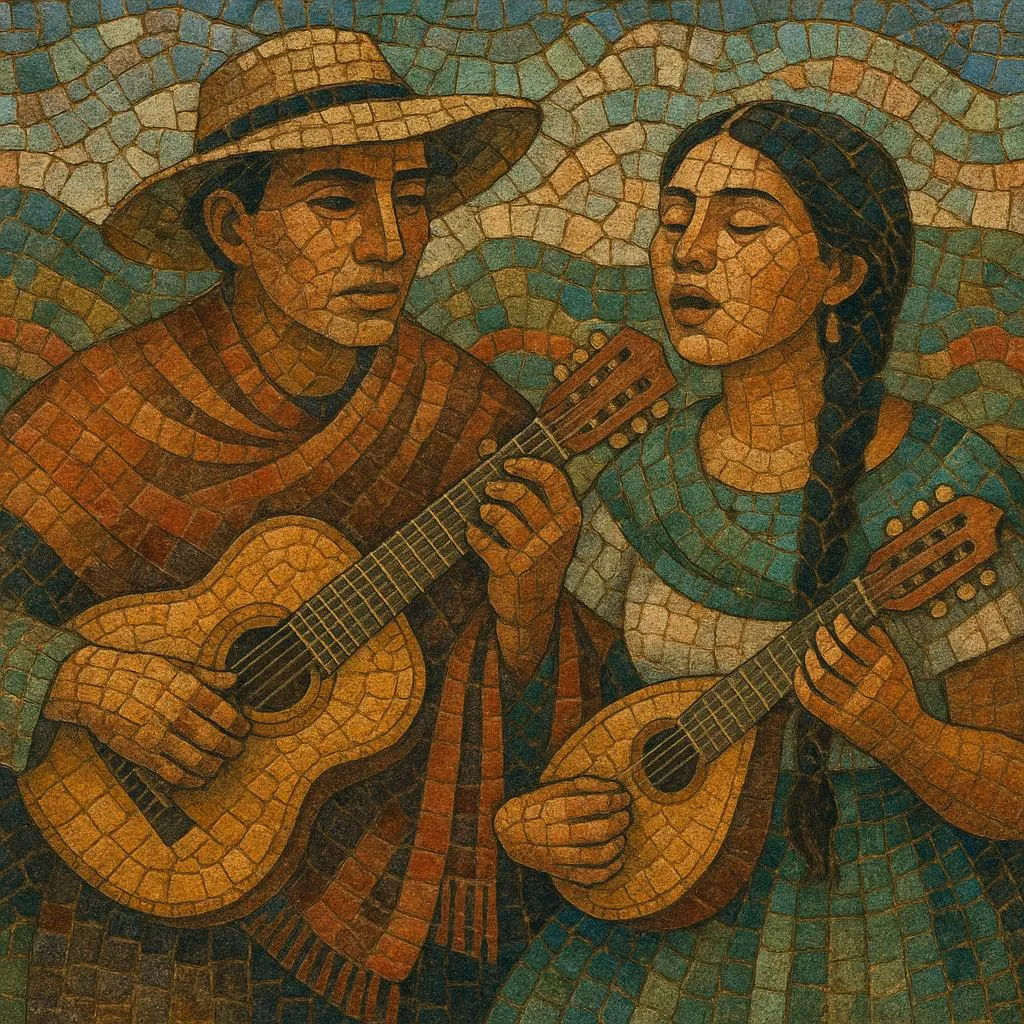
Typically performed by string ensembles featuring the Colombian tiple, bandola andina, guitar, and sometimes requinto or double bass, it interweaves salon-era European harmony with indigenous rhythmic cells and Afro-Colombian syncopation. Vocals often appear in duos with close, expressive harmonies and poetic lyrics that range from serenades and laments to festive dances.
The music’s metric play—especially the 6/8–3/4 hemiola of bambuco and the quick 3/4 of pasillo—gives it a lilting, bittersweet momentum. Over time, it moved from rural and salon settings into radio, recording, competitions, and conservatory arrangements, becoming a core emblem of Colombian identity alongside coastal genres.
History
Colombian Andean music crystallized in the 1800s as local song-dance forms from the Andean highlands (notably bambuco and guabina) met European salon idioms brought by Spanish-descended elites. The pasillo emerged as a regional adaptation of the waltz, acquiring brisker tempi, idiomatic string writing, and Colombian melodic turns. Indigenous rhythmic patterns and Afro-Colombian accents shaped phrasing and syncopation, while Spanish poetic and guitar traditions informed lyrics and accompaniment.
By the early 1900s, composers and ensemble leaders such as Pedro Morales Pino professionalized the style for concert and recording. Estudiantina and trio formats (bandola–tiple–guitar) flourished, codifying instrumental roles and ornamental vocabulary. Composers including Luis A. Calvo, Emilio Murillo, and León Cardona enriched the repertory with pasillos, bambucos, and intermezzos, circulating via sheet music, radio, and gramophone—transitioning the music from parlor to national stage.
Post–World War II media expanded exposure. Landmark festivals (e.g., Festival Mono Núñez in Ginebra, Valle del Cauca) and academic programs canonized the genre, nurturing new virtuosi and ensembles and standardizing performance practice, instrumentation, and competition categories. The music became a touchstone of highland identity and a counterpart to coastal genres like cumbia and porro.
Modern ensembles continue the traditional trio format while exploring extended harmony, chamber orchestrations, and crossovers with classical guitar, jazz, and folk-rock. Luthiers and performers have refined the Colombian tiple and bandola, and composers write concert works based on pasillo and bambuco rhythms. The style coexists as both heritage music (in competitions and conservatories) and a living practice that influences nueva canción, rock andino, neofolklore, and world/jazz fusions.

