Your digging level
Description
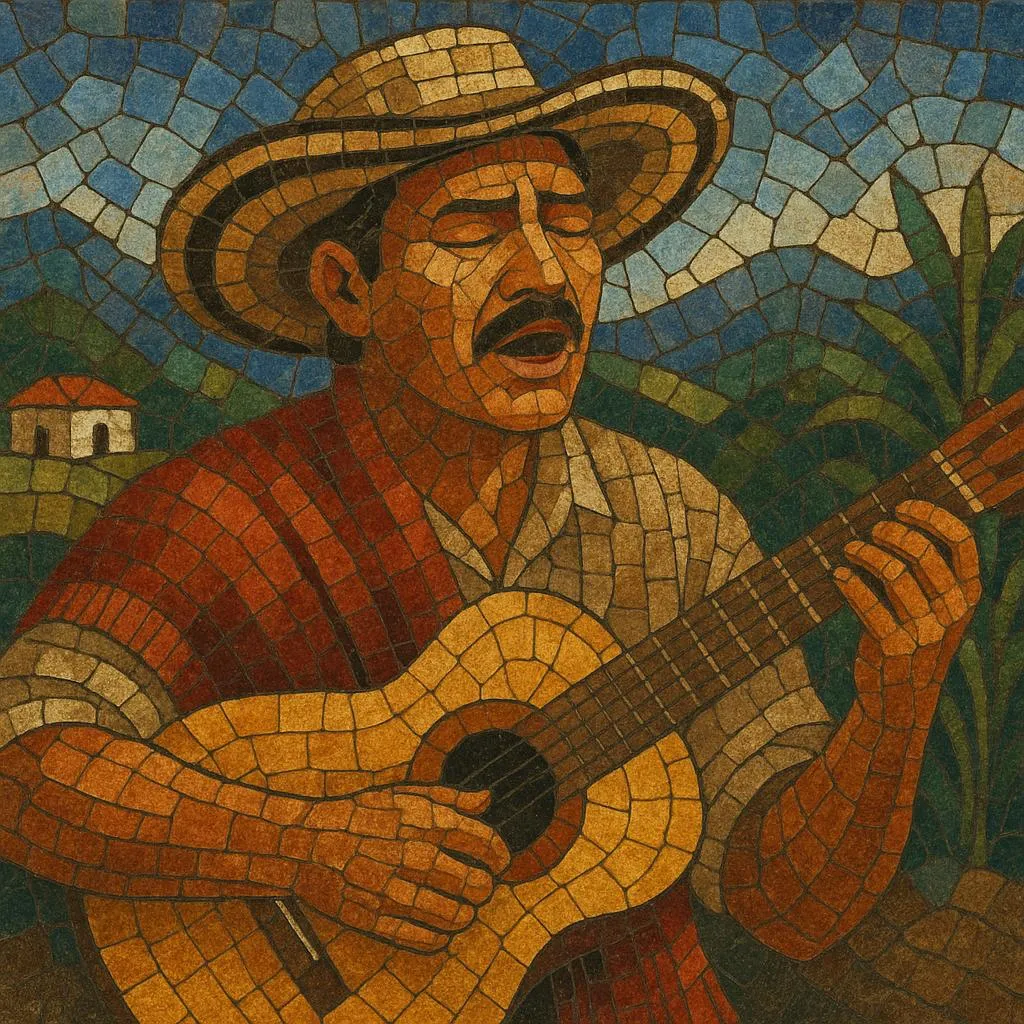
Música popular colombiana is a Colombian folk‑popular style that emerged in the Paisa region (northwest Colombia) in the 1930s–1940s. It drew heavily from Mexican ranchera, corrido, and mariachi traditions, while also absorbing Andean song forms such as pasillo, bambuco, and guabina, and, to a lesser extent, Peruvian vals criollo and highland huayno.
Across the 20th century it became the cantina music of the interior, closely linked to themes of despecho (heartbreak), rural life, migration, and working‑class pride. In the 21st century it has modernized its production and now often blends with different strands of Regional Mexican (mariachi, norteño, banda) while retaining Colombian Andean vocal expression and lyrical sensibility.
Hallmarks include emotive lead vocals with pronounced vibrato, lyrical narratives of love and loss, strophic song forms, diatonic harmonies (I–IV–V with occasional secondary dominants), and accompaniment ranging from guitars/requinto/tiple and accordion to full mariachi‑style brass or banda‑like ensembles.
History
Música popular colombiana arose in the Paisa region during the 1930s–1940s, when Colombian rural and Andean urban audiences embraced Mexican ranchera and corrido recordings and films. Musicians adapted Mexican vocal delivery and song structures to local repertoires (pasillo, bambuco, guabina), creating a distinct Colombian voice dedicated to cantina storytelling and despecho.
Through radio, jukeboxes, and touring ensembles, the style spread across the Andean interior. It crystallized around sentimental waltzes and ranchera‑like polkas, sung with dramatic vibrato and accompanied by guitars, requinto/tiple, bass, and later accordion or small brass units. Lyrical content emphasized heartbreak, migration, rural memory, and working‑class resilience.
The “despecho” brand foregrounded the genre’s cathartic heartache songs, helping it reach national visibility beyond taverns and local bailes. Larger ensembles, studio polish, and crossover airplay connected música popular colombiana to broader Latin ballad and regional formats while maintaining Andean phrasing.
A new wave of artists modernized production (compressed guitars, pop‑ready drums, clearer low end) and collaborated with Regional Mexican acts. Current recordings flexibly alternate among mariachi brass, norteño accordion/bajo sexto textures, banda‑style percussion, and Colombian Andean timbres—yet the genre’s emotional core (despecho narratives, direct melodies, and theatrical vocals) remains intact.