

Your digging level
Description
Música planeca is a vernacular Andean–Colombian style identified with the southern Tolima highlands (around Planadas) and neighboring parts of Huila. The term “planeca” is a local demonym and, by extension, labels the repertoire, dances, and song forms favored in town fiestas, patronal celebrations, and rural gatherings.
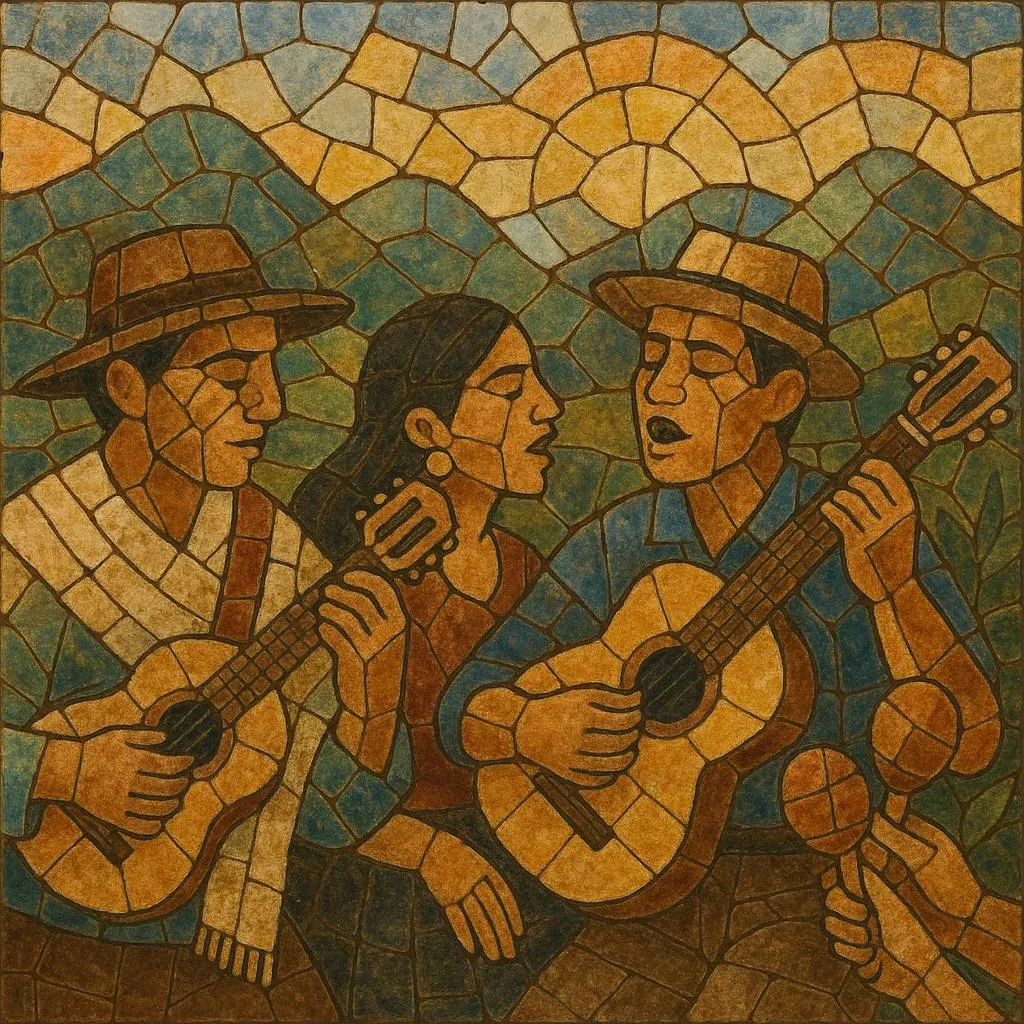
Musically it belongs to the interior-Andean family (bambuco–pasillo–guabina–rajaleña), drawing on characteristic 6/8–3/4 hemiolas, brisk dance pulses, and witty, sometimes picaresque coplas (quatrains). Ensembles typically feature tiple colombiano, bandola, and guitarra (often with requinto), hand percussion (maracas, chucho/guache), and close vocal duets. The result is a bright, agile, and festive sound that alternates between lyrical serenade-like numbers and foot-stirring dance pieces.
History
The style coalesced in the 1930s–1940s as migrants, coffee growers, and Indigenous and mestizo communities around Planadas exchanged dance songs at verbenas and ferias. It inherited rhythmic cells, poetic meters, and string-instrument practice from the established interior-Andean genres—especially bambuco, pasillo, guabina, and the locally iconic rajaleña—while emphasizing the Planadas area’s repertoire and performance habits.
Radio, municipal bands, and estudiantinas in Tolima and Huila helped stabilize common keys, ensemble roles (bandola lead, tiple harmonic engine, guitar bass and cadence), and a fast, buoyant approach to dance numbers. Local composers and duos codified humorous coplas and sentimental verses about rural courtship, harvests, mountain life, and patron-saint festivities.
Today música planeca remains a living community practice at fiestas patronales, dance contests, and school ensembles. Professional Andean trios and duets from Tolima/Huila frequently include planeca items in their sets. While amplification and modern arrangements occur, the core sonic identity—string trio textures, hemiola-driven grooves, and alternating romantic and playful songs—remains intact.

