Your digging level

For this genre
0/8
🏆
Sign in, then listen to this genre to level up

Description

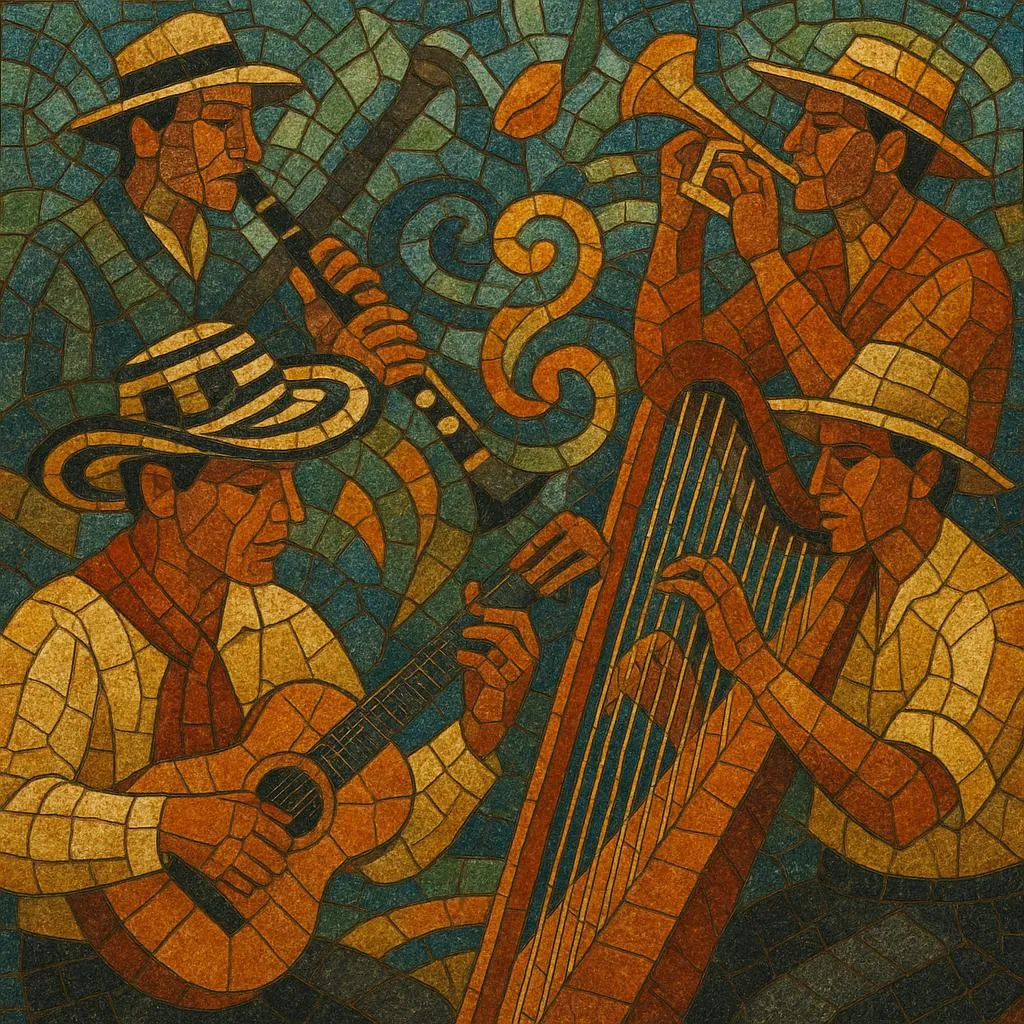
Instrumental Colombian music refers to the performance of Colombia’s traditional and popular styles without vocals, foregrounding melody, counter‑melody, and rhythmic drive across regional ensembles. It spans Andean string trios that render bambucos and pasillos with lyrical finesse; Caribbean coastal brass and reed orchestras that turn cumbias and porros into buoyant, syncopated dance pieces; Pacific Coast marimba ensembles that pulse in 6/8; and llanero harp groups whose arpeggios animate joropo grooves.

Across these settings, timbre and technique do much of the storytelling: bandola and tiple filigree in the Andes, clarinet and trumpet riffs in porro and cumbia, chonta‑marimba ostinatos in currulao, and dazzling arpa llanera cascades in the plains. While deeply rooted in local idioms, the genre has long conversed with salon music, big‑band arranging, and, in recent decades, jazz and chamber music, yielding a repertoire that is both vernacular and virtuosic.


Sources: Spotify, Wikipedia, Discogs, RYM, MB, user feedback and other online sources

History

Origins (early 20th century)

Instrumental renderings of Colombian repertoire took shape in the 1900s–1930s as salon ensembles, estudiantinas, and string trios adapted bambuco, pasillo, and guabina for bandola, tiple, and guitar. Early 78‑rpm recordings helped codify instrumental versions of vocal dances, while arrangers translated rustic dance rhythms into chamber‑like miniatures for urban audiences.

Mid‑century orchestral boom (1940s–1960s)

On the Caribbean coast, clarinet-, sax-, and trumpet‑led orquestas transformed cumbia and porro into exuberant instrumental showpieces. Bandleaders such as Lucho Bermúdez, Pacho Galán, Edmundo Arias, and Clímaco Sarmiento developed tightly scored horn riffs, montuno‑style vamps, and percussion breaks, creating a golden age of Colombian instrumental dance music that circulated widely on radio and records.

Regional schools and idioms
•   Andean string tradition: Tríos and cuartetos refined instrumental bambuco and pasillo with counterpoint between bandola, tiple, and guitar, emphasizing hemiola (3:2) and sentimental, cantabile melodies. •   Caribbean brass/reed orquestas: Porro and cumbia gained punchy horn voicings, clarinet solos, and tambora/alegre percussion frameworks suited for ballrooms and town festivals. •   Pacific Coast marimba: Marimba de chonta with cununos, bombo, and guasá produced polyrhythmic 6/8 instrumentals (currulao) marked by cyclical ostinati and call‑and‑response textures among parts rather than voices. •   Llanero harp ensembles: Arpa llanera, cuatro, and maracas drove rapid joropo instrumentals with brilliant arpeggios and off‑beat accent patterns.
Contemporary developments and revival (1970s–present)

Since the late 20th century, virtuosi and ensembles have expanded the instrumental canon through conservatory training, festival circuits (e.g., Mono Núñez for Andean music), and crossovers with jazz and classical idioms. Harpist Edmar Castañeda, guitar maestro Gentil Montaña, and modern trios like Palos y Cuerdas exemplify a wave that preserves traditional forms while embracing reharmonization, extended techniques, and concert‑hall presentation.

How to make a track in this genre

Core instrumentation and ensemble formats
•   Andean string trio: Bandola (melody and tremolo), tiple (12‑string rhythmic/harmonic drive), and guitar (bass lines, counter‑melody, cadences). Optional requinto or flute for color. •   Caribbean orquesta: Clarinet(s), trumpets, trombones, alto/tenor saxes, piano, bass (or tuba in porro pelayero), and percussion (tambora, bombo, alegre drum, maracas, guacharaca, cowbell). •   Pacific marimba group: Marimba de chonta (two players can share one instrument), cununos (male/female), bombo (or bombo folclórico), and guasá (shaker). •   Llanero trio/ensemble: Arpa llanera, cuatro, maracas; add bandola llanera or bass for expanded formats.
Rhythm and groove design
•   Use hemiola (3:2) and metric modulation between 6/8 and 3/4 in bambuco and joropo; articulate the 3‑3‑2 cell and offbeat maraca patterns. •   For pasillo (usually 3/4), keep a light, dance‑like lilt; phrases often end with short cadential turns. •   In cumbia/porro (2/4), lock tambora/bombo with bass, place guacharaca scrapes as time‑keepers, and write call‑and‑response horn riffs over a vamp. •   Currulao favors layered 6/8 ostinati on marimba with interlocking drum patterns; keep phrases cyclical and trance‑like.
Melody, harmony, and form
•   Compose singable, diatonic melodies with ornamental turns, appoggiaturas, and grace‑note pickups; double lines in thirds and sixths for Andean color. •   Harmonies are primarily functional (I–IV–V, ii–V–I) with occasional modal mixture and circle‑of‑fifths sequences; in jazz‑inflected settings, add extended chords (9ths/11ths/13ths) without obscuring groove. •   Common forms: AABB, ABA/ABACA (rondo‑like), or theme–variations; insert brief solos (bandola, clarinet, arpa) that paraphrase the tune.
Arrangement and articulation tips
•   Balance counter‑melody against the main tune (bandola vs. tiple/guitar; clarinet vs. trumpet) and use unison horn mambos for climaxes in porro/cumbia. •   Exploit idiomatic techniques: bandola tremolo, tiple rasgueos, arpa llanera cross‑string arpeggios, marimba parallel octaves. •   Keep dynamic arcs tied to dance energy—start transparent, thicken textures through layered ostinati, and break down to rhythm section before finales.
Production and performance context
•   Record with minimal compression to preserve transient attack of plucked strings and marimba; place room mics to capture ensemble blend. •   In concert, sequence contrasting meters (6/8 ↔ 2/4 ↔ 3/4) to showcase regional breadth while maintaining a coherent instrumental narrative.

Top tracks

Locked
Share your favorite track to unlock other users’ top tracks

Upcoming concerts

in this genre
Influenced by
Has influenced

Download our mobile app

Get the Melodigging app and start digging for new genres on the go
© 2026 Melodigging
Melodding was created as a tribute to Every Noise at Once, which inspired us to help curious minds keep digging into music's ever-evolving genres.
Buy me a coffee for Melodigging