Your digging level
Description
Orquesta tropical refers to the large, horn-driven dance orchestras that perform the umbrella of Latin "música tropical" styles—son, guaracha, bolero, mambo, cumbia, and merengue among others.
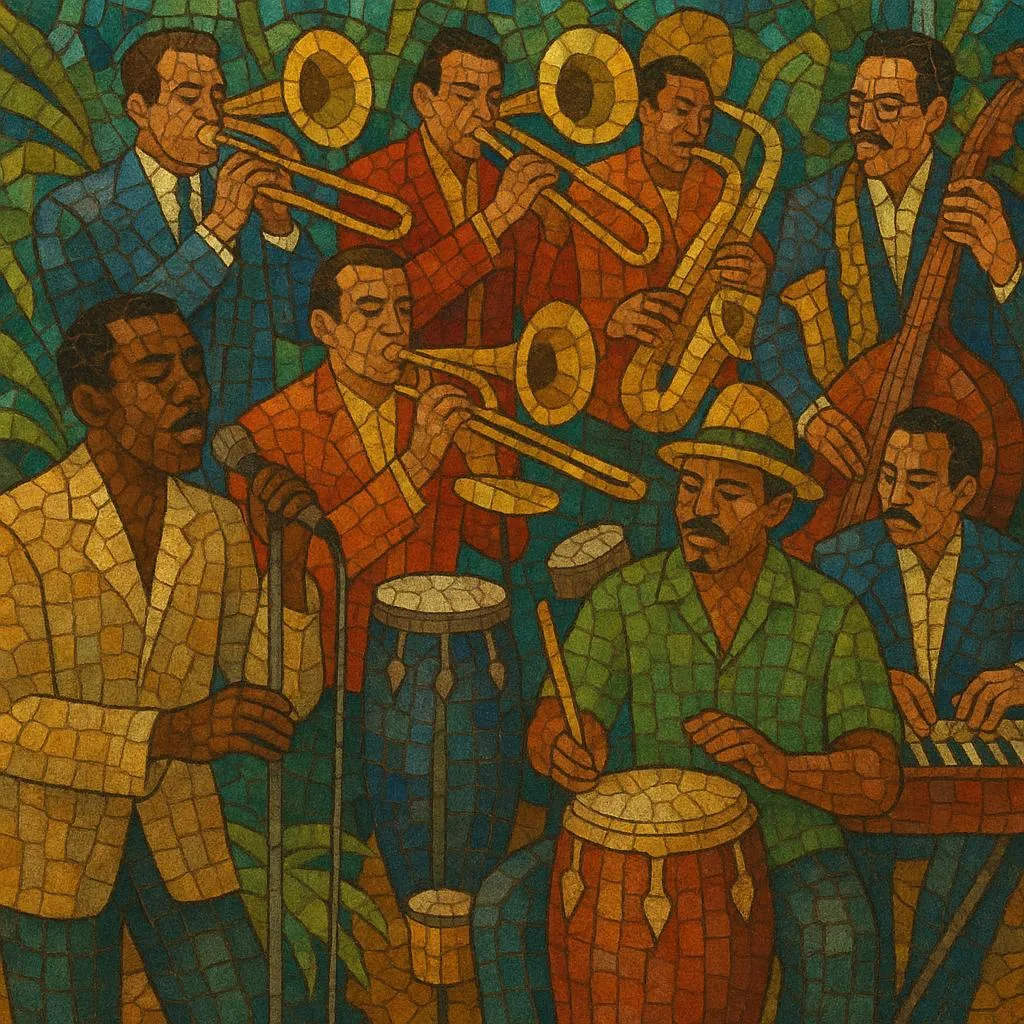
Built like a Latin big band, a typical orquesta tropical features sections of trumpets, trombones, and saxophones supported by piano, bass, and a Cuban percussion battery (congas, bongó, timbales, güiro, cowbell), plus lead singer and coro (backing vocals). The hallmark sound blends tight brass mambos and moñas (short interlocking riffs) with piano montunos, tumbao bass lines, and a 2–3 or 3–2 clave foundation.
While the repertoire spans the Caribbean and northern South America, the ensemble concept crystallized in mid‑century Cuba and New York, where Afro‑Cuban dance music met big‑band arranging. The result is an exuberant, dance‑floor oriented format equally at home in elegant boleros and high‑energy salsas.
History
The orquesta tropical grew out of Cuba’s early 20th‑century dance ensembles—charangas (flute and violins), orquestas típicas, and son conjuntos—at the very moment Afro‑Cuban rhythms encountered big‑band jazz instrumentation. In Havana and then in New York, arrangers adapted brass and saxophone sections to Cuban rhythms, codifying practices such as sectional mambos, call‑and‑response coros, montuno vamps, and shout choruses.
By the mambo era, leaders like Machito, Tito Puente, Tito Rodríguez, Beny Moré, and Cuban orquestas (e.g., Aragón, Riverside) popularized the format across the Americas. The term “tropical” in record catalogs signaled a broad dance repertoire—son, guaracha, bolero—delivered by a full orchestra with tightly voiced brass and sophisticated arrangements anchored to the clave.
The orquesta concept spread to Puerto Rico, the Dominican Republic, Colombia, and Venezuela, where local bands applied the same instrumentation and arranging language to merengue, cumbia, porro, and later salsa. Colombian and Puerto Rican orquestas in particular helped establish salsa’s international profile, while Dominican orquestas drove the modernization of merengue.
Contemporary salsa, timba, and big‑band merengue still rely on the orquesta tropical toolkit: horn mambos and moñas, coro–pregón, layered percussion, and clave logic. Modern groups incorporate expanded harmony, funk/rock timbres, and studio production, but the core dance‑oriented ethos and orchestral call‑and‑response remain central.
Choose 2–3 or 3–2 clave and keep every pattern aligned to it.
•Typical feels:
•Son/salsa: 90–120 BPM with tumbao on the “and” of 2 and 4; piano guajeos outline chord tones and guidehorn hits.
•Merengue orquesta: faster (120–180 BPM), with güira taking the subdivision and tambora‑style accents emulated by timbales/congas if no tambora is present.
•Cumbia orquesta: moderate (90–110 BPM); güiro drives the pulse, bass emphasizes roots/5ths with anticipations.