Your digging level
Description
Música tlaxcalteca is a regional popular-music scene from Tlaxcala, Mexico built around large dance orchestras (orquestas modernas) and brass wind bands (bandas de viento). These ensembles play lively repertoires for fiestas, ferias, patron-saint celebrations, weddings, quinceañeras, and carnival (huehues), mixing Colombian-style cumbia, Cuban salsa and danzón, Dominican merengue, and Mexican ranchera and balada aesthetics.
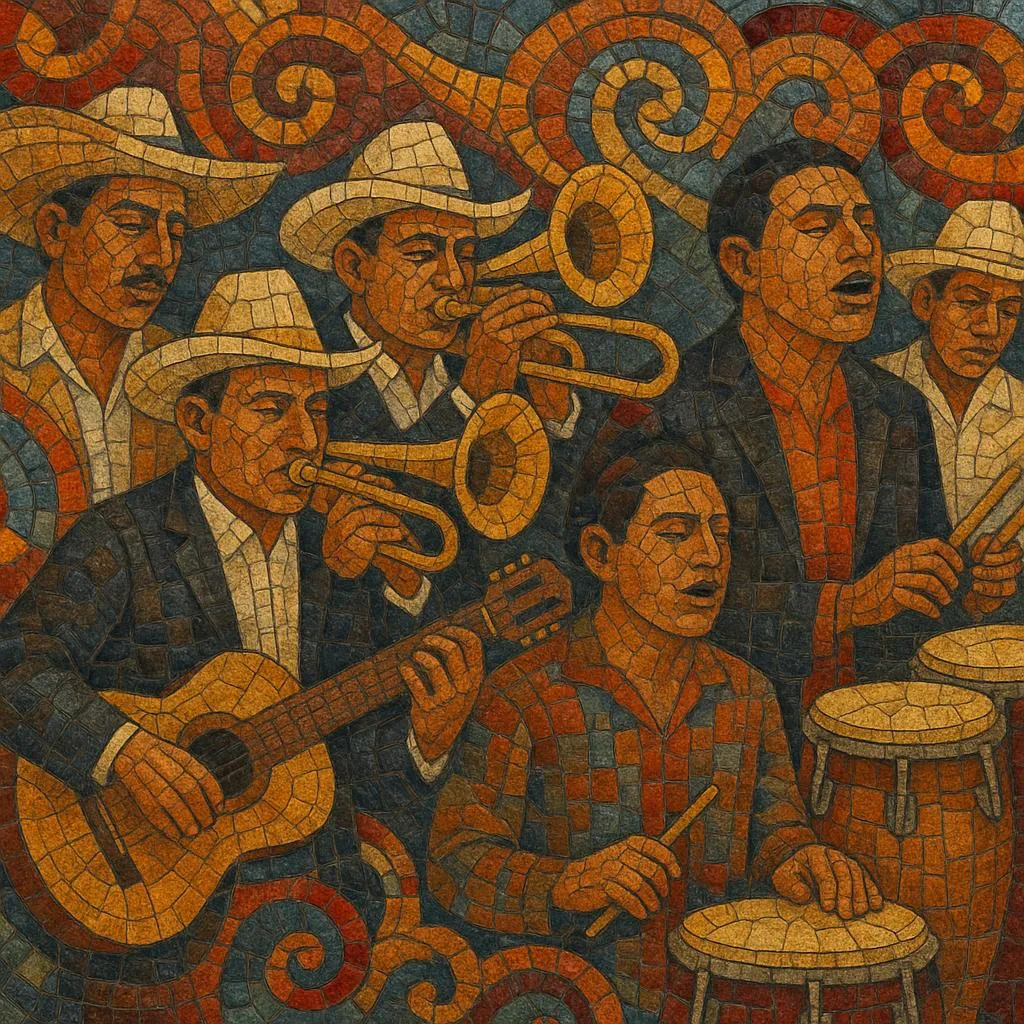
Arrangements typically feature trumpets, trombones, and saxophones in close voicings, supported by rhythm sections with drum set, congas, timbales, güiro, cowbell, electric bass, guitar, and keyboards. Vocals often alternate between a lead singer and responsive coros (call-and-response), with brass mambos and moñas punctuating the groove. While primarily dance-oriented and upbeat, the scene also embraces romantic ballads and nostalgic standards adapted to the orquesta format.


History
Wind bands flourished throughout central Mexico as civic and church ensembles, military bands, and community bandas de viento. In Tlaxcala, these groups provided music for religious processions, plazas, and early carnival dances, incorporating European social-dance forms (polka, redova, schottische) alongside Mexican and Afro-Caribbean rhythms that arrived via radio, records, and touring orchestras.
Postwar broadcasting brought Cuban danzón and mambo, then salsa, and Colombian cumbia into central Mexico’s dance halls. Tlaxcalan musicians adapted these into local parties, gradually expanding instrumentation (saxes, trumpets, trombones, piano/organ, electric bass, Latin percussion). By the 1970s, “orquestas modernas” dedicated to tropical dance repertoires had consolidated in cities like Apizaco and Huamantla, becoming fixtures at town ferias and private events.
Ensembles professionalized their sound systems, repertoires, and stagecraft, mixing salsa brava and romántica, cumbia (including Mexican arrangements of Colombian and costeño hits), merengue, bolero, and Mexican balada/ranchera. Brass sections took on a signature, bright Tlaxcalan punch, while percussionists hybridized cumbia and salsa feels to suit local dancers. Parallel to the orquestas, village and municipal bandas de viento continued to anchor carnival (huehues) and religious festivities.
With inexpensive recording tools and social media, many groups released live and studio videos, increased regional touring, and refreshed repertoires with contemporary Latin pop and regional Mexican crossovers. The genre remains a living dance music for communal celebration, while carnival traditions preserve older European-influenced forms alongside tropical standards.



Best playlists