Your digging level
Description
Gaita is the Iberian bagpipe tradition of north‑western Spain, most strongly identified with Galicia and Asturias. The term refers both to the conical‑bore, reed‑driven bagpipe itself and to the instrumental folk style built around it.
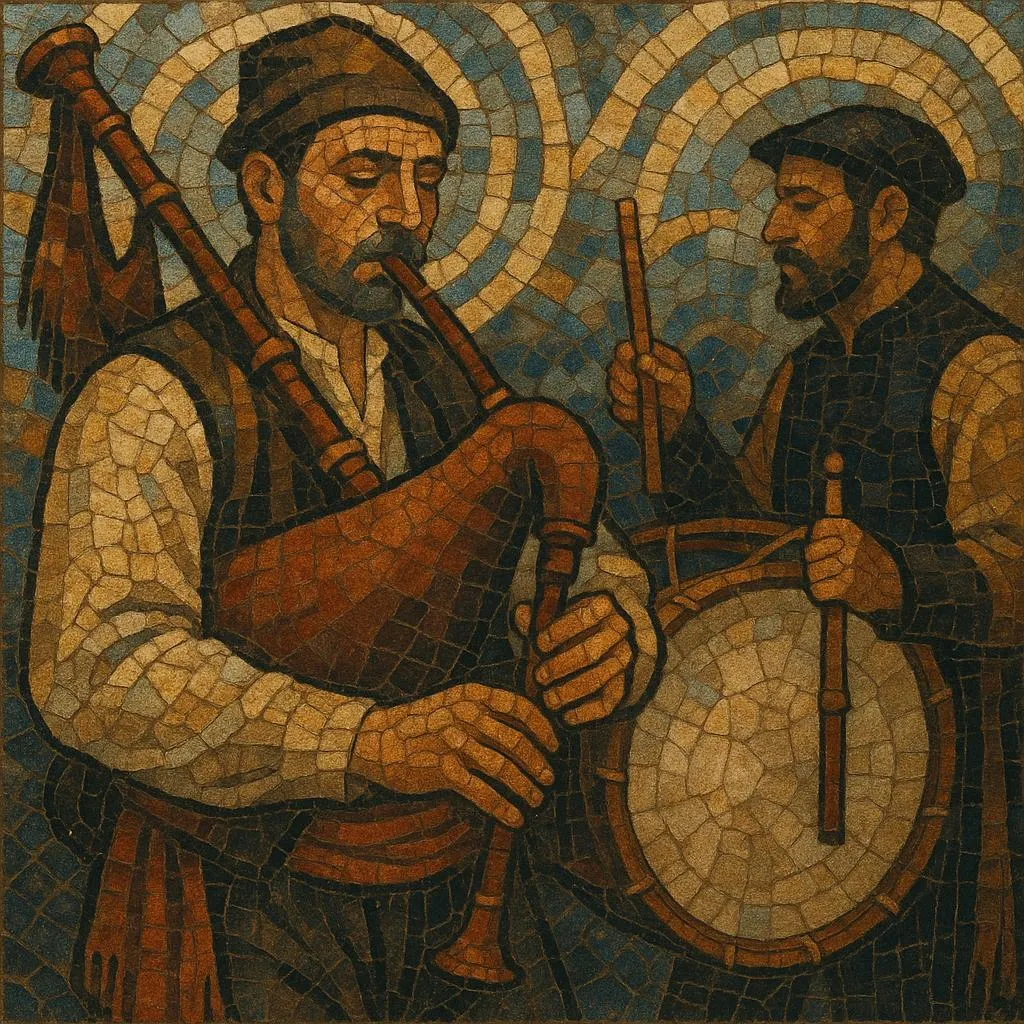
The gaita’s hallmark sound is a penetrating chanter supported by one or more drones, typically tuned to a tonic (often D or C) that creates a constant tonal bed. Repertoire includes dance forms (muiñeiras in 6/8, jotas and pasodobles in duple time), ceremonial marches, alboradas (morning fanfares), and laments. Performance ranges from solo piping to trios (gaita, side drum/tambor, and bass drum/bombo) and large pipe bands. In Galicia the “gaita galega” dominates; in Asturias the “gaita asturiana” features a slightly different scale, range, and ornamentation.
Modern gaita culture retains deep village and festival roots while also intersecting with broader Celtic networks. Since the late 20th century it has expanded into concert stages and fusion contexts, appearing alongside hurdy‑gurdy (zanfona), frame drums and pandeireta, requinta (small transverse flute), folk strings, and occasionally modern rhythm sections.
History
Documentary and iconographic evidence of bagpipes in Galicia and Asturias dates back to the High Middle Ages. The gaita was used in processions, civic ceremonies, and village festivities, functioning as a portable loud instrument suitable for outdoor dance and ritual.
By the 1700s–1800s, regional styles and tunings crystallized. Village pipers (gaiteiros/gaiteiras) maintained repertoires of muiñeiras, alboradas, and marches for romarías (pilgrimages) and seasonal cycles. Notation and early collections began to appear, while instrument makers standardized construction and drone configurations.
Urbanization and the rise of mass entertainment reduced rural demand, but key tradition bearers, luthiers, and folklorists kept techniques and tunes alive. Local festivals, municipal bands, and competitions provided continuity, even as many communities experienced emigration.
From the late 1970s onward, a vigorous folk revival reinvigorated gaita playing. Pipe bands proliferated, youth instruction expanded, and new makers introduced improved intonation and extended‑range chanters. The gaita entered the broader “Celtic” circuit, sharing stages with Irish, Scottish, and Breton musicians and appearing on international tours and recordings.
Today, gaita thrives in village contexts and professional ensembles alike. Players integrate hurdy‑gurdy, requinta, and percussion batteries, and some explore amplified or chromatic instruments. Contemporary composers adapt dance meters for concert pieces, while fusion projects connect gaita to rock, jazz, and cinematic folk.