Genres
Artists
Albums
Make Music
Sign in
Sign in
Artists
Hauntology
Artists
Hauntology
The Caretaker
2023–2024
·
13 albums
Listen
3
/5
Genres
Analog Horror
Analog horror is an internet-born horror style that foregrounds the texture and limits of obsolete media. It is characterized by lo‑fi, band‑limited sound, tape hiss, wow and flutter, and the sonic vocabulary of public‑access TV, VHS cassettes, emergency broadcast signals, and numbers stations. In narrative terms, it tends toward cryptic, surreal plots presented as faux archival broadcasts, training films, or interrupted transmissions. Musically, the idiom leans on drones, minimal motifs, degraded samples, and detuned analog synths, using period‑authentic processing to evoke dread, nostalgia, and the uncanny.
Discover
Listen
Aussie Drill
Aussie drill is the Australian take on drill rap, fusing the dark, minor‑key production and sliding 808s of UK drill with local slang, Pacific Islander and Western Sydney street culture, and distinctly Australian accents. Typical tracks sit around 135–145 BPM, with syncopated hi‑hats, counter‑snares, and gliding 808 basslines beneath ominous piano, string, or choral stabs. Vocals are baritone‑leaning, aggressive, and often chanted by crews, with call‑and‑response ad‑libs and postcode shout‑outs that emphasize group identity and territorial pride. Lyrically, the style centers on loyalty, everyday struggles, rivalry, and social realities, but also includes aspirational and reflective moments. The sound rose quickly via YouTube and streaming platforms in the late 2010s, turning local crews into national talking points while drawing scrutiny from authorities and mainstream media.
Discover
Listen
Digital Horror
Digital horror is a contemporary horror aesthetic that focuses on dread emerging from networked technologies, software, and always‑on media. Narratives and sound worlds revolve around screens, social platforms, livestreams, malware, deepfakes, and the uncanny presence of algorithmic systems. In music and sound design, the style translates this fear of the digital into glitching textures, corrupted audio artifacts, synthetic drones, and the weaponization of familiar interface sounds (alerts, keyboards, notification pings). It often blends dark ambient, industrial noise, and hauntological sampling to suggest threats that live inside code, clouds, and data centers—consistent with the wider definition that emphasizes anxiety and supernatural menace arising from the Internet and modern media.
Discover
Listen
Liminal Space
Liminal space is an internet-borne microgenre/aesthetic of ambient and vaporwave-adjacent music that aims to evoke the uncanny feeling of being in empty transitional places—deserted school corridors, unlit parking structures, late-night office lobbies, or closed shopping malls. Sonically, it blends hushed drones, diffuse synth pads, tape hiss, and faraway environmental noises with fragments of public-address announcements or detuned muzak. The harmonic language is static, unresolved, and memory-like, with slow fades, extreme reverberation, and time-stretching that flatten the sense of motion. The result is a dreamlike, nostalgic, and often eerie atmosphere that feels suspended between past and present, presence and absence.
Discover
Listen
New Isolationism
New isolationism is a contemporary strain of isolationist ambient and post-industrial minimalism that emerged in the 2010s, particularly around Scandinavian experimental labels and studios. It foregrounds intimate, close-mic’d sound, negative space, and a quiet-but-present noise floor; its pieces feel both internal and architectural, like rooms built from reverb tails, tape hiss, and soft electronics. Sonically, the style blends glacial drones, fragile chamber timbres (strings, organ, piano), lo‑fi electronics, and field recordings into stark, slow-evolving tableaux. Melodic information is sparse—often only a few tones or gestures—while rhythm is either absent or reduced to distant pulses, heartbeats, or mechanical cycles. Vocals, when they appear, are murmured, diaristic, or abstracted by pitch and time manipulation. Aesthetically, new isolationism is post‑internet and diaristic: it captures solitude, memory, and dislocation with a palette that feels personal yet estranged, drawing as much from contemporary gallery sound practice as from classic dark ambient.
Discover
Listen
Weirdcore
Weirdcore is an internet-native microgenre and aesthetic of experimental electronic music that leans into liminal nostalgia, eerie memory, and uncanny ambience. Its sound palette often combines misty pads, degraded samples, tape hiss, and bitcrushed percussion with disembodied voices, classroom and mall PA announcements, retro operating system chimes, and field recordings of empty or transitional spaces. Harmonically, weirdcore favors drones, slowly shifting modal clusters, and ambiguous, memory-warping intervals that feel familiar yet distorted. Rhythm ranges from beatless, foggy soundscapes to brittle, broken 2-step and slow, stumbling downtempo pulses. Heavy time-stretching, granular manipulation, wow-and-flutter, convolution reverbs, and spectral or cassette-style degradation are central to its texture. Although closely tied to a visual aesthetic (liminal spaces, late-night analog glow, low-resolution signage), weirdcore as a musical style is defined by its uncanny collage sensibility: sampling and warping everyday audio detritus until it becomes emotionally charged, melancholic, and faintly unsettling.
Discover
Listen
Meme
Meme is an internet-native umbrella genre for songs and audio clips that are created for, shaped by, or propelled through online meme culture. It blends humor, parody, and fast-turnaround production with infectious hooks designed to spread rapidly across platforms. Stylistically, meme music is eclectic. It can be rap, pop, EDM, rock, or mashup-driven collage; the common thread is comedic framing, referential lyrics, exaggerated vocal processing, and recognizable samples that cue shared online in-jokes. Tracks often favor short runtimes, bold punchlines, and instantly loopable sections optimized for social media. Because it thrives on virality rather than a fixed instrumentation set, meme functions as a meta-genre. It borrows techniques from mashup culture, YTPMV, soundclown, nightcore, and novelty/comedy traditions, while using platform-specific aesthetics from YouTube, SoundCloud, Vine, and TikTok.
Discover
Listen
Lo Star
Lo star is a streaming-era umbrella tag used to group under-the-radar, low-profile artists who sit on the fringes of indie, alternative, DIY pop, and related scenes. Rather than denoting a single, tightly defined musical vocabulary, it marks a discovery space of self-produced or small-label projects with modest audiences, genre-fluid aesthetics, and a distinctly DIY approach to recording and release. Expect intimate vocals, inexpensive or home-studio production, hybrid acoustic/electronic textures, and songwriting that favors personal storytelling and immediacy over polish. Because it functions as a curatorial category for emerging or niche acts, the sonic palette spans indie rock and folk-pop to bedroom pop and lo-fi electronic, unified by scale, ethos, and distribution more than by strict musical rules.
Discover
Listen
Hauntology
Hauntology is a retro-futurist strain of experimental electronic music that evokes the "ghosts" of lost cultural futures. Emerging in the United Kingdom in the mid‑2000s, it draws on half-remembered media—library music, public information films, children’s TV idents, and Radiophonic textures—to produce an atmosphere of eerie nostalgia and cultural memory. Sonically, the style favors degraded media and analogue patina: vinyl crackle, tape hiss, wow and flutter, and dusty archival samples. It often pairs subdued drones and detuned synths with looped fragments, sparse percussion, and unresolved harmonies to create a feeling that is at once comforting and unsettling. The term originates in Jacques Derrida’s philosophy and was popularized in a musical context by critics such as Mark Fisher and Simon Reynolds. In music, it names both a sound palette and a way of listening that foregrounds memory, media archaeology, and the uncanny persistence of the past within the present.
Discover
Listen
Glitch
Glitch is an experimental electronic music genre that foregrounds the sounds of technological error—digital clicks, pops, clipping, buffer underruns, CD skipping, software crashes, and bit‑reduction. Rather than hiding artifacts, producers use them as primary musical material, often arranged through extreme micro‑editing and non‑linear sequencing. Texturally, glitch spans austere minimalism to warm, hazy ambience. Rhythms tend to be fragmented and asymmetrical, with sudden cuts, stutters, and silences that create tension and negative space. The palette commonly includes sine‑tone grains, granular clouds, filtered noise, and hyper‑detailed percussive fragments, sometimes sitting over subdued drones or dub‑inflected low end. The style emerged in the late 1990s around labels such as Mille Plateaux, influenced by IDM, minimal techno, and the aesthetics of failure in digital media. It later permeated pop and beat‑driven styles through sound‑design techniques that evoke imperfection and transience.
Discover
Listen
Dark Ambient
Dark ambient is a post‑industrial subgenre that coalesced in the mid‑1980s, drawing primarily on ambient music but shifting its focus toward ominous, subterranean space and timbre. It is characterized by long, low‑frequency drones; dissonant or microtonal overtones; and an enveloping, gloomy or catacomb‑like atmosphere. While largely electronic (synthesizers, samplers, tape and digital processing), artists frequently incorporate field recordings, contact‑mic textures, bowed metal, gongs, and fragments of traditional instruments captured with semi‑acoustic techniques and then heavily processed. Melody and pulse are minimized; instead the music emphasizes immersive sound design, psychoacoustic detail, and slowly evolving textures that evoke dread, awe, and isolation.
Discover
Listen
Post-Industrial
Post-industrial is an umbrella term for the diverse musical currents that evolved out of first‑wave industrial music in the early 1980s. Rather than a single sound, it describes a methodology: the recontextualization of noise, tape collage, found sound, non‑traditional percussion, and transgressive or esoteric themes into new hybrids. It commonly emphasizes textural experimentation over conventional song form, drawing on ambient drones, harsh electronics, ritualistic rhythms, and performance-art strategies. The scene grew through DIY cassette culture, mail‑art networks, and small independent labels, fostering substyles like power electronics, dark ambient, neofolk, martial industrial, and illbient. Aesthetically, post‑industrial retains industrial’s confrontational stance but disperses it into atmospheric, political, mystical, and avant‑garde directions, making it as much a way of working with sound and media as a genre label.
Discover
Listen
Ambient
Ambient is a form of electronic and electroacoustic music that prioritizes tone, atmosphere, and texture over conventional song structures and rhythmic drive. It typically features slow-moving harmonies, sustained drones, gentle timbral shifts, and extensive use of space and silence. Rather than drawing attention to itself through hooks or beats, ambient is designed to be as ignorable as it is interesting, rewarding both background listening and focused immersion. Artists often employ synthesizers, samplers, tape loops, field recordings, and subtle acoustic instruments, with reverb and delay creating a sense of place. Substyles range from luminous, consonant soundscapes to darker, more dissonant atmospheres.
Discover
Listen
Industrial & Noise
Industrial & noise is an umbrella for abrasive, experimental music that foregrounds distortion, mechanical rhythm, feedback, and non-musical sound sources. It merges the harsh timbral explorations of noise with the confrontational, machine-driven aesthetics of industrial. Artists typically use found objects, scrap metal, feedback systems, tape manipulation, and heavily processed electronics alongside drum machines and synthesizers. The style ranges from arrhythmic walls of sound to regimented, factory-like beats, often eschewing conventional harmony in favor of texture, density, and psychoacoustic impact. Thematically, it is frequently transgressive and confrontational—exploring dehumanization, technology, power structures, and catharsis—while performance practice can be theatrical, ritualistic, and intensely physical.
Discover
Listen
Noise
Noise is an experimental music genre that uses non-traditional sound sources, distortion, feedback, and extreme dynamics as primary musical materials. Instead of emphasizing melody, harmony, or conventional rhythm, it focuses on texture, density, timbre, and the physical presence of sound. Practitioners sculpt saturated walls of sound, piercing feedback, metallic clatter, contact-mic scrapes, tape hiss, and electronic interference into works that can be confrontational or meditative. Performances often highlight process and immediacy—improvisation, body movement, and site-specific acoustics—while recordings can range from lo-fi cassette overload to meticulously layered studio constructions. Though rooted in early avant-garde ideas, the genre coalesced as a distinct practice in the late 1970s and 1980s, especially through Japan’s ‘Japanoise’ scene, and subsequently influenced numerous styles across industrial, punk-adjacent, and experimental electronic music.
Discover
Listen
Turntablism
Turntablism is the art of using turntables and a DJ mixer as expressive musical instruments, rather than merely devices to play records. Practitioners manipulate vinyl (or digital vinyl systems) to create new rhythms, textures, and melodies through techniques such as scratching, beat juggling, cutting, and tone play. Rooted in the earliest hip hop DJ practices, turntablism elevates the DJ to a performer-composer who constructs real-time collages from breakbeats, snippets, tones, and vocal cuts. The genre values manual dexterity, rhythmic precision, improvisation, and showmanship, and it thrives both in live battle formats and in studio-produced routines and compositions.
Discover
Listen
Drone
Drone is a minimalist music genre defined by sustained tones, long durations, and extremely gradual change. Harmony is often static or centered on a single fundamental with subtle overtone shifts, while rhythm tends toward stasis or very slow pulses. Sound sources range from acoustic instruments (e.g., strings, organ, bagpipes, shruti box, tambura) to electronics (sine waves, oscillators, feedback, tape loops, and later digital synthesis and processing). Many composers favor just intonation or other alternative tuning systems to emphasize beating patterns, psychoacoustic effects, and the internal life of sound. Although drone as a sonic principle is ancient and global, the modern experimental genre cohered in the 1960s through the New York minimalists and related avant‑garde circles, then spread into ambient, experimental, and heavy music scenes. The focus is less on melody and more on timbre, resonance, and the phenomenology of listening.
Discover
Listen
Experimental
Experimental music is an umbrella term for practices that prioritize exploration, process, and discovery over adherence to established genre norms. It embraces new sound sources, nonstandard tuning systems, indeterminacy and chance operations, graphic and open-form scores, extended techniques, and technology-led sound design (tape, electronics, computers, and live processing). Rather than a single style, it is a methodology and ethos: testing hypotheses about sound, structure, and performance, often blurring boundaries between composition, improvisation, sound art, and performance art. Listeners can expect unfamiliar timbres, unusual forms, and an emphasis on how music is made as much as the resulting sound.
Discover
Listen
Sound Collage
Sound collage is a practice and genre that assembles disparate recorded sounds—speech, field recordings, musical fragments, noise, and media detritus—into a new, cohesive work. It treats recorded sound as raw material to be cut, layered, looped, juxtaposed, and transformed, often privileging texture, timbre, and context over conventional melody and harmony. Emerging from mid‑century tape and electroacoustic experiments, sound collage spans avant‑garde, popular, and club contexts, ranging from radical tape splices to sample‑dense pop and hip‑hop. Because it recontextualizes existing audio, it can be narrative, political, archival, or purely abstract—oscillating between documentary and dreamlike mosaic.
Discover
Listen
Electronic
Electronic is a broad umbrella genre defined by the primary use of electronically generated or electronically processed sound. It encompasses music made with synthesizers, drum machines, samplers, computers, and studio/tape techniques, as well as electroacoustic manipulation of recorded or synthetic sources. The genre ranges from academic and experimental traditions to popular and dance-oriented forms. While its sonic palette is rooted in electricity and circuitry, its aesthetics span minimal and textural explorations, structured song forms, and beat-driven club permutations. Electronic emphasizes sound design, timbre, and studio-as-instrument practices as much as melody and harmony.
Discover
Listen
Classical
Classical music is the notated art-music tradition of Europe and its global descendants, characterized by durable forms, carefully codified harmony and counterpoint, and a literate score-based practice. The term “classical” can refer broadly to the entire Western art-music lineage from the Medieval era to today, not just the Classical period (c. 1750s–1820s). It privileges long-form structures (such as symphonies, sonatas, concertos, masses, and operas), functional or modal harmony, thematic development, and timbral nuance across ensembles ranging from solo instruments to full orchestras and choirs. Across centuries, the style evolved from chant and modal polyphony to tonal harmony, and later to post-tonal idioms, while maintaining a shared emphasis on written notation, performance practice, and craft.
Discover
Listen
Show all 21 genres
Albums
2024
3
/5
Persistent Repetition of Phrases
The Caretaker
Hauntology
Dark Ambient
Electronic
2024
3
/5
Everywhere, an Empty Bliss
The Caretaker
Hauntology
Ambient
Electronic
2024
4
/5
An Empty Bliss Beyond This World
The Caretaker
Hauntology
Dark Ambient
Electronic
2023
2
/5
Everywhere at the End of Time: Stage 5
The Caretaker
Hauntology
Glitch
Ambient
2023
3
/5
Everywhere at the End of Time: Stage 2
The Caretaker
Hauntology
Ambient
Classical
2023
4
/5
Everywhere at the End of Time: Stage 1
The Caretaker
Hauntology
Ambient
Classical
2023
3
/5
Everywhere at the End of Time: Stage 3
The Caretaker
Hauntology
Ambient
Electronic
2023
2
/5
Everywhere at the End of Time: Stage 6
The Caretaker
Dark Ambient
Hauntology
Sound Collage
2023
2
/5
Everywhere at the End of Time: Stage 4
The Caretaker
Hauntology
Dark Ambient
Sound Collage
Take Care. It's a Desert Out There...
The Caretaker
Hauntology
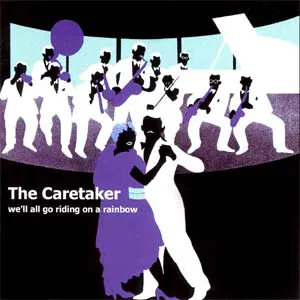
We'll All Go Riding on a Rainbow
The Caretaker
Hauntology
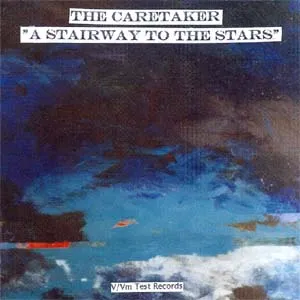
A Stairway to the Stars
The Caretaker
Hauntology
A Stairway to the Stars
The Caretaker
Dark Ambient
Similar artists
3
/5
William Basinski
Tape Music
Ambient
Sound Art
1
/5
Philip Jeck
Experimental
Ambient
Lowercase
2
/5
The Haxan Cloak
Dark Ambient
Experimental
Ambient
3
/5
Oneohtrix Point Never
Hauntology
Plunderphonics
Ambient
2
/5
Robert Rich
Ambient
Tribal Ambient
Electronic
1
/5
Various Artists
Afro-Funk
Alternative Rock
Ambient
2
/5
Laurel Halo
Hauntology
Ambient
Experimental
3
/5
Tim Hecker
Ambient
Drone
Experimental
2
/5
Steve Roach
Ambient
Electronic
Space Ambient
2
/5
Vladislav Delay
Ambient
Glitch
Dub Techno
Download our mobile app
Get the Melodigging app and start digging for new genres on the go
Download on the App Store
Get it on Google Play
© 2026 Melodigging
Give feedback
Legal
Melodding was created as a tribute to
Every Noise at Once
, which inspired us to help curious minds keep digging into music's ever-evolving genres.