Genres
Artists
Albums
Make Music
Sign in
Sign in
Artists
Tape Music
Artists
Tape Music
William Basinski
2001–2024
·
24 albums
Listen
3
/5
Genres
Barber Beats
Barber beats is a vaporwave-adjacent microgenre characterized by slowed, loop-based instrumentals built from lounge, smooth jazz, and easy-listening samples. Producers emphasize a soft, cushiony drum groove, heavy time-stretching, subtle pitch shifting, and warm, dusty textures that evoke waiting rooms, lobbies, and late‑night cable atmospheres. Typical tracks sit around 85–105 BPM, lean on mellow chords, brushed snares or gentle drum-machine kits, and favor tasteful filtering, vinyl crackle, and roomy reverb. The result is hypnotic, low-stakes background music that feels both nostalgic and liminal—less overtly ironic than classic vaporwave, yet still rooted in sample-based moodcraft and retro corporate aesthetics.
Discover
Listen
Warm Drone
Warm drone is a microstyle of ambient/drone music that emphasizes soft, consonant, and enveloping sustained tones with a distinctly warm timbral character. Instead of the bleak or industrial textures often associated with classic drone, warm drone favors analog synth pads, bowed or layered guitars, organs and harmoniums, tape saturation, gentle hiss, and low‑noise field recordings. Harmonic movement is sparse and slow; micro-modulations, overtones, and gradual filtering provide the sense of motion rather than rhythm or melody. The result is an intimate, comforting soundfield that feels close, humane, and tactile—ideal for rest, reading, reflection, or late-night listening. It overlaps with modern sleep/meditation ambient but remains compositionally attentive to tone color, acoustic space, and long-form development.
Discover
Listen
New Isolationism
New isolationism is a contemporary strain of isolationist ambient and post-industrial minimalism that emerged in the 2010s, particularly around Scandinavian experimental labels and studios. It foregrounds intimate, close-mic’d sound, negative space, and a quiet-but-present noise floor; its pieces feel both internal and architectural, like rooms built from reverb tails, tape hiss, and soft electronics. Sonically, the style blends glacial drones, fragile chamber timbres (strings, organ, piano), lo‑fi electronics, and field recordings into stark, slow-evolving tableaux. Melodic information is sparse—often only a few tones or gestures—while rhythm is either absent or reduced to distant pulses, heartbeats, or mechanical cycles. Vocals, when they appear, are murmured, diaristic, or abstracted by pitch and time manipulation. Aesthetically, new isolationism is post‑internet and diaristic: it captures solitude, memory, and dislocation with a palette that feels personal yet estranged, drawing as much from contemporary gallery sound practice as from classic dark ambient.
Discover
Listen
Organic Ambient
Organic ambient is a strain of ambient music that emphasizes natural, acoustic, and tactile timbres over purely synthetic ones. Its sound world is built from softly mic’d pianos and guitars, mallet percussion, strings, voice layers, and environmental field recordings (wind, water, birds, room tone), then gently processed with spacious reverbs, tape warmth, and subtle granular or delay treatments. Compared with classic electronic ambient, the adjective “organic” points to breath, touch, and the audible presence of rooms and spaces: creaking pedals, bow noise, finger sounds on strings, and a bed of environmental sound. Harmony tends toward consonant, slowly evolving chords; rhythm is minimal or absent; and dynamics are restrained, inviting calm, contemplation, and connection with place.
Discover
Listen
Broken Transmission
Broken transmission is a vaporwave-adjacent microgenre built from fragmented, channel-surfing collages of analog broadcast ephemera. Producers splice together tiny shards of TV idents, news stingers, commercials, interstitial music, and dead air, emphasizing tape hiss, static, dropouts, and tuning noise as musical material. Often beatless or only loosely pulsed, tracks unfold like late-night flipping through channels: abrupt cuts, fleeting jingles, station sign‑offs, and half-heard voiceovers that dissolve into snow. The result is a liminal, hauntological mood—nostalgia filtered through the mechanical errors and material decay of VHS, cable boxes, and broadcast tape. Where classic vaporwave slows and loops pop smoothness, broken transmission foregrounds the texture of the medium itself. It treats errors, transitions, and broadcast artifacts as hooks, creating an uncanny documentary of mediated memory.
Discover
Listen
Hauntology
Hauntology is a retro-futurist strain of experimental electronic music that evokes the "ghosts" of lost cultural futures. Emerging in the United Kingdom in the mid‑2000s, it draws on half-remembered media—library music, public information films, children’s TV idents, and Radiophonic textures—to produce an atmosphere of eerie nostalgia and cultural memory. Sonically, the style favors degraded media and analogue patina: vinyl crackle, tape hiss, wow and flutter, and dusty archival samples. It often pairs subdued drones and detuned synths with looped fragments, sparse percussion, and unresolved harmonies to create a feeling that is at once comforting and unsettling. The term originates in Jacques Derrida’s philosophy and was popularized in a musical context by critics such as Mark Fisher and Simon Reynolds. In music, it names both a sound palette and a way of listening that foregrounds memory, media archaeology, and the uncanny persistence of the past within the present.
Discover
Listen
Modern Classical
Modern classical is a contemporary strand of instrumental music that applies classical composition techniques to intimate, cinematic settings. It typically foregrounds piano and strings, is sparsely orchestrated, and embraces ambience, repetition, and timbral detail. Rather than the academic modernism of the early 20th century, modern classical as used today refers to accessible, mood-driven works that sit between classical, ambient, and film music. Felt pianos, close‑miked string quartets, tape hiss, drones, soft electronics, and minimal harmonic movement are common, producing a contemplative, emotionally direct sound that translates well to headphones, streaming playlists, and screen media.
Discover
Listen
Data Sonification
Data sonification is a practice and genre in which numerical or categorical datasets are mapped to sound so that patterns in the data are perceived as musical structure. It differs from simple parameter automation by letting the data itself determine pitch, rhythm, dynamics, timbre, and spatial behavior through clearly defined mappings. Works range from direct audification of scientific signals (e.g., seismic or astronomical measurements) to carefully designed parameter mappings and model-based approaches that translate complex, multivariate datasets into layered sonic textures. Because it sits at the intersection of art, science, and design, data sonification is used both for aesthetic expression and for communicating or revealing structure in data that might be hard to see visually.
Discover
Listen
Dark Ambient
Dark ambient is a post‑industrial subgenre that coalesced in the mid‑1980s, drawing primarily on ambient music but shifting its focus toward ominous, subterranean space and timbre. It is characterized by long, low‑frequency drones; dissonant or microtonal overtones; and an enveloping, gloomy or catacomb‑like atmosphere. While largely electronic (synthesizers, samplers, tape and digital processing), artists frequently incorporate field recordings, contact‑mic textures, bowed metal, gongs, and fragments of traditional instruments captured with semi‑acoustic techniques and then heavily processed. Melody and pulse are minimized; instead the music emphasizes immersive sound design, psychoacoustic detail, and slowly evolving textures that evoke dread, awe, and isolation.
Discover
Listen
Ambient
Ambient is a form of electronic and electroacoustic music that prioritizes tone, atmosphere, and texture over conventional song structures and rhythmic drive. It typically features slow-moving harmonies, sustained drones, gentle timbral shifts, and extensive use of space and silence. Rather than drawing attention to itself through hooks or beats, ambient is designed to be as ignorable as it is interesting, rewarding both background listening and focused immersion. Artists often employ synthesizers, samplers, tape loops, field recordings, and subtle acoustic instruments, with reverb and delay creating a sense of place. Substyles range from luminous, consonant soundscapes to darker, more dissonant atmospheres.
Discover
Listen
Sound Art
Sound art is an interdisciplinary practice that treats sound itself as the primary artistic material, often prioritizing listening, space, and context over conventional musical form. It commonly appears as installations, sculptures, site‑specific works, and conceptual pieces presented in galleries, museums, and public spaces rather than on a traditional stage. Rather than focusing on melody, harmony, or beat, sound art emphasizes timbre, texture, perception, and spatialization. Works may use field recordings, environmental sound, feedback, room acoustics, silence, psychoacoustic phenomena, or generative and interactive systems. The listener’s movement, the architecture, and the social environment frequently become integral to the piece, encouraging attentive, situation‑based listening.
Discover
Listen
Space Music
Space music is an ambient-leaning form of electronic and acoustic soundscaping designed to evoke vastness, weightlessness, and the mystery of the cosmos. It favors long, slowly evolving textures, deep drones, and luminous harmonies over conventional song structure, rhythm, or melody. The style grew around sustained synthesizer pads, sequencer patterns, and expansive reverberation, often integrating field recordings or processed acoustic instruments. Whether contemplative or awe‑struck, its intent is to transport the listener into a spacious, imaginal soundfield—akin to drifting through celestial environments and deep time.
Discover
Listen
Minimalism
Minimalism is a style of Western art music that emerged in the United States during the 1960s, characterized by the use of very limited musical materials, steady pulse, and extensive repetition. Composers often build pieces from short cells or motifs that are repeated and slowly transformed through additive or subtractive processes, phase shifting, and gradual changes in harmony, texture, or register. Harmony is typically consonant (often modal or diatonic), though just intonation and extended drones are also common. The result is music that foregrounds process, clarity, audibility of structure, and a hypnotic sense of stasis and flow. Typical ensembles include keyboards, mallet percussion, strings, winds, voices, and electronics or tape. Minimalism influenced a wide array of later styles, from ambient and new age to post-minimalism and minimal techno.
Discover
Listen
Drone
Drone is a minimalist music genre defined by sustained tones, long durations, and extremely gradual change. Harmony is often static or centered on a single fundamental with subtle overtone shifts, while rhythm tends toward stasis or very slow pulses. Sound sources range from acoustic instruments (e.g., strings, organ, bagpipes, shruti box, tambura) to electronics (sine waves, oscillators, feedback, tape loops, and later digital synthesis and processing). Many composers favor just intonation or other alternative tuning systems to emphasize beating patterns, psychoacoustic effects, and the internal life of sound. Although drone as a sonic principle is ancient and global, the modern experimental genre cohered in the 1960s through the New York minimalists and related avant‑garde circles, then spread into ambient, experimental, and heavy music scenes. The focus is less on melody and more on timbre, resonance, and the phenomenology of listening.
Discover
Listen
Process Music
Process music is a movement in which a composition is generated by a clearly defined procedure or rule-set. Sometimes this procedure is made audible—so the listener can follow the gradual changes as they unfold—and sometimes the process remains hidden behind the surface of the sound. Typical processes include phasing (two identical patterns drifting out of sync), additive or subtractive procedures (expanding or contracting a pattern by fixed steps), iterative feedback (repeating an operation so the output becomes the next input), permutations, stochastic or probabilistic rules, or instruction-based performance systems. The aesthetic ranges from hypnotic and pulse-driven to fragile and static, but the core idea remains: the music arises from the process.
Discover
Listen
Experimental
Experimental music is an umbrella term for practices that prioritize exploration, process, and discovery over adherence to established genre norms. It embraces new sound sources, nonstandard tuning systems, indeterminacy and chance operations, graphic and open-form scores, extended techniques, and technology-led sound design (tape, electronics, computers, and live processing). Rather than a single style, it is a methodology and ethos: testing hypotheses about sound, structure, and performance, often blurring boundaries between composition, improvisation, sound art, and performance art. Listeners can expect unfamiliar timbres, unusual forms, and an emphasis on how music is made as much as the resulting sound.
Discover
Listen
Tape Music
Tape music is a form of early electronic and electroacoustic composition that uses recorded sounds on magnetic tape as the primary material. Composers assemble, cut, splice, loop, reverse, and vary the speed of tape to sculpt timbre, rhythm, and form, often transforming everyday noises into abstract musical structures. Emerging from post–World War II studio experimentation, it blurred the line between composition and sound design. Works are typically fixed-media pieces intended for loudspeaker playback rather than traditional performance, privileging timbral exploration, spatial projection, and montage over conventional harmony and meter.
Discover
Listen
Electronic
Electronic is a broad umbrella genre defined by the primary use of electronically generated or electronically processed sound. It encompasses music made with synthesizers, drum machines, samplers, computers, and studio/tape techniques, as well as electroacoustic manipulation of recorded or synthetic sources. The genre ranges from academic and experimental traditions to popular and dance-oriented forms. While its sonic palette is rooted in electricity and circuitry, its aesthetics span minimal and textural explorations, structured song forms, and beat-driven club permutations. Electronic emphasizes sound design, timbre, and studio-as-instrument practices as much as melody and harmony.
Discover
Listen
Character Piece
A character piece (German: Charakterstück) is a short, single-movement work—most often for solo piano—designed to evoke a specific mood, scene, or persona. Typically lasting one to five minutes, it prioritizes vivid expression and atmosphere over large-scale form. Titles are often descriptive (e.g., Nocturne, Impromptu, Romance, Intermezzo, Barcarolle), guiding the listener’s imagination. Musically, character pieces favor singable melodies, rich but economical harmony, clear textures, and flexible tempo (rubato). Common plans include ternary (ABA) or through-composed designs, with coloristic pedaling and nuanced dynamic shaping to paint the intended character. While the piano repertory dominates, the aesthetic extends to other instruments and small ensembles, and it remains central in pedagogy and concert encores.
Discover
Listen
Nocturne
A nocturne is a short, lyrical character piece that evokes the atmosphere of night, most commonly written for solo piano. It features a cantabile, song-like melody that floats over a gentle, arpeggiated or broken-chord accompaniment, inviting rubato and nuanced pedaling. Originating with the Irish composer John Field and canonized by Frédéric Chopin, nocturnes typically explore intimate emotions—tenderness, melancholy, and reverie—through expressive harmony, chromatic inflections, and spacious pacing. While the piano nocturne is the norm, later composers also wrote orchestral and vocal "nocturnes" that broaden the palette while retaining the essential nocturnal mood.
Discover
Listen
Instrumental
Instrumental is music created and performed without sung lyrics, placing the expressive weight on melody, rhythm, harmony, and timbre produced by instruments. As an umbrella practice it appears in many cultures, but its modern identity cohered in Baroque-era Europe when purely instrumental forms such as the sonata, concerto, and dance suites began to flourish. Since then, instrumental thinking—developing motives, structuring form without text, and showcasing timbral contrast—has informed everything from orchestral music and solo piano repertoire to post-rock, film scores, and beat-driven electronic styles. Instrumental works can be intimate (solo or chamber) or expansive (full orchestra), narrative (programmatic) or abstract (absolute music). The absence of lyrics invites listeners to project imagery and emotion, making the style a natural fit for cinema, games, and contemplative listening.
Discover
Listen
Show all 21 genres
Albums
2024
2
/5
September 23rd
William Basinski
Tape Music
Sound Art
2020
2
/5
Lamentations
William Basinski
Tape Music
Ambient
Drone
2020
1
/5
Lamentations
William Basinski
Hauntology
Tape Music
Ambient
2019
1
/5
On Time Out of Time
William Basinski
Data Sonification
2017
1
/5
A Shadow in Time
William Basinski
Tape Music
Ambient
Electronic
2015
2
/5
Cascade
William Basinski
Tape Music
2015
1
/5
Cascade
William Basinski
Tape Music
2014
1
/5
The Disintegration Loops IV
William Basinski
Process Music
Tape Music
2014
1
/5
The Disintegration Loops II
William Basinski
Process Music
Minimalism
2014
1
/5
The Disintegration Loops
William Basinski
Tape Music
Process Music
Minimalism
2014
1
/5
The Disintegration Loops III
William Basinski
Tape Music
Process Music
Minimalism
2009
1
/5
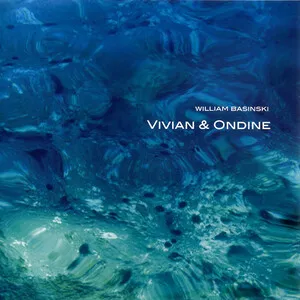
Vivian & Ondine
William Basinski
Tape Music
Ambient
Electronic
2009
2
/5
92982
William Basinski
Tape Music
2007
2
/5
El Camino Real
William Basinski
Tape Music
2006
1
/5
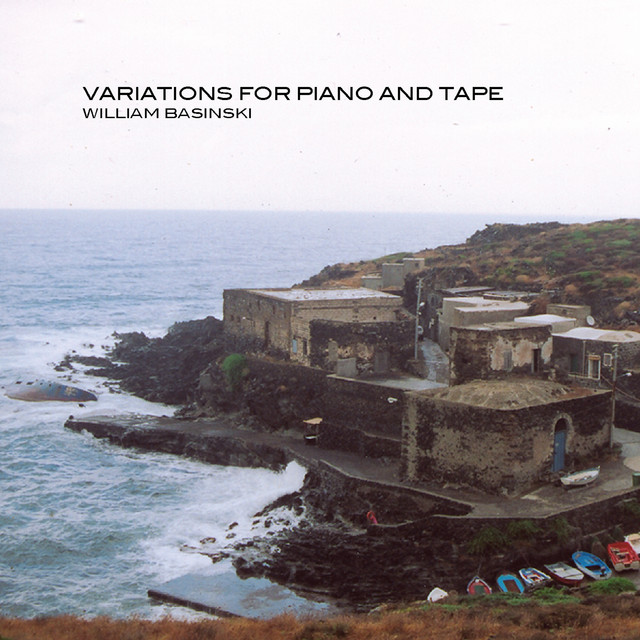
Variations For Piano & Tape
William Basinski
Tape Music
2003
2
/5
The Disintegration Loops IV (Remastered)
William Basinski
Tape Music
Ambient
Electronic
2003
3
/5
Melancholia
William Basinski
Tape Music
Sound Art
Hauntology
2003
2
/5
Watermusic II
William Basinski
Tape Music
Sound Art
Ambient
2003
1
/5
Nocturnes
William Basinski
Nocturne
Character Piece
2003
2
/5
The Disintegration Loops II
William Basinski
Tape Music
Ambient
Electronic
2003
1
/5
Melancholia
William Basinski
Tape Music
Ambient
Electronic
2002
1
/5
The Disintegration Loops (Remastered)
William Basinski
Tape Music
2002
3
/5
The Disintegration Loops (Remastered Reissue)
William Basinski
Tape Music
Sound Art
Hauntology
2001
2
/5
Watermusic
William Basinski
Tape Music
Similar artists
1
/5
Various Artists
Afro-Funk
Alternative Rock
Ambient
3
/5
Biosphere
Ambient
Sound Art
Electronic
2
/5
Taylor Deupree
Lowercase
Tape Music
Ambient
1
/5
Philip Jeck
Experimental
Ambient
Lowercase
4
/5
Brian Eno
Ambient
Krautrock
Experimental
3
/5
Oneohtrix Point Never
Hauntology
Plunderphonics
Ambient
3
/5
The Caretaker
Hauntology
Electronic
Ambient
3
/5
Burial
Classic Dubstep
Hauntology
Uk Bass
3
/5
zakè
Tape Music
Ambient
Drone
2
/5
Laurel Halo
Hauntology
Ambient
Experimental
Download our mobile app
Get the Melodigging app and start digging for new genres on the go
Download on the App Store
Get it on Google Play
© 2026 Melodigging
Give feedback
Legal
Melodding was created as a tribute to
Every Noise at Once
, which inspired us to help curious minds keep digging into music's ever-evolving genres.