Your digging level

For this genre
0/8
🏆
Sign in, then listen to this genre to level up

Description

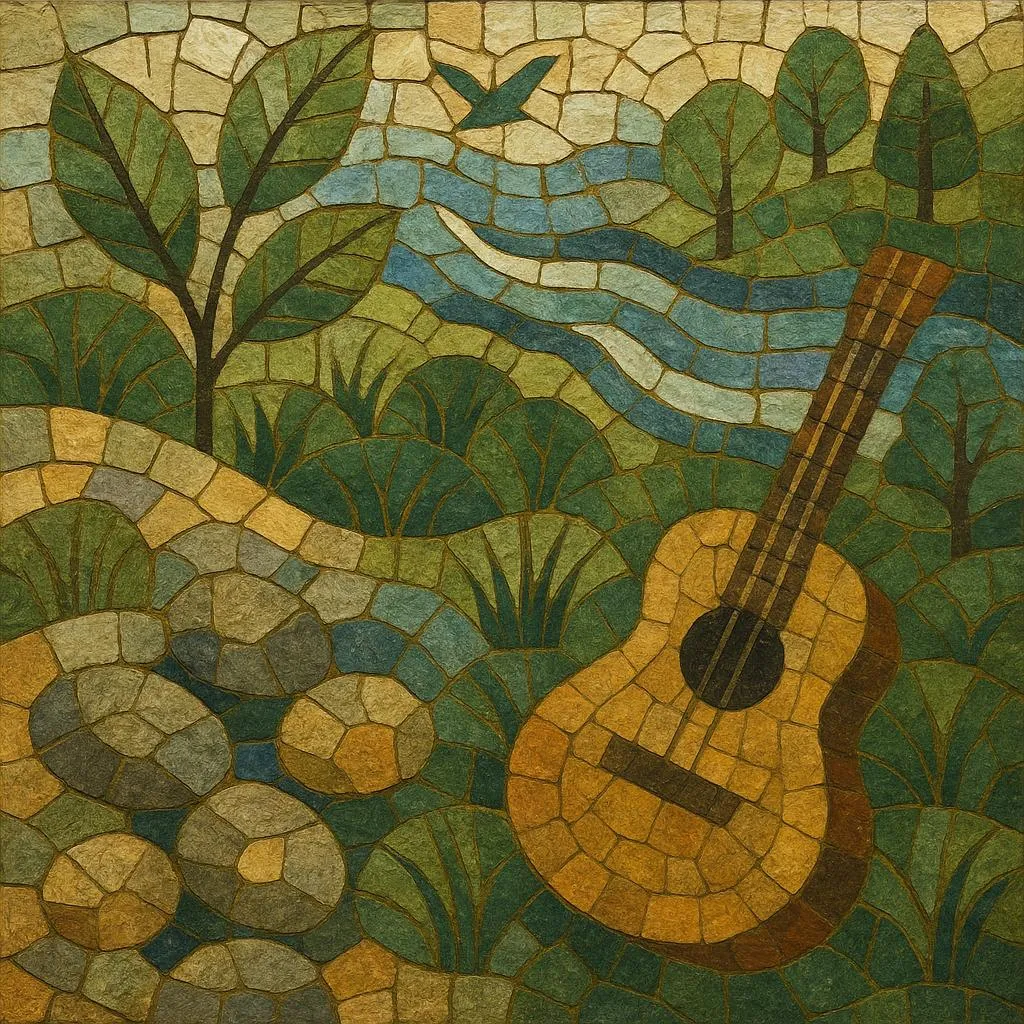
Organic ambient is a strain of ambient music that emphasizes natural, acoustic, and tactile timbres over purely synthetic ones. Its sound world is built from softly mic’d pianos and guitars, mallet percussion, strings, voice layers, and environmental field recordings (wind, water, birds, room tone), then gently processed with spacious reverbs, tape warmth, and subtle granular or delay treatments.

Compared with classic electronic ambient, the adjective “organic” points to breath, touch, and the audible presence of rooms and spaces: creaking pedals, bow noise, finger sounds on strings, and a bed of environmental sound. Harmony tends toward consonant, slowly evolving chords; rhythm is minimal or absent; and dynamics are restrained, inviting calm, contemplation, and connection with place.


Sources: Spotify, Wikipedia, Discogs, Rate Your Music, MusicBrainz, and other online sources

History

Roots (1970s–1990s)

Ambient’s foundations in the 1970s—particularly the emphasis on atmosphere over pulse—created the blueprint for later organic strains. New age and environmental music of the 1980s further normalized gentle, nature‑affiliated listening, while field recording practices and site‑specific electroacoustic work brought literal environments into the music. By the 1990s, drone and space‑leaning ambient had already embraced long decay times and a sense of stasis that organic ambient would inherit.

Convergence with acoustic timbre (2000s)

In the 2000s, a wave of artists blended neoclassical instrumentation (piano, strings, chamber textures) with ambient production. The result foregrounded intimacy—close‑miked acoustic sources, soft mallets, and unquantized performance—alongside subtle electronics. This period normalized hearing the performer’s touch and the room itself as primary sonic material.

Streaming era and codification (2010s–present)

The 2010s saw “organic ambient” emerge as a descriptive tag and listening niche, catalyzed by streaming and wellness contexts (sleep, focus, meditation). Curatorial ecosystems (labels, playlists, boutique imprints) favored warm analog coloration, minimalism, and environmental Foley, further codifying the style. Today, organic ambient intersects with modern classical, mindfulness audio, sound baths, and nature‑centric fieldwork, while remaining rooted in ambient’s original aim: music as atmosphere and place.

How to make a track in this genre

Core palette
•   Start with acoustic sources: felted or upright piano, nylon‑string or lightly picked electric guitar, bowed strings, harmonium, hand percussion, voice drones, or mallet instruments (vibes, glockenspiel). •   Capture environmental layers: wind through trees, water, distant traffic, room tone, page turns. Treat these as harmonic pads or noise floors.
Harmony and tonality
•   Favor consonant extended chords (maj7, add9, sus2), modal centers (Dorian, Lydian), or slowly shifting pedal tones. •   Keep progressions sparse. Let one chord or mode unfold over minutes with tiny voicing changes and register moves.
Rhythm and pacing
•   Often beatless; if using pulse, keep it subtle (soft swells, distant brushed patterns). Avoid hard transients. •   Think in long arcs: phrase lengths of 8–32 bars or more, with gradual crescendos and dissolves.
Sound design and treatment
•   Use long reverbs (plate, hall) and gentle delays to blend sources into a shared space. Sidechain reverb tails lightly to avoid wash. •   Introduce tape warmth or mild saturation for tactile presence. Low‑pass or shelf highs to reduce harshness. •   Granular tools can smear plucks or piano tails into pads; keep grains slow and subtle.
Arrangement and texture
•   Build a stable bed: a sustained drone or looped environmental layer. •   Add sparse melodic fragments (single‑note piano motives, harmonics, or vocal oohs) that appear and recede. •   Orchestrate with register: low pads for grounding, midrange for intimacy, highs for air (bells, gentle overtones).
Production and mixing
•   Close‑mic acoustic sources to capture detail; blend with a mono or mid‑side ambience mic if possible. •   Use subtractive mixing: carve overlapping lows, leave headroom, and prioritize the noise floor as a musical element. •   Aim for −18 to −14 LUFS integrated if targeting wellness/focus contexts; preserve dynamics.
Common pitfalls
•   Over‑processing field recordings (too bright or loop‑obvious). Hide seams with crossfades and layered takes. •   Excessive high‑frequency sheen. Soften with gentle tilt EQ and darker reverbs to maintain warmth.

Related labels

Top tracks

Locked
Share your favorite track to unlock other users’ top tracks
Influenced by
Has influenced
Challenges
Digger Battle
Let's see who can find the best track in this genre

Download our mobile app

Get the Melodigging app and start digging for new genres on the go
© 2026 Melodigging
Melodding was created as a tribute to Every Noise at Once, which inspired us to help curious minds keep digging into music's ever-evolving genres.
Buy me a coffee for Melodigging