Genres
Artists
Albums
Make Music
Sign in
Sign in
Artists
Country Blues
Artists
Country Blues
Lee Green
1993
·
1 album
Listen
1
/5
Genres
Country Blues
Country blues—also called rural blues or folk blues—is the earliest widely documented form of the blues, rooted in the everyday music-making of African Americans in the rural American South. It typically features a solo singer accompanying themselves on acoustic guitar, with flexible time, expressive vocal delivery, and abundant use of blue notes. While 12‑bar structures are common, country blues often stretches or compresses measures to fit the lyric, making phrasing elastic and conversational. Regional flavors emerged—Delta (driving, droning thumb bass and slide), Piedmont (ragtime‑inflected fingerpicking), and Texas (looser phrasing and single‑string leads)—but all share storytelling lyrics about work, travel, love, hardship, and spiritual longing.
Discover
Listen
Ragtime
Ragtime is an African American–rooted piano style that flourished from the 1890s to the 1910s, characterized by lively syncopation in the right hand against a steady, march-like “oom‑pah” accompaniment in the left hand. Typically written in 2/4 or 4/4 time and notated with straight (unswung) eighth notes, classic rags unfold in multiple 16‑bar strains, often in the form AABBACCDD. The music draws on cakewalk rhythms, marching-band forms, and popular song, and it became a sensation through sheet music, piano rolls, and parlor performance. Scott Joplin, known as the “King of Ragtime,” helped codify the genre’s refined, compositional approach, calling for moderate tempos and a clear, singing melody. Beyond solo piano, ragtime was arranged for small ensembles and orchestras, found a home in vaudeville and dance halls, and laid essential groundwork for early jazz, stride piano, and much of 20th‑century American popular music.
Discover
Listen
Barrelhouse Piano
Barrelhouse piano is a raucous, percussive style of early American piano blues associated with rough-and-ready "barrelhouses"—cheap saloons and dance spots that served liquor straight from the barrel. To cut through noisy rooms and often out‑of‑tune instruments, players struck hard, kept time with a stomping left hand, and used a freewheeling, improvisatory right hand. The approach favored drive and grit over refinement. Technically, the left hand lays down a pounding, train‑like beat (walking figures, repeated basses, and chordal stomps) while the right hand spins syncopated melodies and riffs; many performers eschewed pedal use entirely to keep the attack crisp and loud. The style emerged alongside ragtime but leaned far more toward blues feel and groove, and it became an acknowledged precursor to boogie‑woogie and later dance‑oriented blues.
Discover
Listen
Albums
1993
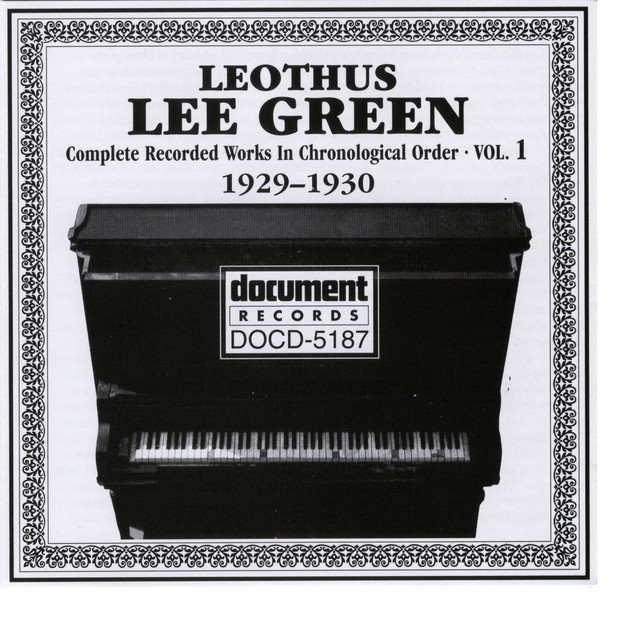
Lee Green Vol. 1 1929-1930
Lee Green
Barrelhouse Piano
Similar artists
1
/5
Blind John Davis
Blues
Boogie-Woogie
Country Blues
2
/5
Lead Belly
Blues
Country Blues
Folk
2
/5
Mississippi John Hurt
Piedmont Blues
Acoustic Blues
Country Blues
2
/5
Big Bill Broonzy
Acoustic Chicago Blues
Country Blues
Acoustic Blues
2
/5
Rory Block
Blues
Folk
Blues Rock
2
/5
Skip James
Delta Blues
Country Blues
Blues
2
/5
Rev. Gary Davis
Piedmont Blues
Country Blues
Gospel
2
/5
Blind Willie McTell
Piedmont Blues
Country Blues
Delta Blues
2
/5
Charley Patton
Blues
Classic Blues
Country Blues
2
/5
Blind Blake
Goombay
Bahamian Folk
Blues
Download our mobile app
Get the Melodigging app and start digging for new genres on the go
Download on the App Store
Get it on Google Play
© 2026 Melodigging
Give feedback
Legal
Melodding was created as a tribute to
Every Noise at Once
, which inspired us to help curious minds keep digging into music's ever-evolving genres.