

Your digging level

For this genre
0/8
🏆
Sign in, then listen to this genre to level up

Description

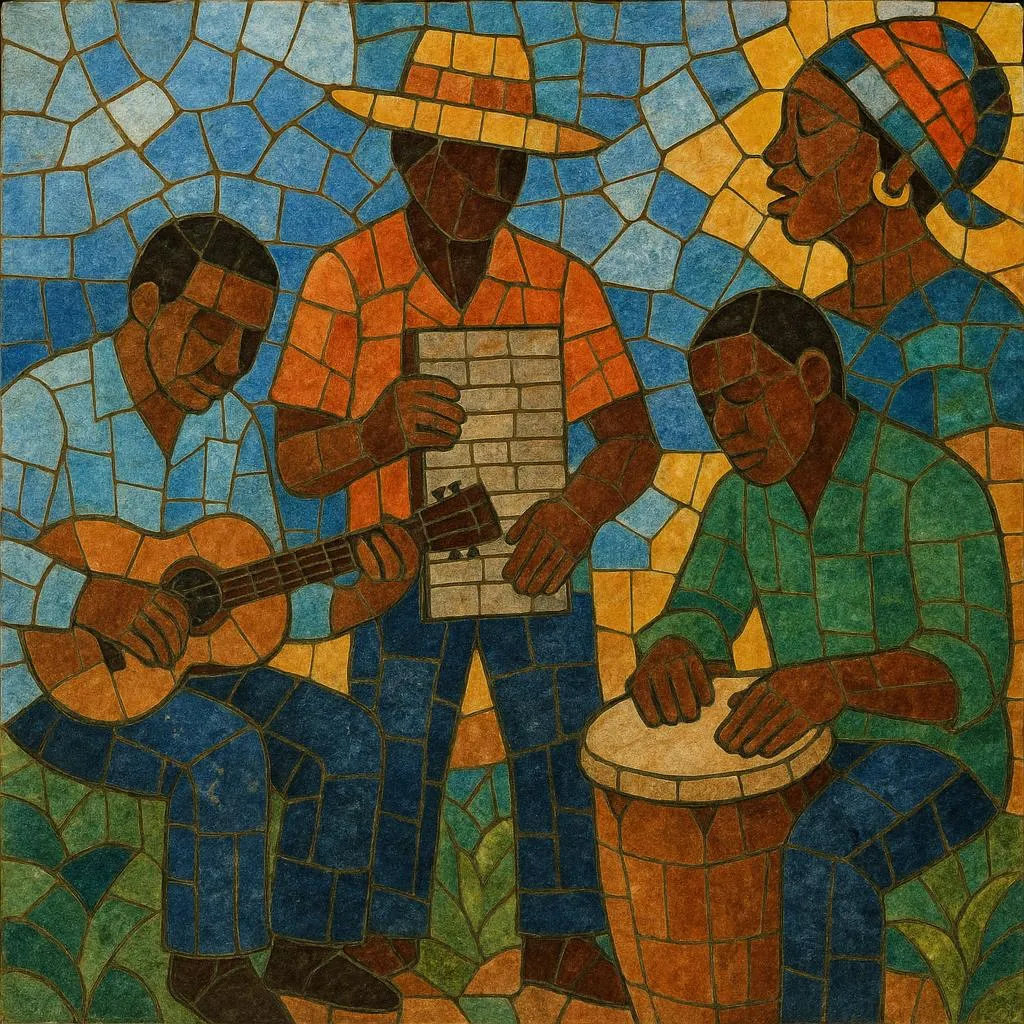
Bahamian folk is the traditional music of The Bahamas, rooted in West African rhythms and call-and-response singing, blended with British hymnody, sea shanties, and other Atlantic maritime repertoires.

It features distinctive local forms such as rhyming spirituals, goombay drumming, and rake-and-scrape dance music (often with saw, accordion, and goatskin drum). Melodies are typically diatonic with blues inflections; harmony is usually simple (I–IV–V), supporting communal, participatory singing. Lyrics draw on Bahamian Creole English, everyday island life, seafaring, Christian devotion, storytelling, humor, and dance.


Sources: Spotify, Wikipedia, Discogs, RYM, MB, user feedback and other online sources

History

Roots and Formation (19th century)

Bahamian folk grew from the encounter of enslaved and free Afro-Bahamian communities with British colonial culture and the broader Atlantic maritime world. West African polyrhythms, ring shouts, and call-and-response merged with Anglican hymnody and work songs. Sailors’ and spongers’ sea shanties circulating in Bahamian harbors further shaped the vocal style and repertoire.

Early 20th Century: Local Idioms Coalesce

By the early 1900s, distinct Bahamian idioms were evident: rhyming spirituals (narrative, improvised verse over choral refrains), goombay drumming (goatskin bass and hand percussion), and the emergent rake-and-scrape dance band sound centered on accordion, saw, and drum. These practices underscored social dances, wakes, church gatherings, and festivals, particularly around Christmas-time celebrations related to Junkanoo.

Mid-20th Century: Documentation and Popularization

From the 1940s–1960s, tourism in Nassau and family islands supported house bands and dance orchestras performing traditional songs alongside calypso and mento. Field recordings and folk-revival interest (notably of guitar stylists and spiritual groups) documented Bahamian folk for international audiences. This period codified the repertoire of ring plays, spirituals, and dance tunes that many ensembles still perform.

Late 20th Century to Present: Continuity and Crossovers

While modern Bahamian pop and Junkanoo-based styles rose to prominence, folk traditions persisted in community settings, church programs, and heritage festivals. Rake-and-scrape bands remain central to island dances, and choirs keep rhyming spirituals alive. Contemporary artists often fuse folk instrumentation with calypso, soca, and even rock, ensuring Bahamian folk’s vocabulary continues to inform broader Caribbean and “island” aesthetics.

How to make a track in this genre

Core Ensemble and Timbres
•   Use a rake-and-scrape lineup: accordion (or concertina), carpenter’s hand saw (scraped with metal), and goatskin (goombay) drum; add guitar/banjo for harmony and bass. •   For spirituals and ring plays, prioritize unaccompanied or lightly accompanied voices with a strong leader–chorus antiphony.
Rhythm and Groove
•   Emphasize interlocking polyrhythms and steady dance pulses; the goombay drum anchors the beat while the saw provides rasping off-beat textures. •   Favor 2/4 or 4/4 meters with swinging, lilted subdivisions; use simple but infectious patterns designed for communal dancing.
Melody and Harmony
•   Compose singable, diatonic tunes with occasional blue notes and pentatonic hints. •   Keep harmony straightforward (I–IV–V progressions), using parallel thirds/sixths in vocal parts and homophonic choruses.
Form and Vocals
•   Structure pieces as call-and-response verses with a recurring chorus; allow space for improvised lines ("rhyming"). •   Encourage group participation: overlapping entries, clapped accompaniment, and shouted interjections are authentic.
Texts and Language
•   Write in Bahamian Creole English or accessible English; themes include seafaring, island life, humor, flirtation, Christian faith, and community pride. •   Keep verses concise and narrative; use refrains the audience can quickly learn and repeat.
Production Aesthetics
•   Favor live, room-forward recording to capture communal energy, hand percussion, and vocal blend. •   Minimal processing preserves the raw textures of saw scrape, goatskin resonance, and crowd response.

Top tracks

Locked
Share your favorite track to unlock other users’ top tracks

Upcoming concerts

in this genre
Influenced by

Download our mobile app

Get the Melodigging app and start digging for new genres on the go
© 2026 Melodigging
Melodding was created as a tribute to Every Noise at Once, which inspired us to help curious minds keep digging into music's ever-evolving genres.
Buy me a coffee for Melodigging
