Genres
Artists
Albums
Make Music
Sign in
Sign in
Artists
Horror Synth
Artists
Horror Synth
Kyle Dixon & Michael Stein
2016–2025
·
8 albums
Listen
3
/5
Genres
Spectra
Spectra is a contemporary, internet-native microgenre of moody alternative electronic and R&B-adjacent music characterized by spectral, hazy textures, soft-focus vocals, and lush, wide stereo sound design. It blends downtempo grooves with post-dubstep sound palettes, dreamy pads, and understated, melancholic songwriting. Production often favors granular and time-stretched atmospheres, filtered synths, submerged bass, and delicate percussion patterns that feel intimate yet cinematic. Vocals are commonly breathy and layered with subtle pitch/formant processing, while harmony leans toward extended, suspended, and add-color chords that emphasize bittersweet, nocturnal moods.
Discover
Listen
Horror Synth
Horror synth is a dark, cinematic electronic style that draws heavily from 1970s–1980s horror film scores and analog synthesizer aesthetics. It emphasizes ominous arpeggios, minor-key ostinati, and brooding pads that evoke suspense, dread, and retro VHS-era atmosphere. While it overlaps with synthwave, horror synth is noticeably darker and more aggressive, often incorporating industrial textures, dissonant intervals, and sound-design cues taken from classic slasher and giallo soundtracks. The music typically features vintage drum machine grooves, tape-like saturation, and motif-driven themes that feel like cues to an unseen film.
Discover
Listen
Flint Sound
Flint sound is a contemporary Michigan rap style centered in Flint, United States. It is characterized by fast, minimal, piano- or organ-led beats, dry and upfront vocals, and bar-by-bar “punch‑in” delivery that often rides slightly ahead of or behind the grid for a conversational, off‑kilter feel. The production typically favors bright piano loops, staccato 808 slides, crisp claps or rimshots, and sparse percussion, leaving plenty of space for relentless punchlines, gritty street reportage, and mischievous humor. While hard-edged and streetwise, the style frequently leans into charismatic personality and wit, making it both aggressive and infectious for dancing.
Discover
Listen
Spacewave
Spacewave is an internet-born microgenre that blends the retro-futurist nostalgia of vaporwave with the cinematic pads and arpeggiated synths of synthwave and the vast, slow-moving atmospheres of space ambient. It favors warm analog-style timbres, shimmering pads, slow to mid-tempo grooves, and expansive reverbs that suggest cosmic distance. Tape hiss, vinyl crackle, and radio-voice samples (e.g., NASA mission comms) are common, reinforcing a sense of archival futurism. The aesthetic is both utopian and wistful: neon starfields, VHS-era sci‑fi optimism, and long, flowing arrangements designed for late-night driving, studying, or stargazing. Much of the scene circulates on Bandcamp, YouTube mix channels, and streaming playlists rather than traditional label ecosystems.
Discover
Listen
Speedrun
Speedrun is a gaming-adjacent EDM microgenre designed for adrenaline, focus, and momentum. It blends hyper-energetic drops with catchy, game-like melodies and rapid switch‑ups that mirror the pace and tension of timed gameplay. Typically sitting between 140–175+ BPM, the style pivots between half‑time dubstep weight, electro/complextro riffing, glitchy fills, and drum & bass acceleration. Producers favor bright, synthetic leads (often with chiptune flourishes), tightly sidechained supersaws, and animated bass design that stays clean and punchy for streaming. The mood is triumphant, high‑octane, and “level‑up” cinematic—made to keep speedrunners and viewers locked in.
Discover
Listen
Vaporwave
Vaporwave is an internet-born microgenre and visual aesthetic that repurposes late‑20th‑century commercial sound—mu zak, smooth jazz, soft rock, synth‑pop, city pop, and corporate training tapes—into hazy, slowed, and looped collages. Its sound foregrounds pitched‑down samples, heavy reverb, tape hiss, vinyl crackle, and dreamy pads to evoke a mood between satire and sincere nostalgia. Beyond music, vaporwave is inseparable from its graphic language: Greco‑Roman busts, Japanese text, retro operating systems, chrome logos, palm trees, neon gradients, and “mall culture” architecture. The result feels like a haunted shopping mall: part critique of consumer capitalism, part wistful memory of media and retail spaces from the 1980s–2000s. Tempos are typically slow (roughly 60–90 BPM), harmonies tend toward lush seventh and extended chords, and rhythms range from barely perceptible loops to minimal, gated drum programming. Many tracks are short, vignette‑like studies in texture and mood.
Discover
Listen
Vapor
Vapor is an internet-born microgenre of atmospheric, half-time electronic trap that emphasizes space, texture, and emotive melody over aggression or technical flash. Its sonic palette leans on airy pads, crystalline bell and pluck leads, misty reverb tails, and round, subby 808s. Drums typically follow a modern trap grid at halftime, with sparse, syncopated hats and gentle percussion instead of hard-edged snares. Vocals, if present at all, are usually textural—chopped phrases, distant calls, or heavily processed one-shots—serving ambience rather than lyrical narrative. The result is a dreamy, nocturnal mood that sits between cloud rap, vaporwave aesthetics, and the UK-led "wave" scene: cinematic yet minimal, melancholic yet weightless, and designed as much for headphones as for late-night club systems.
Discover
Listen
Ambient Lo-Fi
Ambient lo-fi blends the spacious, texture-driven soundscapes of ambient music with the intimate, imperfect aesthetics of lo‑fi recording and production. Expect soft pads, tape hiss, vinyl crackle, gentle guitar swells, field recordings, muted pianos, and unobtrusive, often beatless or barely-there rhythms. Harmonic movement is slow and consonant, with modal or drone foundations and lots of reverb, flutter, and saturation to convey warmth and closeness. It thrives as background-friendly music for reading, studying, sleeping, or decompression, prioritizing atmosphere and tactile sound design over hooks or complex form.
Discover
Listen
Escape Room
Escape room is a data-driven label popularized by Spotify to cluster artists who blur lines between alternative R&B, experimental pop, left-field hip hop, and cutting‑edge club/electronic production. Rather than a strict set of musical rules, it signals a sound defined by textural minimalism, sub‑heavy and off‑kilter rhythms, intimate vocal delivery (often breathy or ASMR-adjacent), and a strong emphasis on sound design and negative space. Songs frequently juxtapose glossy melodies with abrasive or deconstructed percussive layers, creating a stylish, future‑leaning mood that resists easy categorization. The name is unrelated to physical puzzle rooms; instead, it marks music that “escapes” legacy genre boxes while remaining pop‑adjacent and internet‑native in aesthetics and distribution.
Discover
Listen
New Isolationism
New isolationism is a contemporary strain of isolationist ambient and post-industrial minimalism that emerged in the 2010s, particularly around Scandinavian experimental labels and studios. It foregrounds intimate, close-mic’d sound, negative space, and a quiet-but-present noise floor; its pieces feel both internal and architectural, like rooms built from reverb tails, tape hiss, and soft electronics. Sonically, the style blends glacial drones, fragile chamber timbres (strings, organ, piano), lo‑fi electronics, and field recordings into stark, slow-evolving tableaux. Melodic information is sparse—often only a few tones or gestures—while rhythm is either absent or reduced to distant pulses, heartbeats, or mechanical cycles. Vocals, when they appear, are murmured, diaristic, or abstracted by pitch and time manipulation. Aesthetically, new isolationism is post‑internet and diaristic: it captures solitude, memory, and dislocation with a palette that feels personal yet estranged, drawing as much from contemporary gallery sound practice as from classic dark ambient.
Discover
Listen
Nightrun
Nightrun is a synthwave-adjacent microgenre built for the sensation of cruising through a neon-lit city at night. It blends retro-’80s analog synth timbres, melodramatic minor-key harmonies, and steady four-on-the-floor or motorik grooves with a glossy, cinematic finish. Compared to broader synthwave, nightrun tends to be slightly leaner and more driving: pulsing bass arpeggios, gated snares, and shimmering pads frame soaring lead melodies that evoke nocturnal highways, sodium lights, and distant horizons. Tempos typically sit in the midtempo range (about 85–110 BPM), with arrangements that rise and fall like a night drive—quiet intros, long cruising sections, and cathartic choruses. Aesthetically, it borrows the neon futurism of 1980s action and thriller soundtracks, while adopting modern production sheen and sidechain pumping. The result is danceable yet reflective electronic music tailored to late-night motion and nostalgic escapism.
Discover
Listen
Spamwave
Spamwave is a microgenre of vaporwave and sample-based collage that centers on the sounds, aesthetics, and affect of early-2000s internet clutter: spam emails, robocalls, pop‑up ads, infomercials, and adware/OS notifications. Producers loop, time‑stretch, and detune these commercial and computational artifacts into hypnotic, uncanny textures that feel both nostalgic and slightly menacing. Musically, spamwave favors slow to mid‑tempo loops, heavy reverb, pitch shifting, and granular edits. It blends corporate muzak, hold music, TTS voices, dial tones, and UI sounds with vaporwave’s dreamy pads and tape‑hiss patina. The result is a haunted-office ambience—equal parts retro tech nostalgia and digital detritus.
Discover
Listen
Weirdcore
Weirdcore is an internet-native microgenre and aesthetic of experimental electronic music that leans into liminal nostalgia, eerie memory, and uncanny ambience. Its sound palette often combines misty pads, degraded samples, tape hiss, and bitcrushed percussion with disembodied voices, classroom and mall PA announcements, retro operating system chimes, and field recordings of empty or transitional spaces. Harmonically, weirdcore favors drones, slowly shifting modal clusters, and ambiguous, memory-warping intervals that feel familiar yet distorted. Rhythm ranges from beatless, foggy soundscapes to brittle, broken 2-step and slow, stumbling downtempo pulses. Heavy time-stretching, granular manipulation, wow-and-flutter, convolution reverbs, and spectral or cassette-style degradation are central to its texture. Although closely tied to a visual aesthetic (liminal spaces, late-night analog glow, low-resolution signage), weirdcore as a musical style is defined by its uncanny collage sensibility: sampling and warping everyday audio detritus until it becomes emotionally charged, melancholic, and faintly unsettling.
Discover
Listen
Artcore
Artcore is a subgenre of hardcore techno that fuses high-BPM club energy with the orchestral colors and dramatic writing of cinematic classical music. Producers combine pounding four-on-the-floor kicks, breakbeats, and modern EDM sound design with strings, piano, choirs, and sweeping harmonic progressions. The result is a maximalist, emotive style: towering builds, through-composed sections, key changes, and leitmotifs are common, while supersaw leads, reese basses, and intricate percussion keep the dancefloor intensity. The sound took shape in Japan’s doujin and rhythm-game circles, but it has since spread globally among electronic musicians who favor epic, narrative arrangements.
Discover
Listen
Synthwave
Synthwave is a retro-futurist electronic genre that revives and reimagines the sound, texture, and visual culture of 1980s film scores, television themes, arcade games, and synth-pop. Characterized by analog-style synthesizers, arpeggiated basslines, neon-soaked melodies, and gated-reverb drums, it blends nostalgia with cinematic drama. Substyles include the uplifting, driving "outrun" sound, the softer and romantic "dreamwave/chillsynth," and the heavier, horror-tinged "darksynth." Typical sound palettes reference instruments like the Roland Juno series, Yamaha DX7, Oberheim and Prophet polysynths, with drum machines such as the LinnDrum, TR-707, and 909 (or their modern emulations).
Discover
Listen
Dark Ambient
Dark ambient is a post‑industrial subgenre that coalesced in the mid‑1980s, drawing primarily on ambient music but shifting its focus toward ominous, subterranean space and timbre. It is characterized by long, low‑frequency drones; dissonant or microtonal overtones; and an enveloping, gloomy or catacomb‑like atmosphere. While largely electronic (synthesizers, samplers, tape and digital processing), artists frequently incorporate field recordings, contact‑mic textures, bowed metal, gongs, and fragments of traditional instruments captured with semi‑acoustic techniques and then heavily processed. Melody and pulse are minimized; instead the music emphasizes immersive sound design, psychoacoustic detail, and slowly evolving textures that evoke dread, awe, and isolation.
Discover
Listen
Ambient
Ambient is a form of electronic and electroacoustic music that prioritizes tone, atmosphere, and texture over conventional song structures and rhythmic drive. It typically features slow-moving harmonies, sustained drones, gentle timbral shifts, and extensive use of space and silence. Rather than drawing attention to itself through hooks or beats, ambient is designed to be as ignorable as it is interesting, rewarding both background listening and focused immersion. Artists often employ synthesizers, samplers, tape loops, field recordings, and subtle acoustic instruments, with reverb and delay creating a sense of place. Substyles range from luminous, consonant soundscapes to darker, more dissonant atmospheres.
Discover
Listen
Soundtrack
Soundtrack is music created to accompany and enhance visual media such as film, television, and video games. It includes original scores (instrumental or vocal music composed specifically for the picture) and, at times, curated compilations of pre-existing songs. Stylistically, soundtrack is a meta-genre that can encompass orchestral symphonic writing, jazz, electronic and synth-driven textures, choral forces, popular song, and experimental sound design. Its defining trait is functional storytelling: themes, motifs, harmony, rhythm, and timbre are shaped by narrative needs, character psychology, pacing, and editing. Common features include leitmotifs for characters or ideas, modular cues that can be edited to picture, dynamic orchestration for dramatic range, and production approaches that sit well under dialogue and sound effects. Because it must synchronize to picture, soundtrack often uses clear dramatic arcs, tempo maps, and hit points.
Discover
Listen
Score
Score refers to original music composed to synchronize with and shape the narrative of visual media—primarily film, television, and, later, video games. Unlike a “soundtrack,” which often compiles pre-existing songs, a score is written to picture, uses timing cues to support storytelling beat by beat, and develops recurring themes (leitmotifs) for characters, settings, or ideas. The palette ranges from late‑Romantic orchestration and modernist harmony to jazz idioms, electronic sound design, and global instrumentation. Hallmarks include thematic development, hit points, motif variation, orchestration color, and a close relationship with sound effects and dialogue in the final mix.
Discover
Listen
Electronic
Electronic is a broad umbrella genre defined by the primary use of electronically generated or electronically processed sound. It encompasses music made with synthesizers, drum machines, samplers, computers, and studio/tape techniques, as well as electroacoustic manipulation of recorded or synthetic sources. The genre ranges from academic and experimental traditions to popular and dance-oriented forms. While its sonic palette is rooted in electricity and circuitry, its aesthetics span minimal and textural explorations, structured song forms, and beat-driven club permutations. Electronic emphasizes sound design, timbre, and studio-as-instrument practices as much as melody and harmony.
Discover
Listen
Show all 20 genres
Albums
2025
3
/5
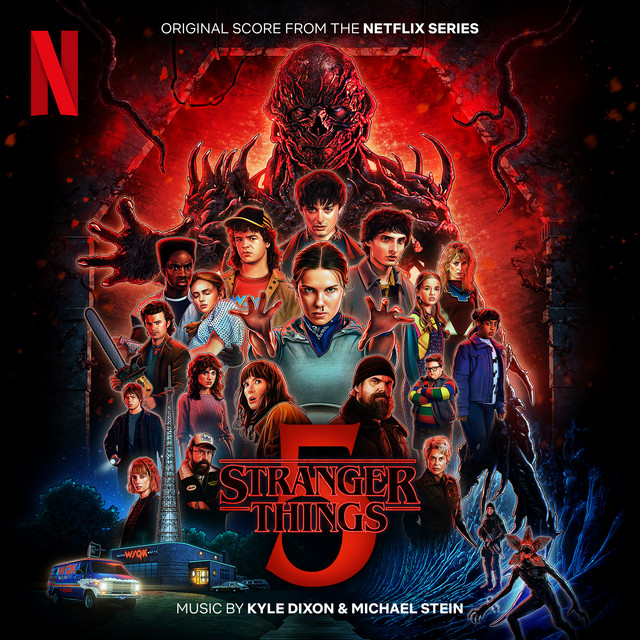
Stranger Things 5 (Original Score From The Netflix Series)
Kyle Dixon & Michael Stein
Horror Synth
2022
3
/5
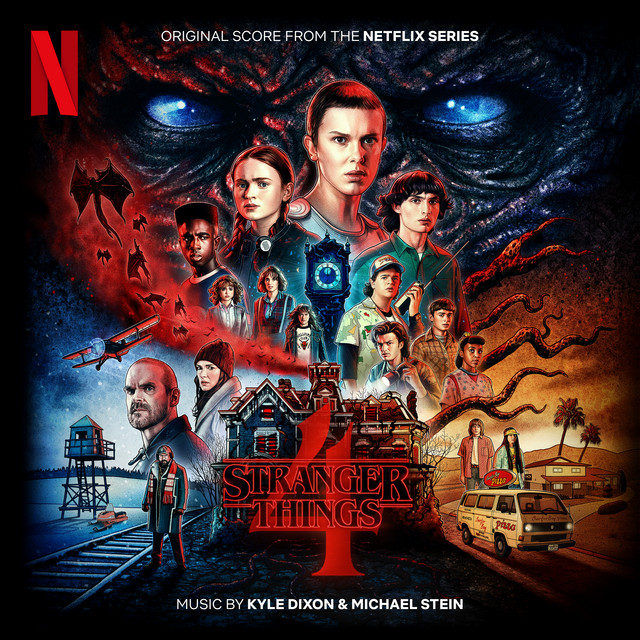
Stranger Things 4 (Original Score From The Netflix Series)
Kyle Dixon & Michael Stein
Horror Synth
Ambient
Electronic
2019
1
/5
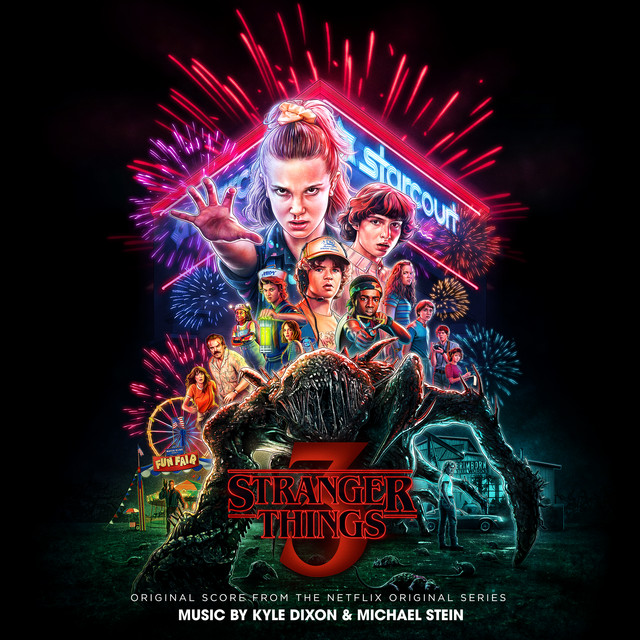
Stranger Things 3 (Original Score from the Netflix Original Series)
Kyle Dixon & Michael Stein
Horror Synth
Ambient
Electronic
2019
3
/5
Stranger Things 3 (Original Score from the Netflix Original Series)
Kyle Dixon & Michael Stein
Horror Synth
2018
1
/5
Spheres (Original Score)
Kyle Dixon & Michael Stein
Horror Synth
2017
4
/5
Stranger Things 2 (Soundtrack from the Netflix Original Series)
Kyle Dixon & Michael Stein
Horror Synth
2016
3
/5
Stranger Things, Vol. 2 (A Netflix Original Series Soundtrack)
Kyle Dixon & Michael Stein
Horror Synth
2016
4
/5
Stranger Things, Vol. 1 (A Netflix Original Series Soundtrack)
Kyle Dixon & Michael Stein
Horror Synth
Ambient
Electronic
Similar artists
4
/5
John Carpenter
Horror Synth
Electronic
Rock
1
/5
Various Artists
Afro-Funk
Alternative Rock
Ambient
3
/5
Ulver
Post-Metal
Avant-Garde
Black Metal
2
/5
VAPERROR
Vaportrap
Slushwave
Electronic
3
/5
Perturbator
Synthwave
Darksynth
Dark Wave
3
/5
Lazerhawk
Synthwave
Horror Synth
Darksynth
2
/5
Occams Laser
Horror Synth
Darksynth
Dark Wave
2
/5
Equip
Utopian Virtual
Chillwave
Synthwave
3
/5
Hello Meteor
Chillsynth
Chillwave
Slushwave
2
/5
Wojciech Golczewski
Horror Synth
Synthwave
Chiptune
Download our mobile app
Get the Melodigging app and start digging for new genres on the go
Download on the App Store
Get it on Google Play
© 2026 Melodigging
Give feedback
Legal
Melodding was created as a tribute to
Every Noise at Once
, which inspired us to help curious minds keep digging into music's ever-evolving genres.