Genres
Artists
Albums
Make Music
Sign in
Sign in
Artists
Choral
Artists
Choral
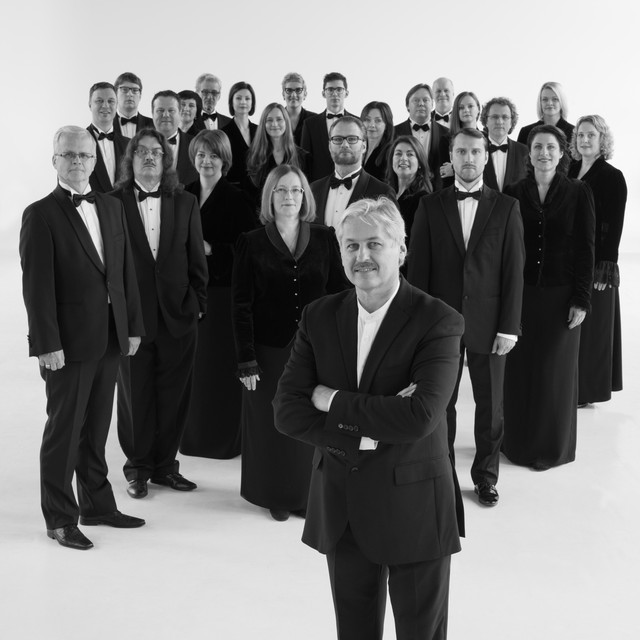
Haissmavourk Choir
1995
·
1 album
Listen
1
/5
Genres
Traditional Music
Traditional music is an umbrella term used in the mid–20th century by folklorists and ethnomusicologists to denote community-rooted, orally transmitted repertoires tied to social ritual, work, celebration, and storytelling. Unlike commercial pop or art-music traditions, traditional music is typically learned by ear, varies regionally, and evolves slowly through communal participation. It often features modal melodies, cyclic rhythms, heterophony or unison singing, and indigenous instruments whose timbres are integral to local identity. Lyrics tend to preserve language, history, and collective memory. While the musical practices themselves can be ancient, the phrase “traditional music” emerged to replace earlier, narrower or colonial framings like “folk” or “ethnic” music, foregrounding continuity, locality, and living practice rather than exoticism.
Discover
Listen
Armenian Church Music
Armenian church music is the sacred chant and liturgical repertoire of the Armenian Apostolic Church, sung primarily in Classical Armenian (Grabar) and preserved through oral transmission, medieval neumatic (khaz) notation, and later staff transcriptions. It centers on the Divine Liturgy (Badarak), the daily offices, and a vast corpus of hymns known as sharakans. Musically, the tradition is fundamentally monophonic and modal, drawing on an eight-mode (oktoechos) system with characteristically stepwise melodies, narrow to moderate ambitus, and expressive melismas. While the historical tradition is a cappella and unaccompanied, modern choral harmonizations (notably by Makar Yekmalyan and Komitas Vardapet) are also widely performed, carefully respecting the modal flavor of the original chants. The sound is solemn, luminous, and contemplative, with an emphasis on textual clarity, rhetorical pacing, and devotional atmosphere.
Discover
Listen
Choral
Choral refers to music written for and performed by a choir—an ensemble of voices organized into sections such as soprano, alto, tenor, and bass (SATB), or same-voice groupings (SSA, TTBB). It encompasses both sacred and secular repertoire and may be sung a cappella or with accompaniment by organ, piano, or full orchestra. Stylistically, choral music ranges from chant-like monophony to intricate polyphony and rich homophonic textures. Texts are drawn from liturgy, scripture, poetry, and vernacular sources, and are set in many languages. Performance contexts include church services, concert halls, and community events, making choral one of the most socially embedded and widely practiced forms of ensemble music. Across history, choral music has served as a laboratory for vocal counterpoint, word painting, and text-driven form, while functioning as a cultural bridge among religious rites, national traditions, and contemporary concert practice.
Discover
Listen
Armenian Music
Armenian music encompasses the sacred and secular traditions of the Armenian Highlands, with roots that trace back to Bronze Age ritual, epic song, and village dance. Over millennia it developed a distinct modal language, ornate vocal style, complex additive rhythms, and a celebrated palette of timbres—most famously the warm, breathy voice of the apricot-wood duduk. A continuous sacred tradition (Armenian chant, or sharakans) evolved alongside folk practices (work songs, laments, lullabies, and dance suites such as kochari and shalakho). Medieval Armenians created the khaz neumatic notation, one of the world’s earliest indigenous systems for recording melody. In the late 19th and early 20th centuries, Komitas Vardapet collected and reimagined village repertories, helping found a modern national school later broadened by composers like Aram Khachaturian, Alexander Arutiunian, and Arno Babajanian. Today, Armenian music ranges from liturgical choirs and duduk ensembles to jazz, rock, and electronic fusions. Diasporic and local scenes share a common aesthetic: modal melody with expressive ornamentation, heterophonic textures, and asymmetric meters that invite communal dance and lyrical introspection alike.
Discover
Listen
Albums
1995
1
/5
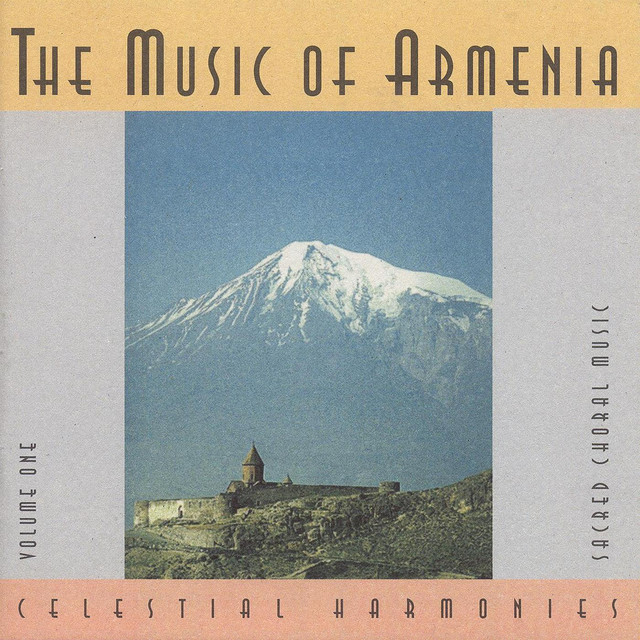
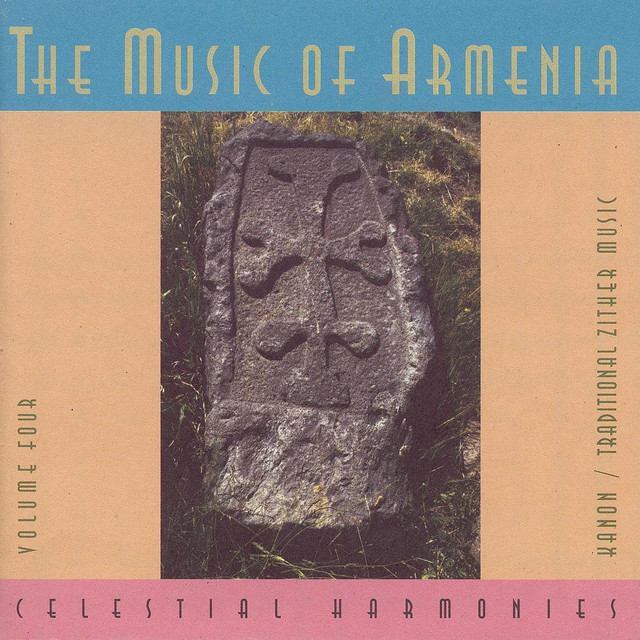
The Music of Armenia Vol. 1: Sacred Choral Music
The Haissmavourk Choir
Armenian Church Music
Armenian Music
Similar artists
1
/5
Various Artists
Afro-Funk
Alternative Rock
Ambient
1
/5
Alice Parker
Choral
Traditional Music
1
/5
VocalEssence
Choral
Traditional Music
1
/5
Paula Hoffman
Choral
Requiem
Traditional Music
1
/5
Blánaid Murphy
Celtic
Choral
Traditional Music
3
/5
Sigvards Kļava
Choral
Minimalism
Armenian Church Music
2
/5
Latvian Radio Choir
Choral
Minimalism
Armenian Church Music
2
/5
Hossein Alizadeh
Sufi
Traditional Folk
Traditional Music
2
/5
Gevorg Dabagian
Armenian Folk Music
Traditional Music
Armenian Music
1
/5
Karineh Hovhanessian
Gregorian Chant
Traditional Music
Armenian Folk Music
Download our mobile app
Get the Melodigging app and start digging for new genres on the go
Download on the App Store
Get it on Google Play
© 2026 Melodigging
Give feedback
Legal
Melodding was created as a tribute to
Every Noise at Once
, which inspired us to help curious minds keep digging into music's ever-evolving genres.