Your digging level
Description
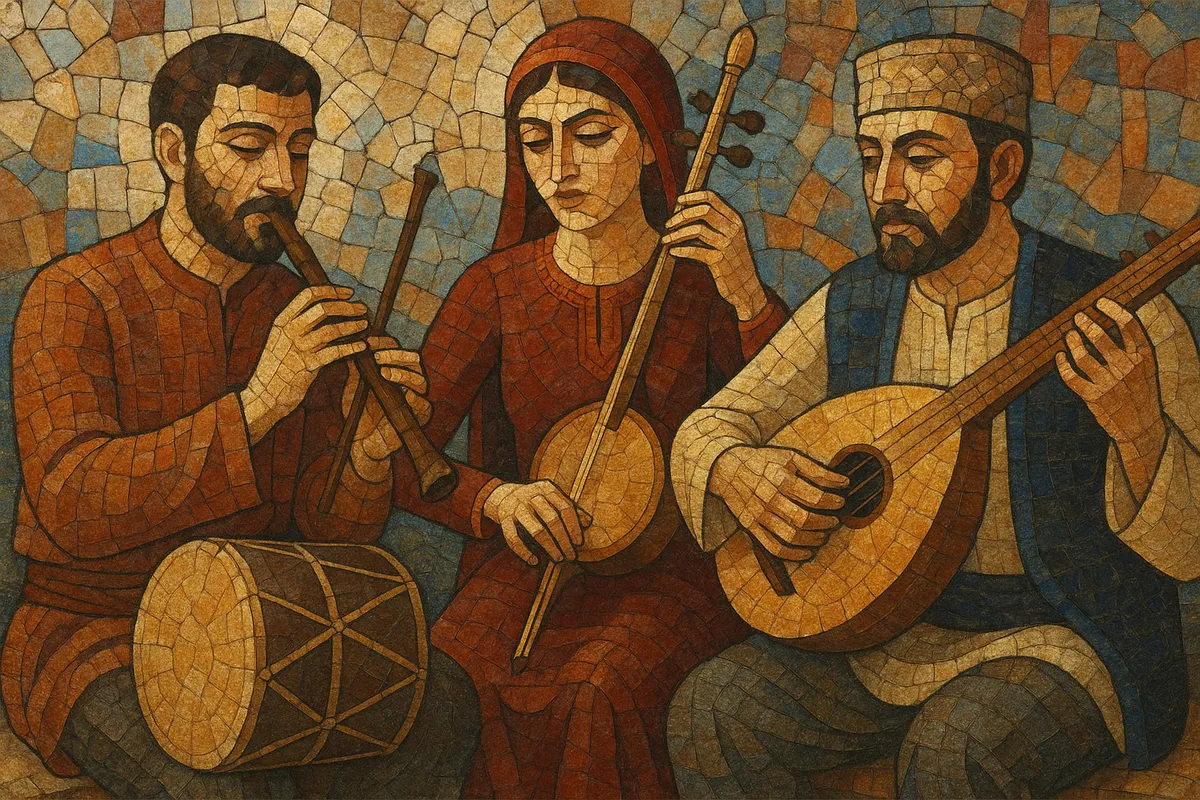
Armenian music encompasses the sacred and secular traditions of the Armenian Highlands, with roots that trace back to Bronze Age ritual, epic song, and village dance. Over millennia it developed a distinct modal language, ornate vocal style, complex additive rhythms, and a celebrated palette of timbres—most famously the warm, breathy voice of the apricot-wood duduk.
A continuous sacred tradition (Armenian chant, or sharakans) evolved alongside folk practices (work songs, laments, lullabies, and dance suites such as kochari and shalakho). Medieval Armenians created the khaz neumatic notation, one of the world’s earliest indigenous systems for recording melody. In the late 19th and early 20th centuries, Komitas Vardapet collected and reimagined village repertories, helping found a modern national school later broadened by composers like Aram Khachaturian, Alexander Arutiunian, and Arno Babajanian.
Today, Armenian music ranges from liturgical choirs and duduk ensembles to jazz, rock, and electronic fusions. Diasporic and local scenes share a common aesthetic: modal melody with expressive ornamentation, heterophonic textures, and asymmetric meters that invite communal dance and lyrical introspection alike.
History
Armenian music reaches back to the 3rd millennium BCE in the Armenian Highlands, where ritual, epic recitation, and communal dance shaped a shared sound world. Ancient modal practices, frame-drum rhythms, and reed pipes inform the lineage that later produced the iconic duduk.
With the Christianization of Armenia (4th century), a rich liturgical repertoire developed. Armenian chant (sharakan) arose in dialogue with neighboring sacred traditions, yet retained a distinct melodic rhetoric and Armenian-language hymnography. The medieval khaz neumatic notation system (dating from c. 9th–12th centuries) documented melodic contours and ornaments, testifying to an advanced indigenous theory of music.
From the early modern period, itinerant poet-musicians (ashughs)—most famously Sayat-Nova (1712–1795)—synthesized Armenian poetry with regional modal practices. Village song genres (hairen lyrical songs, lullabies, laments) and dance suites (kochari, shalakho, yarkhushta) sustained a living tradition marked by heterophony and asymmetric meters (5/8, 7/8, 9/8, 10/8).
In the late 19th and early 20th centuries, Komitas Vardapet (Soghomon Soghomonian) collected thousands of folk melodies, systematized their modal/harmonic logic, and set them for choir and piano, laying the groundwork for a modern Armenian national style. His work preserved repertories threatened by modernization and dislocation, and inspired later composers.
During the 20th century, Armenian concert music flourished: Aram Khachaturian integrated folk rhythms and modal colors into ballets and concertos; Alexander Arutiunian and Arno Babajanian extended the idiom with lyrical modernism. State ensembles professionalized folk and dance repertoires, while diaspora communities sustained liturgical and popular traditions abroad.
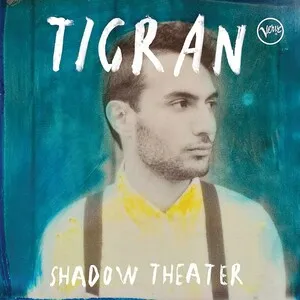
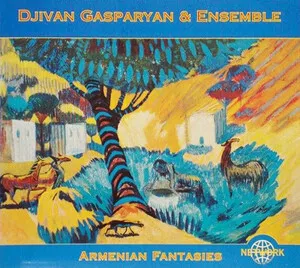
After independence (1991), Armenian music diversified further. Duduk masters like Djivan Gasparyan carried traditional timbres to world stages and film. Jazz artists (e.g., Tigran Hamasyan) fused odd meters and folk modes with improvisation, while rock, pop, and electronic musicians recontextualized folk material. Across sacred, folk, and popular domains, Armenian music remains a vibrant bridge between antiquity and innovation.

Top albums