Genres
Artists
Albums
Make Music
Sign in
Sign in
Artists
Opera
Artists
Opera
Giuseppe Giacomini
1993
·
1 album
Listen
1
/5
Genres
Classical Tenor
Classical tenor refers to the Western classical tradition of tenor singing across opera, oratorio, and art song. It centers on a high male voice type whose typical written range spans roughly C3 to B4/C5, with the core tessitura sitting around the passaggio between E4–G4. The style is defined by legato phrasing, precise diction in multiple languages (especially Italian, German, French, and Latin), balanced chiaroscuro tone, and secure breath management (appoggio) that enables both long lyrical lines and brilliant climaxes. Subtypes include leggiero, lyric, spinto, dramatic, and heldentenor, each suited to different repertoire weights and orchestral demands. Accompaniments are commonly full orchestra (opera/oratorio) or piano (Lied/mélodie), sometimes organ or chamber ensembles. Repertoire ranges from Baroque da capo arias to Romantic grand opera scenes, Wagnerian music dramas, sacred works, and recital songs.
Discover
Listen
Opera
Opera is a large-scale theatrical genre that combines music, drama, and visual spectacle, in which the story is primarily conveyed through singing accompanied by an orchestra. It unites solo voices, ensembles, and chorus with staging, costumes, and often dance to create a total artwork. Emerging in late Renaissance Italy and flourishing in the Baroque era, opera developed signature forms such as recitative (speech-like singing that advances the plot) and aria (lyrical numbers that explore character and emotion). Over the centuries it evolved diverse national styles—Italian bel canto, French grand opéra, German music drama—while continually experimenting with orchestration, harmony, narrative structure, and stagecraft.
Discover
Listen
Requiem
A requiem is a musical setting of the Roman Catholic Mass for the Dead (Missa pro defunctis). Historically rooted in Latin liturgy, it sets movements such as the Introit, Kyrie, (historically) the Sequence Dies irae, Offertory, Sanctus, Agnus Dei, and Communion, and often includes additional responsories like Libera me and In paradisum. While the earliest requiems were monophonic chants, the genre became a showcase for polyphonic and later symphonic choral writing. Renaissance composers wrote austere, modal settings; Classical and Romantic composers expanded the forces and dramatic scope; and 20th–21st century composers reimagined the form with new languages, from neo-modal and impressionistic harmonies to avant‑garde sonorities. Today, requiems appear both in liturgy and as concert works, symbolizing collective mourning, remembrance, and spiritual reflection.
Discover
Listen
Albums
1993
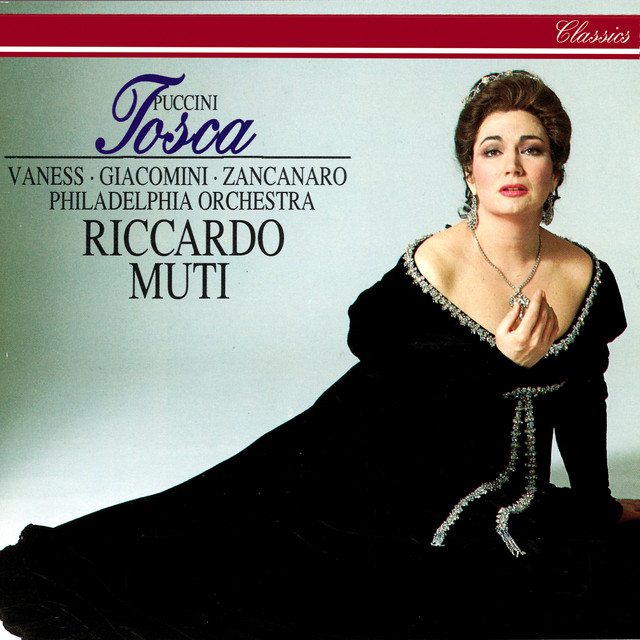
Puccini: Tosca
Giacomo Puccini, Riccardo Muti, Carol Vaness, Giuseppe Giacomini, Giorgio Zanca…
Classical Tenor
Similar artists
4
/5
Wolfgang Amadeus Mozart
Classical
Requiem
Classical Period
4
/5
London Symphony Orchestra
Classical
Ballet
American Classical Piano
4
/5
Berliner Philharmoniker
Classical
Symphony
Romantic Classical
4
/5
Herbert von Karajan
Classical
Symphonic Poem
Symphony
4
/5
Wiener Philharmoniker
Classical
Romantic Classical
Romanticism
4
/5
Claudio Abbado
Classical
Concerto
Expressionism
4
/5
Giuseppe Verdi
Classical Baritone
Classical Mezzo-Soprano
Requiem
3
/5
John Eliot Gardiner
Baroque
Classical
Choral
3
/5
Riccardo Muti
Classical
Opera
Symphony
3
/5
English Baroque Soloists
Baroque
Classical
Choral
Download our mobile app
Get the Melodigging app and start digging for new genres on the go
Download on the App Store
Get it on Google Play
© 2026 Melodigging
Give feedback
Legal
Melodding was created as a tribute to
Every Noise at Once
, which inspired us to help curious minds keep digging into music's ever-evolving genres.