Genres
Artists
Albums
Make Music
Sign in
Sign in
Artists
Isekai
Artists
Isekai
岡部啓一
2010
·
1 album
Listen
3
/5
Genres
Isekai
Isekai (lit. "another world") in music refers to songs and scores written for anime and games where characters are transported—often accidentally or involuntarily—into a parallel universe or fantasy world. In practice, it is a sub-current of Japanese anisong and soundtrack culture whose soundworld emphasizes the wonder, peril, and empowerment arcs typical of isekai narratives. Musically, isekai blends high-impact J‑pop/J‑rock openings (OPs) with hybrid orchestral scores: soaring string ostinati, heroic brass, choir pads, and EDM/rock rhythm sections used to frame battles, leveling-up sequences, and portal moments. Endings (EDs) often pivot to lyrical, nostalgic or bittersweet pop to reflect homesickness, found-family bonds, or the protagonist’s inner monologue.
Discover
Listen
Slow Game
Slow game is a modern, internet-era blend of contemporary R&B and hip hop that prioritizes seductive mid‑tempo grooves, intimate vocals, and polished, radio‑ready songwriting. It typically features trap‑influenced drum programming (808 kicks, ticking hi‑hats), warm sub‑bass, sparse keys or guitar loops, and a prominent, melodic hook. Lyrically, the style revolves around romance, attraction, and late‑night introspection, often switching between sung choruses and rap verses. Compared with classic “slow jams,” slow game is glossier, more minimal, and shaped by the aesthetics of streaming culture—catchy toplines, short forms, and lush, reverb‑soaked space that leaves room for vocal ad‑libs and harmonies.
Discover
Listen
Artcore
Artcore is a subgenre of hardcore techno that fuses high-BPM club energy with the orchestral colors and dramatic writing of cinematic classical music. Producers combine pounding four-on-the-floor kicks, breakbeats, and modern EDM sound design with strings, piano, choirs, and sweeping harmonic progressions. The result is a maximalist, emotive style: towering builds, through-composed sections, key changes, and leitmotifs are common, while supersaw leads, reese basses, and intricate percussion keep the dancefloor intensity. The sound took shape in Japan’s doujin and rhythm-game circles, but it has since spread globally among electronic musicians who favor epic, narrative arrangements.
Discover
Listen
Bytebeat
Bytebeat is a minimalist form of algorithmic music in which very short computer programs (often a single arithmetic expression) generate raw PCM audio directly. It typically uses 8-bit integer math and a running time counter t to produce harsh, glitchy, melody-like patterns, rhythms, and textures through bitwise operations, shifts, modular arithmetic, and simple integer multiplications. The aesthetic sits between chiptune timbres and noise art: crunchy aliasing, stepping waveforms, and emergent structure arise from extremely compact code. First popularized online in 2011, bytebeat is as much a programming puzzle as it is a musical style, celebrated for revealing how complex musical behaviors can emerge from ultra-simple rules.
Discover
Listen
Dreamgaze
Dreamgaze is a contemporary, internet-era blend of shoegaze and dream pop that emphasizes hazy guitar textures, soft vocals, and a nostalgic, romantic atmosphere. The style favors slow-to-mid tempos, chorus- and reverb-drenched guitars, gauzy synth pads, and pillow-soft drum programming or lightly compressed live drums. Vocals tend to be breathy and mixed as part of the texture rather than as a dominant lead, with lyrics that evoke memory, distance, and intimate, cinematic imagery. Production leans toward lush ambience and gentle saturation—think washed-out delays, shimmering modulations, side-chained pads, and layers of stereo width—creating a weightless, dreamlike sound field.
Discover
Listen
Lo-Fi Vgm
Lo‑fi VGM (lo‑fi video game music) is a crossover style that blends the relaxed, tape‑warmed aesthetics of lo‑fi hip hop with melodies and atmospheres from classic and contemporary video game scores. Producers typically re‑harmonize or gently reharmonize well‑known themes, slow the tempos into the 60–90 BPM range, add vinyl crackle, tape hiss, dusty drums, soft keys/guitar, and cozy ambience, and retain the nostalgic contours of the original cues. The result is music suited for studying, streaming, or unwinding, while evoking game‑world nostalgia. Netlabels and collectives—most visibly GameChops and Curaga Records—helped codify the sound with licensed, album‑length reinterpretations of major franchises.
Discover
Listen
Fourth World
Fourth World is a term coined by trumpeter-composer Jon Hassell to describe a "unified primitive/futuristic sound" that blends ambient minimalism, non-Western traditional musics, and studio electronics into an imagined global music. The style is characterized by modal drones, cyclical hand percussion, and timbral experimentation (often through harmonizers, delays, and pitch-shifting) applied to acoustic instruments—famously Hassell’s processed trumpet—alongside sampled or evoked elements of African, Indian, Southeast Asian, and other traditions. Rather than ethnographic authenticity, Fourth World proposes an imaginative, post-geographic sound world where the studio acts as a cultural crossroads. Musically it favors slow to mid tempos, layered polyrhythms, pentatonic or raga-like modality, microtonal color, spacious reverbs, and textural foregrounding. The result is meditative and sensuous, at once ancient-sounding and hyper-modern.
Discover
Listen
Video Game Music
Video game music (VGM) is the soundtrack or background music composed specifically to accompany and enhance interactive gameplay. In its earliest decades, VGM was bound by severe hardware constraints: simple programmable sound generators (PSG) and later FM-synthesis chips limited composers to a handful of monophonic channels, basic waveforms, and tiny memory footprints. Those constraints forged a distinctive, catchy, loop-based idiom—often called “chip music” or “8‑bit”—that became the emblematic sound of early games. As technology advanced, VGM expanded into rich orchestral, rock, electronic, and hybrid palettes and adopted adaptive/interactive scoring techniques so the music could change with the player’s actions. Today it spans everything from intimate, textural ambience to full symphonic epics, while still celebrating its retro chip heritage.
Discover
Listen
Anime
Anime (often called "anisong" for vocal themes) is the umbrella term for songs and scores created for Japanese animation, including opening/ending themes and background music. It blends contemporary J‑pop/J‑rock songwriting with dramatic orchestral scoring and modern electronic production, aiming for instantly memorable hooks and emotionally charged climaxes tailored to a show's narrative and characters. Stylistic hallmarks include high-register, expressive vocals; tight, hook-forward structures (especially 90-second “TV size” versions); bright, polished production; and frequent late-song key changes. Arrangements often hybridize rock bands, strings, brass, and EDM textures to deliver cinematic impact, while lyrics favor aspirational, metaphor-rich imagery that mirrors the series’ themes.
Discover
Listen
Experimental Electronic
Experimental electronic is an umbrella term for electronic music that foregrounds exploration and innovation over convention. It treats the studio, computer, and synthesizer as laboratories, using techniques such as tape manipulation, modular and software synthesis, feedback systems, granular and spectral processing, algorithmic/generative composition, circuit-bending, and field recording. Rather than regular song forms or dancefloor functionality, it prioritizes timbre, texture, space, and process. Structures may be nonlinear or open-form; harmony is often non-functional or drone-based; rhythm can be free, irregular, or machine-deconstructed. The style overlaps with electroacoustic music, sound art, industrial, ambient, and noise while continually interfacing with club culture and contemporary art contexts.
Discover
Listen
Soundtrack
Soundtrack is music created to accompany and enhance visual media such as film, television, and video games. It includes original scores (instrumental or vocal music composed specifically for the picture) and, at times, curated compilations of pre-existing songs. Stylistically, soundtrack is a meta-genre that can encompass orchestral symphonic writing, jazz, electronic and synth-driven textures, choral forces, popular song, and experimental sound design. Its defining trait is functional storytelling: themes, motifs, harmony, rhythm, and timbre are shaped by narrative needs, character psychology, pacing, and editing. Common features include leitmotifs for characters or ideas, modular cues that can be edited to picture, dynamic orchestration for dramatic range, and production approaches that sit well under dialogue and sound effects. Because it must synchronize to picture, soundtrack often uses clear dramatic arcs, tempo maps, and hit points.
Discover
Listen
Show all 11 genres
Albums
2010
1
/5
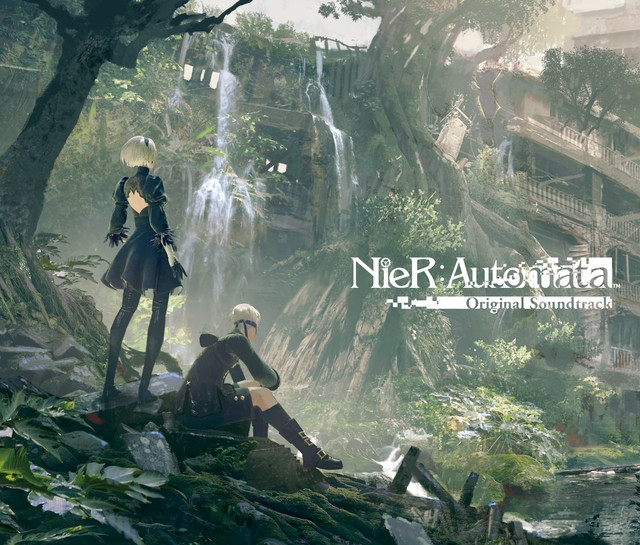
NieR:Automata (Original Soundtrack)
Various Artists, Mitsuda, Yasunori, Millennial Fair, Uematsu, Nobuo, Itō, Kenji…
Experimental Electronic
Fourth World
Similar artists
3
/5
SQUARE ENIX MUSIC
Isekai
Japanese Vgm
Soundtrack
4
/5
Toby Fox
Indie Game Soundtrack
Soundtrack
Video Game Music
4
/5
アトラスサウンドチーム
Soundtrack
Isekai
Japanese Vgm
4
/5
Lorien Testard
Soundtrack
Deep Soundtrack
Isekai
4
/5
Shiro SAGISU
Anime
Anime Lo-Fi
Gaming Edm
4
/5
Alice Duport-Percier
Soundtrack
Deep Soundtrack
Isekai
4
/5
Yoko Shimomura
Chiptune
Digital Horror
Isekai
4
/5
Joe Hisaishi
Japanese Classical
Anime
Cinematic Classical
5
/5
Hans Zimmer
Country Dawn
Soundtrack
Classical
4
/5
HOYO-MiX
Soundtrack
Digital Horror
Gamecore
Download our mobile app
Get the Melodigging app and start digging for new genres on the go
Download on the App Store
Get it on Google Play
© 2026 Melodigging
Give feedback
Legal
Melodding was created as a tribute to
Every Noise at Once
, which inspired us to help curious minds keep digging into music's ever-evolving genres.