Genres
Make Music
Artists
Albums
Challenges
Sign in
Sign in
Albums
By Black Sabbath
Albums
By Black Sabbath
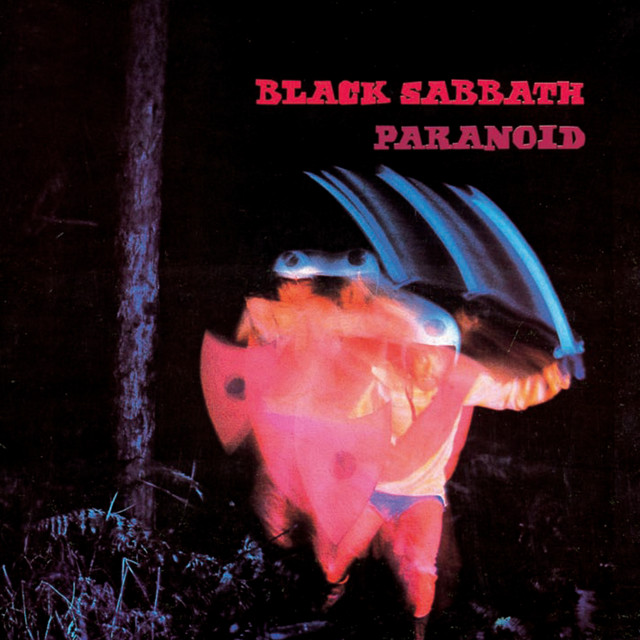
Paranoid
September 18, 1970
Listen
5
/5
Genres
Stoner Rock
Stoner rock is a heavy, riff‑centric style that blends the weight and doom of early heavy metal with the groove and expansive jams of late‑60s/70s psychedelic and acid rock. It is marked by fuzz‑drenched, down‑tuned guitars, thick bass tones, and relaxed but powerful mid‑tempo grooves. Songs often emphasize hypnotic, repetitive riffs; extended instrumental passages; and a warm, vintage analog sound. Vocals tend to be laid‑back or gritty rather than operatic, and lyrical themes commonly explore the desert, space, altered states, mythology, and countercultural imagery. The overall vibe is earthy and immersive—equal parts head‑nodding groove, psychedelic haze, and Sabbath‑born heaviness.
Discover
Listen
Dystopian
Dystopian music is a thematic style that evokes societies under repressive control, surveillance, and decay—often imagined in near‑ or far‑future settings. Sonically, it blends industrial abrasiveness, mechanical rhythms, and shadowy ambient textures with synth‑driven timbres and cinematic sound design. The result is a sense of unease, alienation, and technological overreach that mirrors the dystopian fiction tradition in literature and film.
Discover
Listen
Doom Metal
Doom metal is a heavy metal subgenre defined by slow to mid-tempo grooves, down-tuned, highly distorted guitars, and an atmosphere of dread, melancholy, and weight. It emphasizes ominous, minor-key riffs and sustained tones over speed or virtuosity, creating a crushing sense of space and inevitability. Vocals range from plaintive and theatrical (epic/traditional doom) to anguished wails or harsh growls (death-doom), and lyrics often explore themes of suffering, mortality, the occult, apocalyptic visions, and existential despair. Song structures are typically riff-centric and long-form, with repetition and gradual dynamic shifts producing a hypnotic, ritualistic feel.
Discover
Listen
Album Rock
Album rock (often associated with the album‑oriented rock, or AOR, FM radio format) refers to rock music created and programmed with the album as the primary artistic unit rather than individual hit singles. Emerging on U.S. FM radio in the early 1970s, it spotlighted deeper album cuts, long-form tracks, and cohesive sequencing, drawing heavily from progressive, psychedelic, art, hard, blues, and folk rock. Musically, album rock favors full-band arrangements, extended solos, dynamic contrasts, and high-fidelity production intended for immersive, start-to-finish listening. While overlapping with “arena rock” and later “classic rock,” album rock is best understood as an album-centered approach and a radio culture that shaped how rock acts wrote, produced, and presented their music.
Discover
Listen
Brickfilm
Brickfilm is a stop‑motion animation style that uses interlocking plastic bricks—most commonly LEGO—and their minifigures to tell stories. Filmmakers build sets from bricks, pose figures frame by frame, and photograph each incremental movement to create motion when the images are sequenced. The medium embraces the toy’s modularity: walls, props, vehicles, and even special effects can be constructed from bricks, while post‑production adds sound design, music, and occasional CG compositing. Though it spans every genre (comedy, action, sci‑fi, drama), brickfilm is united by its playful, tactile aesthetic and the unmistakable look and limitations of minifigure performance. Since the late 1990s and early 2000s, brickfilm has flourished online, with a large community of hobbyists and professionals sharing work, techniques, and running fast‑turn contests. The style ranges from rough single‑weekend shorts to meticulously lit, cinematic productions shot with dedicated stop‑motion rigs.
Discover
Listen
Cannibal
Cannibal is a niche soundtrack-anchored genre tag tied to the Italian “cannibal” exploitation film cycle that peaked from the mid‑1970s to early 1980s. Musically, it blends lush European library/easy‑listening orchestration, prog‑rock rhythm sections, jazz/funk instrumentation, and so‑called “tribal” percussion and flutes, set against dark, suspenseful harmonic beds. Its aesthetic aims for high shock value consistent with the films’ violent and transgressive subject matter, juxtaposing deceptively beautiful themes with dread, ambient dissonance, and percussive ritual cues. Contemporary dark electronic and extreme metal acts sometimes reference this palette to evoke jungle survivalism, taboo, and visceral tension.
Discover
Listen
Heavy Metal
Heavy metal is a loud, guitar-driven style of rock defined by heavily distorted riffs, thunderous drums, and powerful vocals. Its musical language emphasizes minor modes, modal (Aeolian, Phrygian) riffing, and energy over groove, often featuring virtuosic guitar solos and dramatic dynamic contrasts. Emerging from late-1960s blues rock and psychedelic experimentation, heavy metal codified a darker, heavier sound with bands like Black Sabbath, Deep Purple, and Led Zeppelin. The genre values weight, intensity, and grandeur—whether through plodding, doom-laden tempos or galloping, high-energy rhythms—paired with themes that range from personal struggle and social critique to fantasy, mythology, and the occult.
Discover
Listen
Video Game Music
Video game music (VGM) is the soundtrack or background music composed specifically to accompany and enhance interactive gameplay. In its earliest decades, VGM was bound by severe hardware constraints: simple programmable sound generators (PSG) and later FM-synthesis chips limited composers to a handful of monophonic channels, basic waveforms, and tiny memory footprints. Those constraints forged a distinctive, catchy, loop-based idiom—often called “chip music” or “8‑bit”—that became the emblematic sound of early games. As technology advanced, VGM expanded into rich orchestral, rock, electronic, and hybrid palettes and adopted adaptive/interactive scoring techniques so the music could change with the player’s actions. Today it spans everything from intimate, textural ambience to full symphonic epics, while still celebrating its retro chip heritage.
Discover
Listen
Classic Rock
Classic rock is a radio-defined umbrella for mainstream, guitar-centered rock music from the mid-1960s through the 1980s. It emphasizes blues-based riffs, memorable choruses, sturdy backbeats, and prominent guitar solos, often framed by warm, analog production. Rather than being a single stylistic branch, classic rock curates a canon that spans hard rock, blues rock, folk rock, psychedelic and progressive strains, and heartland- and country-tinged rock. Albums and album-oriented rock (AOR) values—extended tracks, conceptual cohesion, and musicianship—are central to its identity. The sound evokes tube-amp crunch, Hammond organs, stacked vocal harmonies, and anthemic songwriting designed for both FM radio and the concert arena.
Discover
Listen
Metal
Metal (often used to mean heavy metal in its broad, umbrella sense) is a loud, guitar-driven style of rock defined by high-gain distortion, emphatic and often martial rhythms, and a dense, powerful low end. It foregrounds riff-based songwriting, dramatic dynamics, virtuosic guitar solos, and commanding vocals that range from melodic wails to aggressive snarls and growls. Harmonically, metal favors minor modes, modal color (Aeolian, Phrygian), chromaticism, and tritone-inflected tension, while thematically it explores power, mythology, the occult, social critique, fantasy, and existential subjects. While adjacent to hard rock, metal typically pushes amplification, distortion, precision, and thematic intensity further, forming a foundation for many specialized subgenres.
Discover
Listen
Hard Rock
Hard rock is a loud, riff-driven style of rock music built around heavily amplified electric guitars, a powerful rhythm section, and assertive vocals. Songs typically center on memorable, blues-based guitar riffs, strong backbeats, and energetic, often shouted or belted choruses. The genre emphasizes power, groove, and visceral impact over intricate harmony or extended improvisation. Distortion, power chords, pentatonic melodies, and call‑and‑response between vocals and guitar are core traits, while lyrical themes often explore rebellion, lust, swagger, escape, and cathartic release.
Discover
Listen
Blues Rock
Blues rock is a guitar-driven style that fuses the raw feeling and 12‑bar structures of the blues with the power, volume, and rhythmic punch of rock. It emphasizes riff-based songs, pentatonic and blues-scale soloing, call‑and‑response between voice and guitar, and an expressive, often gritty vocal delivery. Typical ensembles are power trios (guitar, bass, drums) or quartet formats adding second guitar, keyboards, or harmonica, and performances commonly feature extended improvisation. Sonically, it favors overdriven tube-amp tones, sustained bends, vibrato, and dynamic contrasts, moving from shuffles and boogies to straight‑eighth rock grooves.
Discover
Listen
Dacoit Film
Dacoit film is an Indian cinema subgenre centered on the lives and outlaw activities of rural bandits (“dacoits”) in the Indian subcontinent. Musically, these films blend the idioms of Hindi film songwriting with rustic North Indian folk colors and the dramatic, twangy orchestration of Westerns. Expect keening flutes (bansuri), sarangi and harmonium for pathos; dholak, nagara, and khartal for earthy drive; plus trumpets, whistling, and electric guitars that echo spaghetti‑western tension. Songs often alternate between village festivities and ballads of honor, vendetta, and fate, while the background score leans on galloping rhythms and stark modal motifs to power chases and standoffs.
Discover
Listen
Mafia Film
Mafia film is a crime-cinema subgenre centered on Italian and Italian‑American organized crime syndicates (the Mafia/Cosa Nostra and related clans). Narratives typically explore family hierarchies, codes of honor and omertà, the tension between old‑world tradition and new‑world capitalism, and the tragic costs of power. Musically, the style became strongly codified in the 1970s through scores that blend Italianate lyricism with noir‑era harmony: mournful waltzes, mandolin or accordion colors, solo trumpet or clarinet laments, and lush, elegiac strings. Contemporary entries often juxtapose this palette with curated period source music (doo‑wop, crooner ballads, Italian canzoni) and darker, minimalist textures to underscore brutality and fate.
Discover
Listen
Animation
Animation is a moving-image medium that rapidly displays static imagery to create the illusion of motion and change. Music written for animation is crafted to support this hyper-expressive visual grammar—accenting motion, enhancing character, and articulating comedic timing. Unlike many live‑action scores, animation scoring often embraces tightly synchronized "hit points" (sometimes called Mickey‑Mousing), brisk thematic development, and kaleidoscopic changes of mood to mirror frequent cuts and rapid action. Its stylistic palette ranges from orchestral light music and jazz/big band swing to modern electronic textures and pop songs (especially in anime OP/ED formats).
Discover
Listen
Similar albums
1969
Abbey Road
The Beatles
1972
The Rise and Fall of Ziggy Stardust and The Spiders From Mars
David Bowie
1970
Paranoid
Black Sabbath
2010
My Beautiful Dark Twisted Fantasy
Kanye West
2007
In Rainbows
Radiohead
2019
Igor
Tyler, The Creator
1986
The Queen Is Dead
The Smiths
1994
Dummy
Portishead
1993
Souvlaki
Slowdive
2000
Kid A
Radiohead
Download our mobile app
Get the Melodigging app and start digging for new genres on the go
Download on the App Store
Get it on Google Play
© 2026 Melodigging
Give feedback
Legal
Melodding was created as a tribute to
Every Noise at Once
, which inspired us to help curious minds keep digging into music's ever-evolving genres.