Your digging level
Description
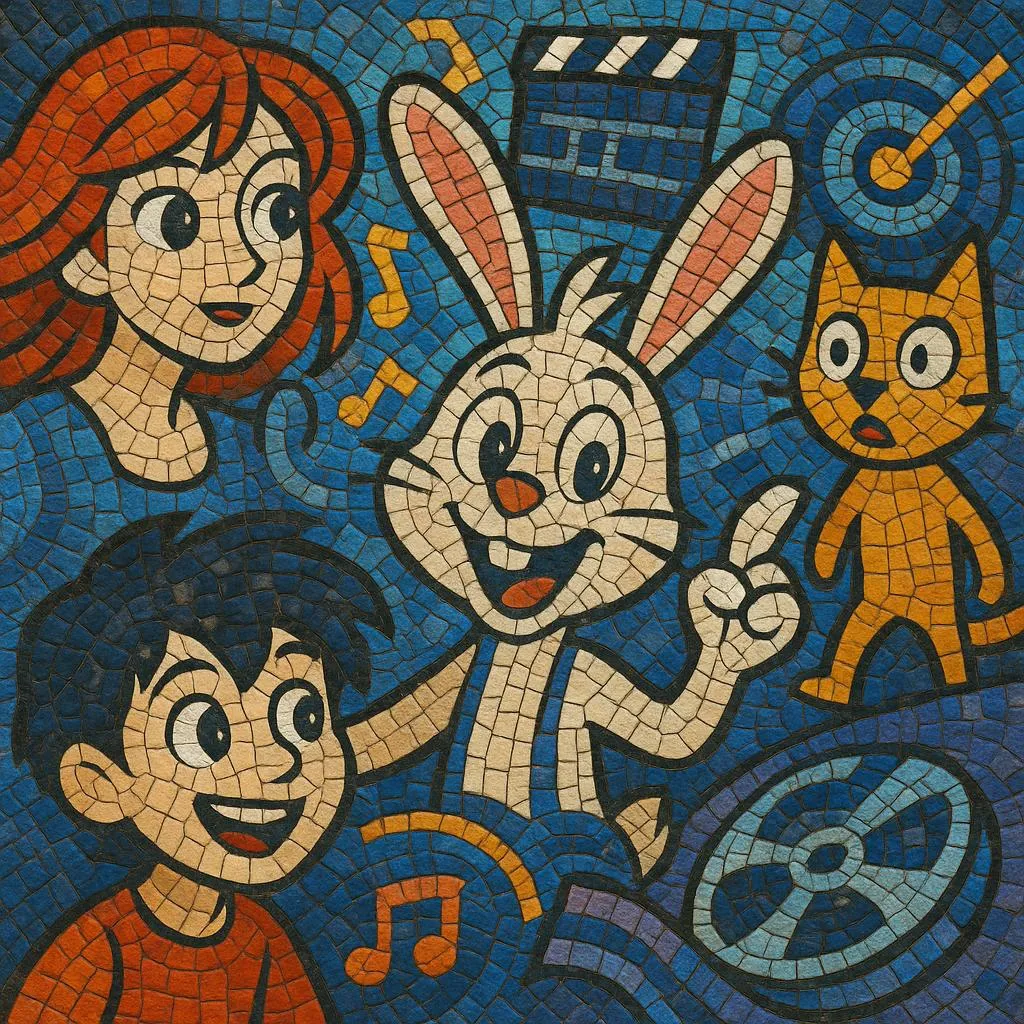
Animation is a moving-image medium that rapidly displays static imagery to create the illusion of motion and change. Music written for animation is crafted to support this hyper-expressive visual grammar—accenting motion, enhancing character, and articulating comedic timing.
Unlike many live‑action scores, animation scoring often embraces tightly synchronized "hit points" (sometimes called Mickey‑Mousing), brisk thematic development, and kaleidoscopic changes of mood to mirror frequent cuts and rapid action. Its stylistic palette ranges from orchestral light music and jazz/big band swing to modern electronic textures and pop songs (especially in anime OP/ED formats).
History
Early silent animation used live accompanists or cue sheets drawn from light classical and popular repertoire. The synchronization revolution of the late 1920s (e.g., Disney’s Steamboat Willie, 1928) enabled precisely timed musical gags and began codifying cartoon scoring practices—rapid modulations, quick motif swaps, and on‑the‑nose accents for every twitch and pratfall.
Studios in the United States (Warner Bros., Disney, MGM) established a house style: tightly orchestrated, virtuosic cues that fused operetta, classical forms, jazz, and big‑band swing. Composers like Carl Stalling and Scott Bradley perfected techniques such as leitmotifs for characters, split‑second accenting of visual beats, and witty quotation of public‑domain tunes—turning the score into a comedic voice equal to the visuals.
TV animation demanded faster production and smaller ensembles, shifting some scores toward library music, reduced orchestras, or jazz combos. In Japan, anime developed its own musical ecosystem: kayōkyoku- and later J‑pop‑inflected songs for openings/endings, alongside dramatic underscore that mixed Western orchestral language with rock, funk, and early synths. This period laid the groundwork for the distinctive culture of anime music and composer‑driven soundtracks.
The Disney Renaissance rekindled the animated musical in the West, merging Broadway songwriting with symphonic underscore. Globally, studios adopted hybrid orchestral/electronic scoring while anime soundtracks gained international audiences. Composers like Joe Hisaishi (Studio Ghibli) brought lyrical minimalism and sumptuous harmonies that broadened the idiom’s emotional spectrum beyond slapstick.
Contemporary animation scores flex across styles—from lush neoclassical to EDM‑influenced textures—while production workflows rely on tempo‑mapped DAW sessions and meticulous hit‑point design. Anime OP/ED songs regularly chart, and specialized sub‑genres (e.g., lo‑fi adaptations of anime themes) reflect the form’s cultural reach. Throughout, animation music remains defined by agile form, precise synchronization, and character‑first thematic writing.