

Your digging level

For this genre
0/8
🏆
Sign in, then listen to this genre to level up

Description

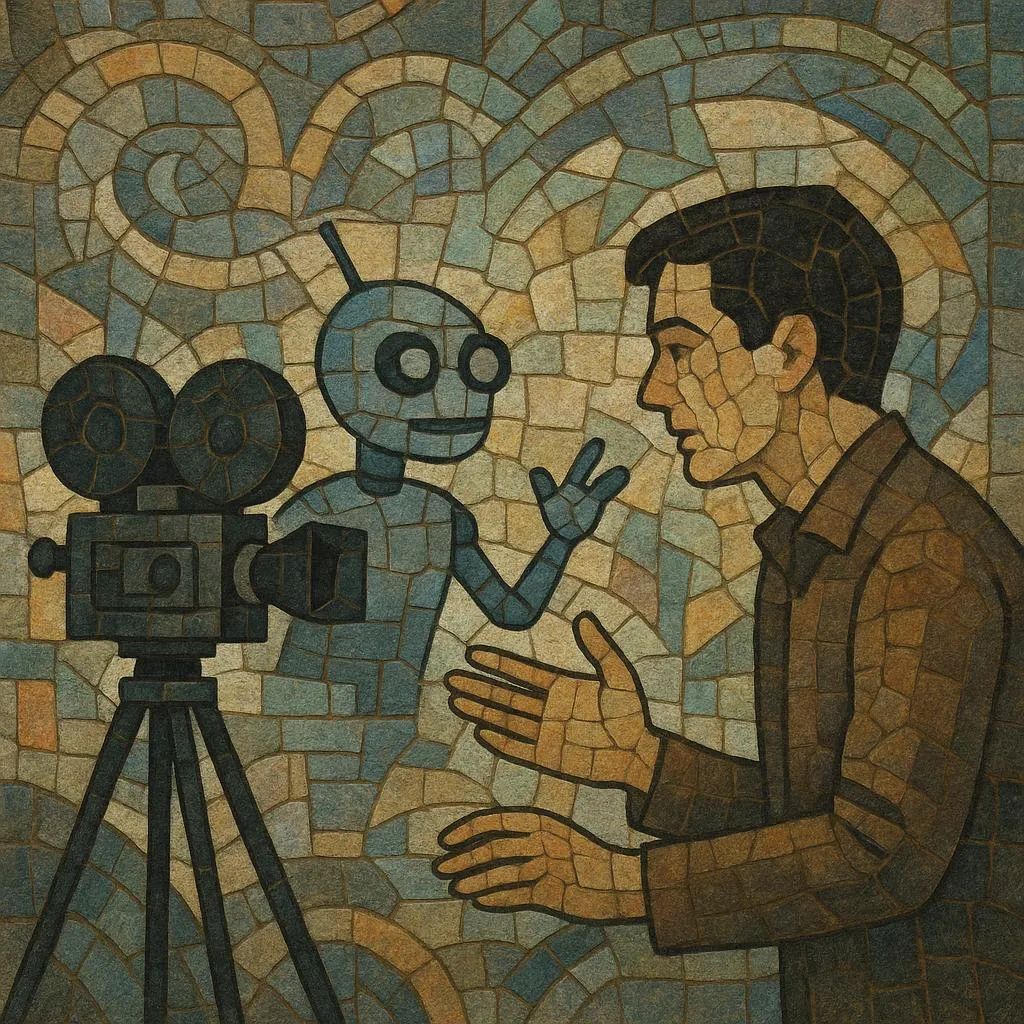
Live-action animation is a hybrid screen medium that deliberately combines photographed live-action footage with frame-by-frame animation, allowing human performers, physical sets, or real environments to share the screen and interact with drawn, stop-motion, or computer-generated characters and elements.

Its hallmark is the seamless illusion of interaction: actors exchange eye-lines, props, and choreography with animated figures; lighting, perspective, and timing are carefully matched so the composite reads as a single, believable space. Historically achieved with optical printing, travelling mattes, and painstaking cel work, it now commonly relies on digital compositing, match‑moving, and CG rendering—while still honoring the classic craft of 2D and stop‑motion animation.

Sources: Spotify, Wikipedia, Discogs, RYM, MB, user feedback and other online sources

History

Early experiments (1900s–1910s)
•   Originating in the silent era, pioneers such as J. Stuart Blackton (The Enchanted Drawing, 1900) and Winsor McCay (Gertie the Dinosaur, 1914, with staged live interaction) explored on-screen interplay between filmed performers and drawings. These works established core principles: eye-line matching, frame-accurate timing, and composited illusions.
Studio refinement and popularization (1920s–1940s)
•   Max and Dave Fleischer’s Out of the Inkwell series regularly brought animated figures into the live world (and vice versa). Walt Disney Productions further normalized hybrid sequences across shorts and features, using increasingly sophisticated matte processes, multiplane camera work, and optical printing to integrate animation with live sets and actors.
Musical and family cinema showcase (1960s–1970s)
•   Films like Mary Poppins (1964), Bedknobs and Broomsticks (1971), and Pete’s Dragon (1977) demonstrated large‑scale, musical storytelling with extended live-action/animation set pieces. These productions codified editorial pacing, choreography, and color scripting that supported the illusion during lengthy song‑and‑dance numbers.
Technical watershed (1980s–1990s)
•   Who Framed Roger Rabbit (1988, Robert Zemeckis; animation direction by Richard Williams) reset the bar with rigorous lighting continuity, physical props for interactions, and complex camera moves, inspiring a wave of features (Cool World, 1992; Space Jam, 1996). This period bridged optical and digital techniques, refining match‑move and contact shadows that made interactions feel tactile.
Digital era and genre elasticity (2000s–present)
•   With mature digital compositing and CG, hybrids flourished in diverse tones—from fairytale musicals (Enchanted, 2007) to sports comedies (Space Jam: A New Legacy, 2021). Music videos and advertising continued to embrace the format for its playful, instantly readable magic. Despite new tools, the core grammar remains: previsualization, plate planning, consistent lighting, performance cues, and postproduction craft.

How to make a track in this genre

Concept and previsualization
•   Define the dramatic purpose of the hybrid: comedy, musical spectacle, or fantastical realism. Create detailed storyboards/animatics that lock eye-lines, staging, and beats of contact between live performers and animated elements. •   Decide the animation modality (hand‑drawn 2D, stop‑motion, or CG) early; each implies different on‑set requirements (markers, stand‑ins, rigs) and post schedules.
Live-action plates and performance
•   Block actors with precise marks and consistent eye-lines at the animated character’s intended height and depth. Use stand‑in puppets or tracking balls for timing. •   Match lenses, camera height, and movement to animation’s planned perspective; motion-control rigs are ideal for repeatable passes. •   Capture clean plates and reference passes (gray/Chrome ball, Macbeth chart) for lighting and compositing continuity.
Animation production
•   For 2D: animate on the plate’s frame rate (often 24 fps), maintaining volume, perspective, and contact cues (hand grips, footfalls, prop intersections). Draw contact shadows and occlusions. •   For stop-motion: replicate set scale or project live plates behind/within miniature sets. Lock frame‑accurate placements to the live timing. •   For CG: build accurate camera solves and geometry proxies; light with HDRIs derived from set photography to unify reflections and color temperature.
Compositing and integration
•   Rotoscope foreground actors/props to sandwich animation at correct depths; ensure occlusion logic is consistent. •   Balance lighting (keys/fills/rims), introduce shared grain, lens distortion, and motion blur to unify texture. Add ground contact (shadows, speculars), interaction debris, and subtle reflections.
Sound and music
•   Score to reinforce the hybrid illusion: musical hits on contact moments, Foley for shared space (footsteps, rustle), and spatialized effects that position animated elements within the live room. •   For musical set pieces, pre‑record vocals and establish click tracks for choreography so animation and performance sync cleanly.
Aesthetic calibration
•   Color-script both worlds; either harmonize palettes for naturalism or deliberately contrast them for whimsical effect (classic cel saturation against neutral sets). Maintain consistent art direction so the hybrid reads as intentional, not incidental.

Top tracks

Locked
Share your favorite track to unlock other users’ top tracks

Upcoming concerts

in this genre

Download our mobile app

Get the Melodigging app and start digging for new genres on the go
© 2026 Melodigging
Melodding was created as a tribute to Every Noise at Once, which inspired us to help curious minds keep digging into music's ever-evolving genres.
Buy me a coffee for Melodigging
