Your digging level
Description
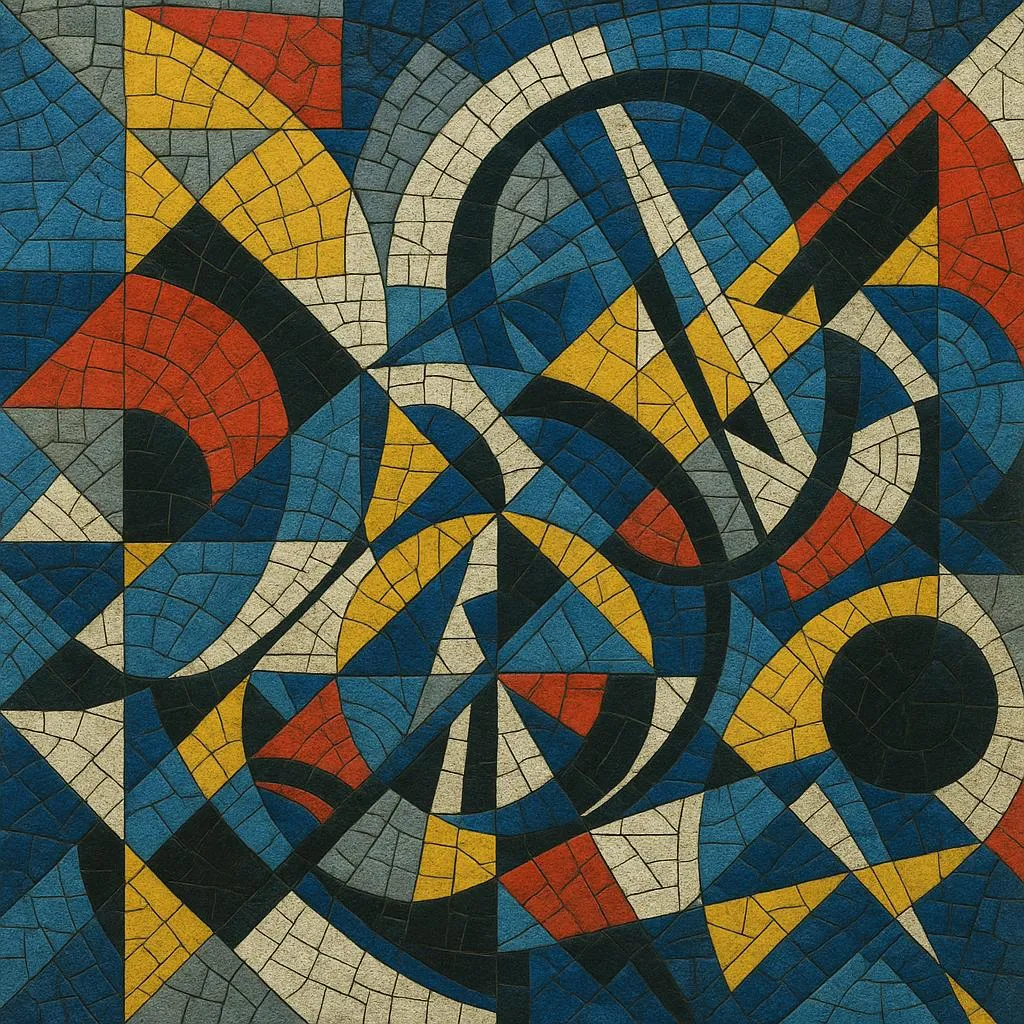
Absolute film is an early avant‑garde, non‑narrative cinema movement that sought pure visual abstraction—shapes, lines, light, and rhythm—without representational imagery or story.
Rooted in Berlin in the early 1920s, its pioneers aimed to go beyond Expressionism and Cubism to achieve completely unrecognizable abstraction, often conceived as a visual analogue to “absolute music.” In practice, films were composed like musical works, organized in movements, motifs, and counterpoint, and frequently screened with live or specially prepared musical accompaniment.
Typical techniques included geometric animation, hand‑painted or scratched film, cut‑outs, stop motion, and optical printing. The results emphasized visual rhythm, contrast, and motion, foregrounding the idea of cinema as pure time‑based composition.
History
The term “absolute film” evokes “absolute music,” signaling a desire for autonomous, non‑programmatic art. In post‑WWI Berlin, artists including Hans Richter, Viking Eggeling, Walter Ruttmann, and Oskar Fischinger rejected narrative cinema and the lingering representational pull of Expressionism and Cubism, concentrating instead on purely abstract motion.
• 1921–1925: Landmark works appear, such as Walter Ruttmann’s Opus series (I–IV), Hans Richter’s Rhythmus 21 and subsequent Rhythmus films, and Viking Eggeling’s Diagonal Symphony (Symphonie Diagonale, 1924). Screenings often took place in avant‑garde galleries and clubs, with live accompaniment that underscored the films’ musical conception.Absolute film formalized the idea of “visual music”—cinema composed like sound, using formal devices such as phrase, motif, counterpoint, and acceleration/decrescendo of motion. László Moholy‑Nagy’s Light‑Play Black White Gray (1930) and color‑organ experiments by figures like Ludwig Hirschfeld‑Mack broadened the toolkit, while Oskar Fischinger’s meticulously synchronized geometries (Studie series) refined the craft of abstract animation.
The approach spread internationally: Mary Ellen Bute in the U.S., Len Lye in New Zealand/UK, and Norman McLaren in Canada advanced techniques such as direct animation (painting or scratching on film), stroboscopic patterning, and tightly coupled sound/image relations. Parallel Soviet research into drawn/graphical sound connected abstraction directly to audio synthesis.
Absolute film shaped later experimental animation, motion graphics, VJ culture, and “visual music” practices. Its emphasis on rhythm, minimal form, and process informed sound art and the wider experimental canon, as well as contemporary computer animation and music visualization.