Your digging level
Description
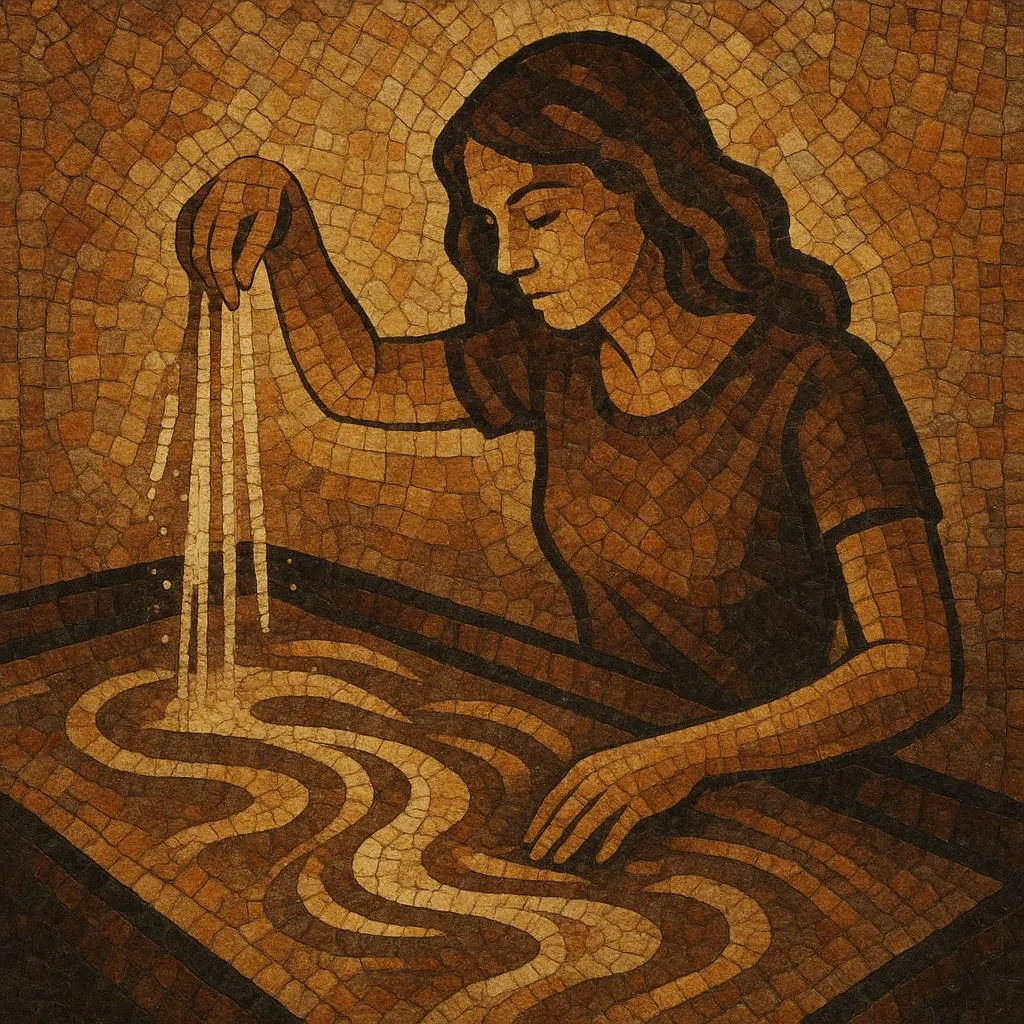
Sand animation is a frame-by-frame and live performance animation technique in which artists manipulate sand on a backlit or frontlit pane of glass while a camera captures the evolving images from above. By pushing, brushing, pouring, and erasing sand, the animator creates high-contrast silhouettes, gradients, and textures that transform fluidly from one scene to another.
Because it is drawn with granular material in continuous motion, sand animation naturally favors metamorphosis, dissolves, and crossfades rather than hard scene cuts. The look ranges from bold, graphic silhouettes to painterly, smoky tones, and the process lends itself both to studio-made films (shot one frame at a time) and to live stage performances synchronized with music.
History
Early experiments with manipulating loose media for animation emerged alongside other direct and abstract animation practices. In the late 1960s, Canadian animator Caroline Leaf (working with the National Film Board of Canada) popularized the specific method of moving sand on a lightbox beneath a camera, establishing the visual vocabulary of high-contrast silhouettes, soft gradients, and continuous metamorphosis that defines sand animation.
Through the 1980s and 1990s, sand animation matured as a distinctive technique. Filmmakers explored narrative shorts and poetic, music-driven films, often pairing the medium’s flowing transformations with minimal cuts and evocative soundtracks. Hungarian animator Ferenc Cakó became internationally known for both studio shorts and onstage sand performances, demonstrating the medium’s power in real time.
The 2000s saw a surge in live sand animation on television and in concert halls. Artists such as Ilana Yahav and Kseniya Simonova brought the technique to global audiences via televised talent shows and touring performances. In these settings, the artist works under a camera that projects the evolving sand images to a screen while music underscores the narrative, turning the making of the image into a performative spectacle.
Today sand animation spans auteur shorts, commissioned music videos, stage shows with orchestras or choirs, and hybrid workflows that combine sand imagery with digital compositing. The technique remains valued for its tactile immediacy, expressive metamorphosis, and its ability to synchronize intimately with music and sound design.