Your digging level
Description
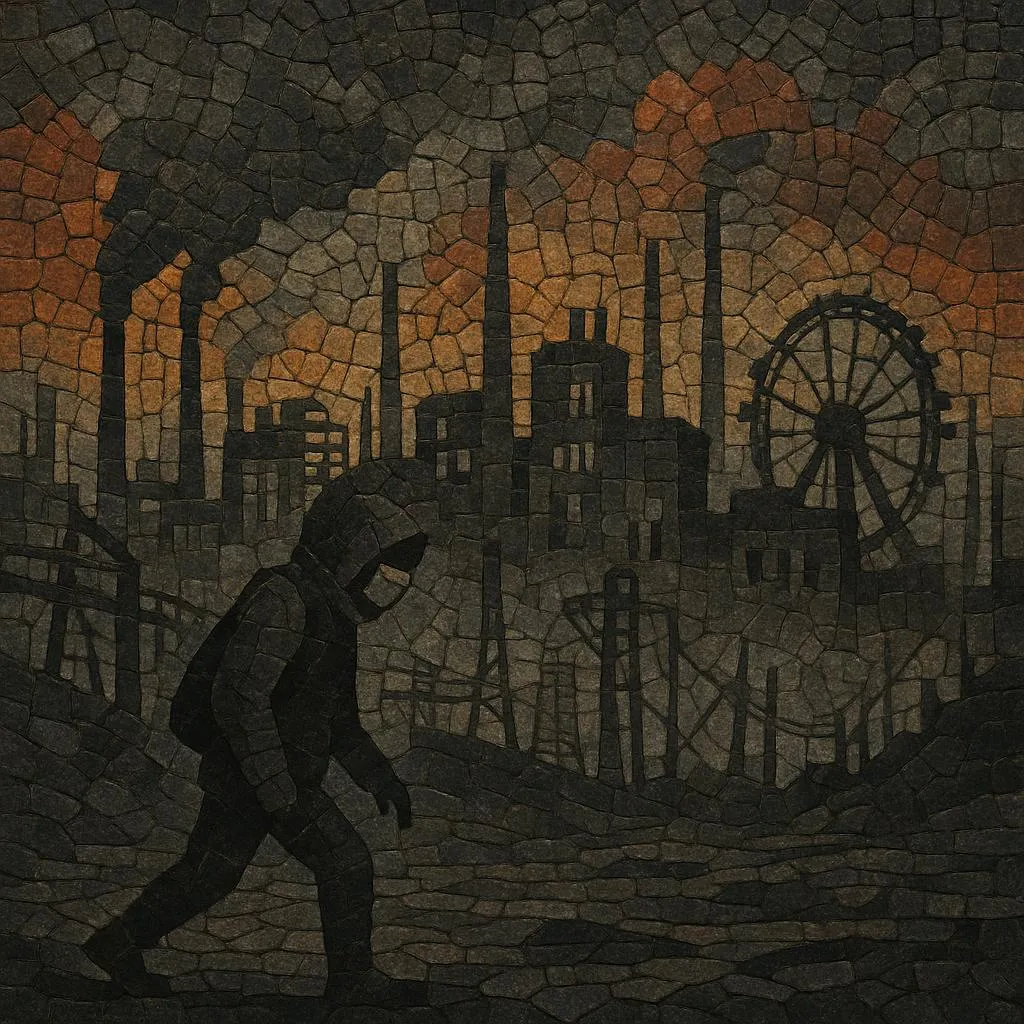
Dystopian music is a thematic style that evokes societies under repressive control, surveillance, and decay—often imagined in near‑ or far‑future settings.
Sonically, it blends industrial abrasiveness, mechanical rhythms, and shadowy ambient textures with synth‑driven timbres and cinematic sound design. The result is a sense of unease, alienation, and technological overreach that mirrors the dystopian fiction tradition in literature and film.
History
The dystopian aesthetic in music cohered in the late 1970s and 1980s alongside the rise of industrial, post‑punk, and electronic film scoring. Artists and composers drew on the cold mechanics of early synths, tape manipulation, and noise practices to mirror literary dystopias and the urban blight of the era. UK industrial and post‑punk scenes (e.g., Throbbing Gristle, Cabaret Voltaire) and electronic score pioneers (e.g., Vangelis) provided a sonic vocabulary of machinery, neon glow, and surveillance.
Science‑fiction cinema and television, especially cyberpunk and neo‑noir works, normalized a dystopian palette—analog synths, drones, metallic percussion, and processed ambience. Parallel club forms like EBM and electro‑industrial added danceable, militaristic rhythms that felt like factory floors. The language of dystopia became as much about texture and atmosphere as about lyrics.
As digital production matured, producers fused granular textures, degraded media patina (hauntology), and post‑apocalyptic post‑rock to paint desolate futures. Darksynth and neo‑synthwave re‑interpreted 1980s dystopian cinema tropes with heavier, more aggressive sound design. Contemporary scores by industrial‑adjacent composers (e.g., Reznor & Ross) brought the dystopian sound into prestige film and television, while underground electronic scenes adopted its bleak, mechanized affect.
Core themes include surveillance, authoritarian control, environmental collapse, and alienation. Musically this manifests as mechanized grooves, minor and modal harmonies, claustrophobic drones, distorted Foley, shortwave voices, and alarm‑like motifs—an audio architecture designed to feel oppressive yet eerily beautiful.



Top albums
Best playlists