Your digging level
Description
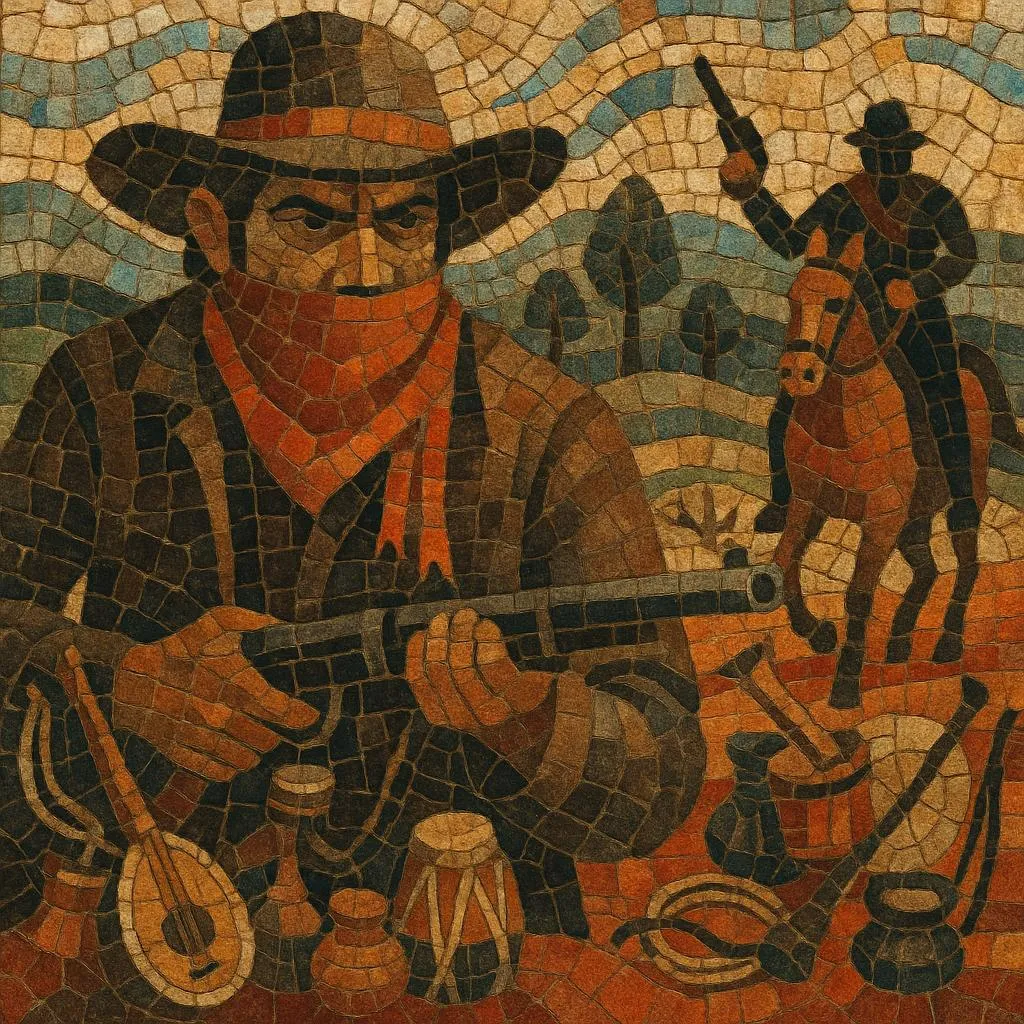
Dacoit film is an Indian cinema subgenre centered on the lives and outlaw activities of rural bandits (“dacoits”) in the Indian subcontinent.
Musically, these films blend the idioms of Hindi film songwriting with rustic North Indian folk colors and the dramatic, twangy orchestration of Westerns. Expect keening flutes (bansuri), sarangi and harmonium for pathos; dholak, nagara, and khartal for earthy drive; plus trumpets, whistling, and electric guitars that echo spaghetti‑western tension. Songs often alternate between village festivities and ballads of honor, vendetta, and fate, while the background score leans on galloping rhythms and stark modal motifs to power chases and standoffs.
History
Dacoit films depict banditry in the arid ravines and villages of North India, dramatizing codes of honor, revenge, and social injustice. Their soundworld fuses Hindustani and folk elements with the suspenseful orchestration and rhythmic tropes of the Western.
• Late-1950s Hindi cinema began foregrounding dacoit narratives in rural melodramas, establishing the archetype of the outlaw as both social symptom and tragic hero.
• Musically, composers drew on Hindustani ragas and regional folk (Keherwa/Dadra grooves, bansuri/sarangi timbres) while adopting film‑noir and Western suspense techniques in the underscore. Landmark titles like Mujhe Jeene Do (1963, music by Jaidev) codified the idiom.
• The subgenre reached mass popularity with Sholay (1975), a “curry western” that married Morricone‑esque guitars and whistling with raga‑tinged melodies and blockbuster song‑and‑dance. R. D. Burman’s score set the sonic template for chase cues, bandit camp scenes, and heroic anthems.
• Throughout the 1970s–80s, mainstream composers (Kalyanji–Anandji, Laxmikant–Pyarelal) balanced rustic percussion and folk refrains with cinematic brass, timpani, and chromatic suspensions to heighten tension.
• Films like Bandit Queen (1994) pivoted to grittier realism, with sparer, ethnographic textures (folk vocals, drones, frame drums) and restrained thematic scoring that underscored brutality and social critique.
• Later biographical and neo‑western treatments retained the genre’s rhythmic gallop and modal starkness while modernizing orchestration and sound design.
• Dacoit film music left a lasting imprint on Indian action/adventure scoring: galloping 6/8 ostinati, desert‑whistle motifs, and twangy guitars became shorthand for frontier suspense.
• Its songs and underscore broadened the Bollywood palette, normalizing hybrids of raga melody with Western cinematic devices across crime, revenge, and rural epics.
• Melody: Hindustani raga‑tinged lines (e.g., Bhairavi/Bhupali for rustic/heroic hues) mixed with pentatonic/aeolian phrases for Western bite.
• Timbres: bansuri, sarangi, harmonium, dholak, khartal, nagara, algoza; layered with electric guitar (clean/twang or tremolo), whistling, trumpet/flugelhorn, timpani, and snare rolls.
• Use galloping feels for pursuit cues: 6/8 or 12/8 ostinati (LOW–‑x‑‑LOW–‑x–) with toms/dholak doubling.
• For songs, favor Keherwa (8‑beat), Dadra (6‑beat), or Rupak (7‑beat), with claps/khartal to evoke village gatherings.
• For standoffs, thin to heartbeat pulses, sparse frame drum hits, and suspended cymbals.
• Keep harmony modal and static; pedal drones (sa/pa) under melody. Introduce bII (phrygian touch) or bVI for menace, reserving major lifts for camaraderie or romance.
• Counterpoint with call‑and‑response between a folk instrument (bansuri/sarangi) and twang guitar or muted trumpet.
• Playback vocals should carry folk prosody and melisma; duet formats suit friendship or oath‑making scenes.
• Lyrical themes: honor, fate, vendetta, defiance, and the harshness/beauty of the ravines (badlands), interspersed with celebratory village numbers.
• Introduce scenes with environmental cues (wind, distant bells, camel bells, whip cracks) blended into musical downbeats.
• Use whistling leitmotifs and tremolo guitars for villain or terrain identity; reserve big brass/timpani swells for ambushes.
• Reverb choices: plate/spring on guitars and whistling; roomy percussion to suggest open landscapes.
• Chase: 6/8 gallop, ostinato low strings/dholak, snare accents, minor‑mode brass hits.
• Lament/Ballad: sarangi lead over tanpura drone, slow Dadra, soft harmonium pads.
• Camp/Dance: Keherwa with khartal claps, group chorus hooks, rustic reeds or algoza riffs.