

Your digging level
Description
Yakuza eiga refers to Japanese gangster films about the yakuza; in musicological terms it denotes the distinctive soundtrack style that grew around those films.
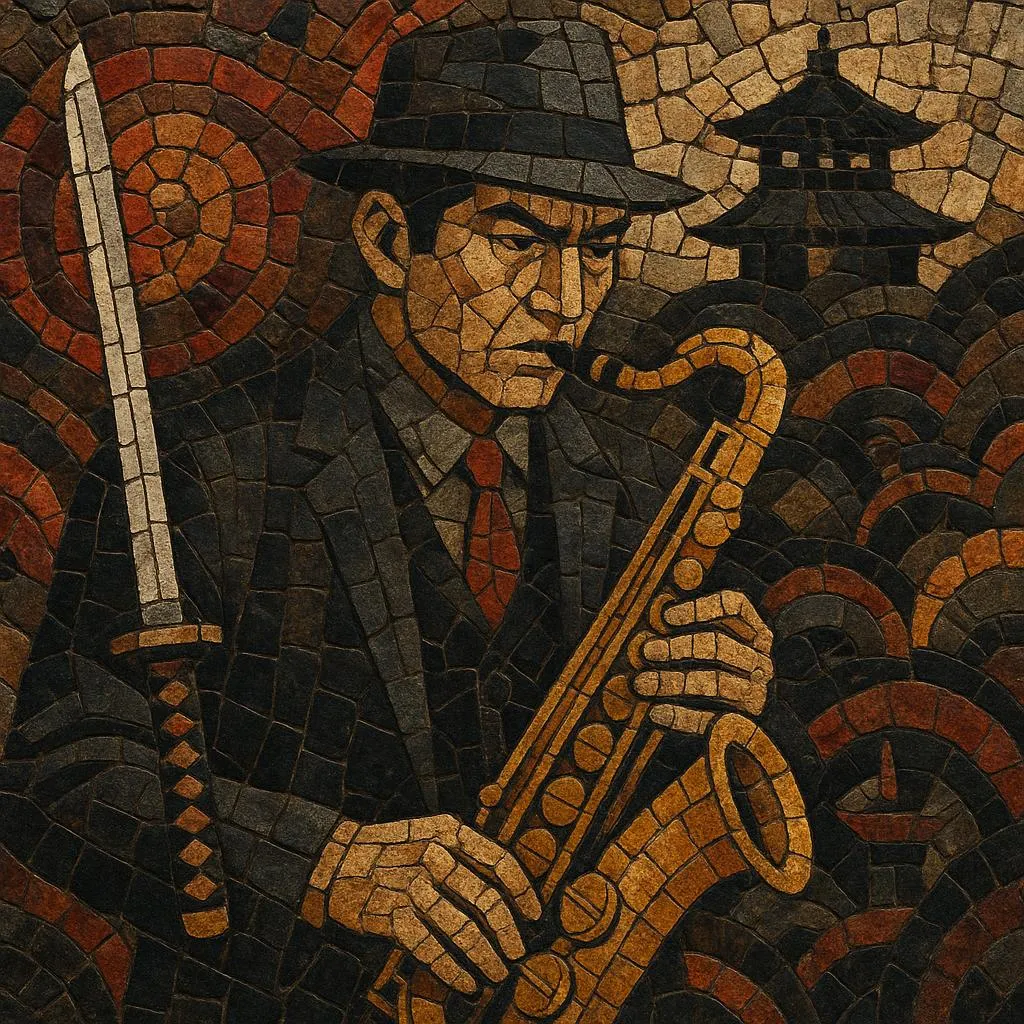
Across the 1950s–1970s, these scores fused noirish big‑band and bebop jazz with Japanese popular song (kayōkyoku) and enka melodrama, adding twangy eleki/surf guitars, walking bass, brushed drums, brassy stabs, and smoky saxophone leads. Traditional colors—shakuhachi, shamisen, taiko/kumi‑daiko—often underline codes of honor, ritual, or tragedy.
By the gritty 1970s jitsuroku wave, funk, wah‑guitar, and tense ostinati entered the palette. From the 1990s onward (e.g., Kitano and Miike films), spare, melancholic minimalism and hybrid electro‑orchestral textures became common. The resulting idiom evokes honor and fatalism alongside violence—dark, urbane, and stylish.
History
Postwar studios (Toei, Nikkatsu, Toho) consolidated the yakuza film cycle; musically, arrangers leaned on American film‑noir and big‑band jazz vocabulary. Kayōkyoku and enka supplied lyrical themes for honor, loyalty, and loss, while chromatic noir harmonies and muted brass painted urban menace.
“Chivalry films” idealized code‑bound gangsters. Scores combined lounge jazz, bluesy progressions, and eleki/surf guitars (spring reverb tremolo, walking bass, brushes). Traditional timbres—shakuhachi, shamisen—signaled clan ritual and ancestral duty, intertwining Japanese modality with ii–V–I minor turns.
Grittier “true record” films (e.g., Kinji Fukasaku) pushed the music darker and leaner: tense ostinatos, wah‑guitar funk touches, stabbing brass, and relentless snare patterns. Title themes became anthemic yet ominous, often mixing enka melody with hard‑edged rhythm sections.
With directors like Takeshi Kitano, scores embraced lyrical minimalism: sparse piano, small strings, and restrained percussion, juxtaposed with sudden percussive bursts for violence. Jazz harmony remained, but textures thinned to highlight isolation and fatalism.
Contemporary yakuza films (e.g., Takashi Miike, Kitano’s later works) blend orchestral, jazz‑blues DNA with electronic pulses, granular sound design, and saturated guitars. The idiom also seeps into game music and retro‑modern scenes that reference mid‑century Japanese cool.
Yakuza eiga music codified a Japanese noir sound—equal parts jazz club, street ritual, and tragic ballad. Its fingerprints are audible in Shibuya‑kei, city‑pop‑informed scoring, anime/film cues that evoke underworld chic, and sampling aesthetics that mine 1960s–70s Japanese soundtrack LPs.

