Your digging level
Description
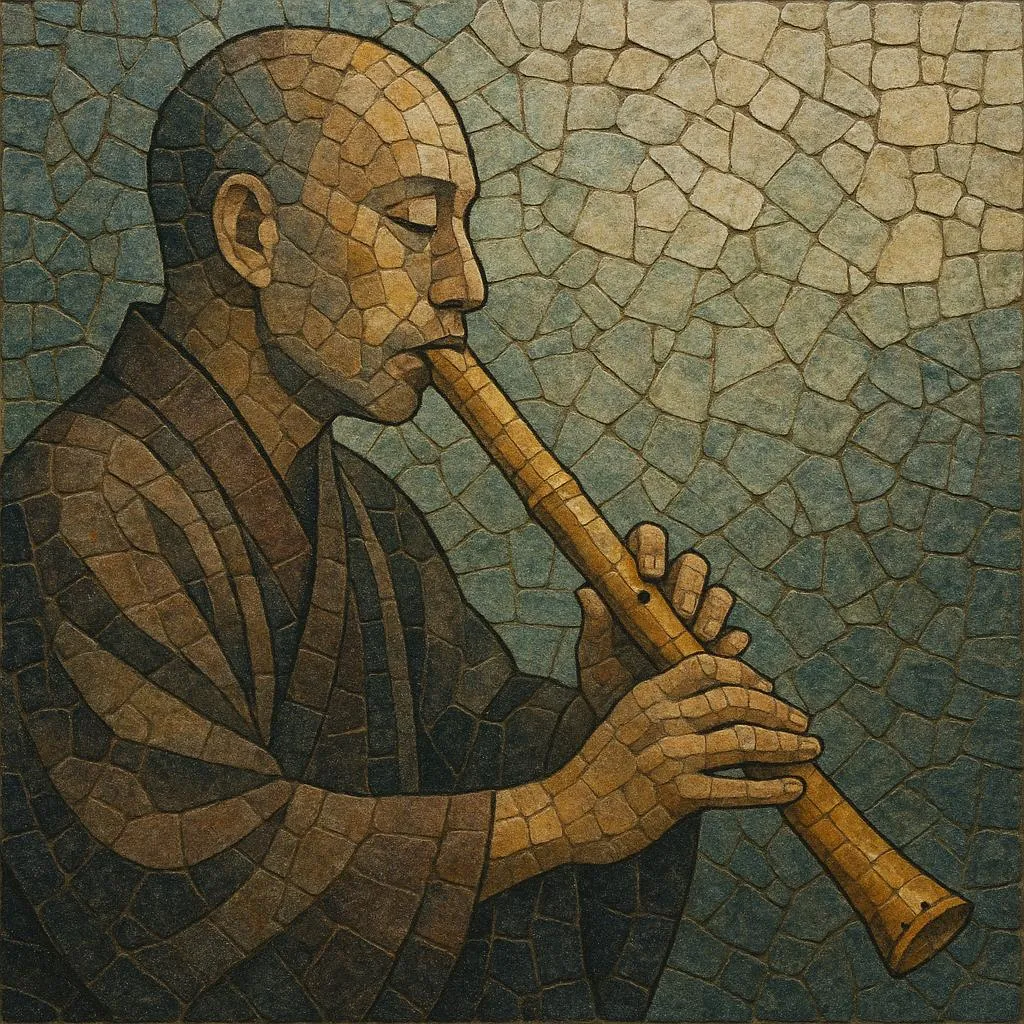
Shakuhachi refers to the repertoire and performance practice centered on Japan’s end-blown bamboo flute of the same name. The standard instrument is approximately 1.8 shaku long (hence the name), has five finger holes, and a distinctive notched mouthpiece that enables a wide spectrum of breath colors and pitch inflections.
Its sound world is defined by timbral nuance, meri/kari pitch shading (altering head angle to lower/raise pitch), free-rhythm phrasing, and the expressive use of silence (ma). Core solo repertoire (honkyoku) originated in Zen Buddhist contexts as music for meditation (suizen), while later ensemble traditions (sankyoku) paired shakuhachi with koto and shamisen. In modern times the instrument has moved fluidly between classical, folk, contemporary classical, jazz, and ambient/new-age idioms.
History
Shakuhachi’s Japanese form crystallized during the Edo period. Although end-blown flutes have older Chinese antecedents, the Japanese shakuhachi developed its own construction, scale tendencies, and phrasing. Komusō monks of the Fuke Zen sect adopted the flute for suizen ("blowing meditation"), cultivating a body of solo pieces later known as honkyoku. Early lineages, notably Kinko-ryū (codified by Kurosawa Kinko) and later works preserved by players such as Jin Nyodō, standardized transmission and notation.
As Japan’s urban cultures flourished, shakuhachi moved beyond monastic contexts. In sankyoku chamber music it conversed with koto and shamisen, sharing aesthetics with jiuta and other genres linked to kabuki and popular classical styles. The instrument’s idiom—free timing, ornamental slides, breath articulation, and silence—remained central.
Following the Meiji Restoration, shakuhachi entered conservatories, publishing houses, and public concerts. Masters such as Goro Yamaguchi, Hozan Yamamoto, and Katsuya Yokoyama recorded canonical honkyoku and commissioned new works, helping to define a modern recital tradition. Notation systems were adapted for broader pedagogy, and collaborations with Western classical composers began.
From the 1970s onward, artists in North America, Europe, and Oceania embraced the instrument, creating international schools and festivals. Shakuhachi’s breath-driven, spacious aesthetics influenced ambient, new age, and kankyō ongaku (Japanese environmental music). Contemporary composers blend it with electronics, jazz, and film scoring, while tradition-bearers continue to transmit honkyoku and sankyoku repertoires.