Your digging level
Description
Tuvan folk refers to the traditional music of Tuva (a republic in southern Siberia, today within Russia), best known for its overtone or throat-singing techniques (khöömei) alongside small ensemble instrumental traditions.
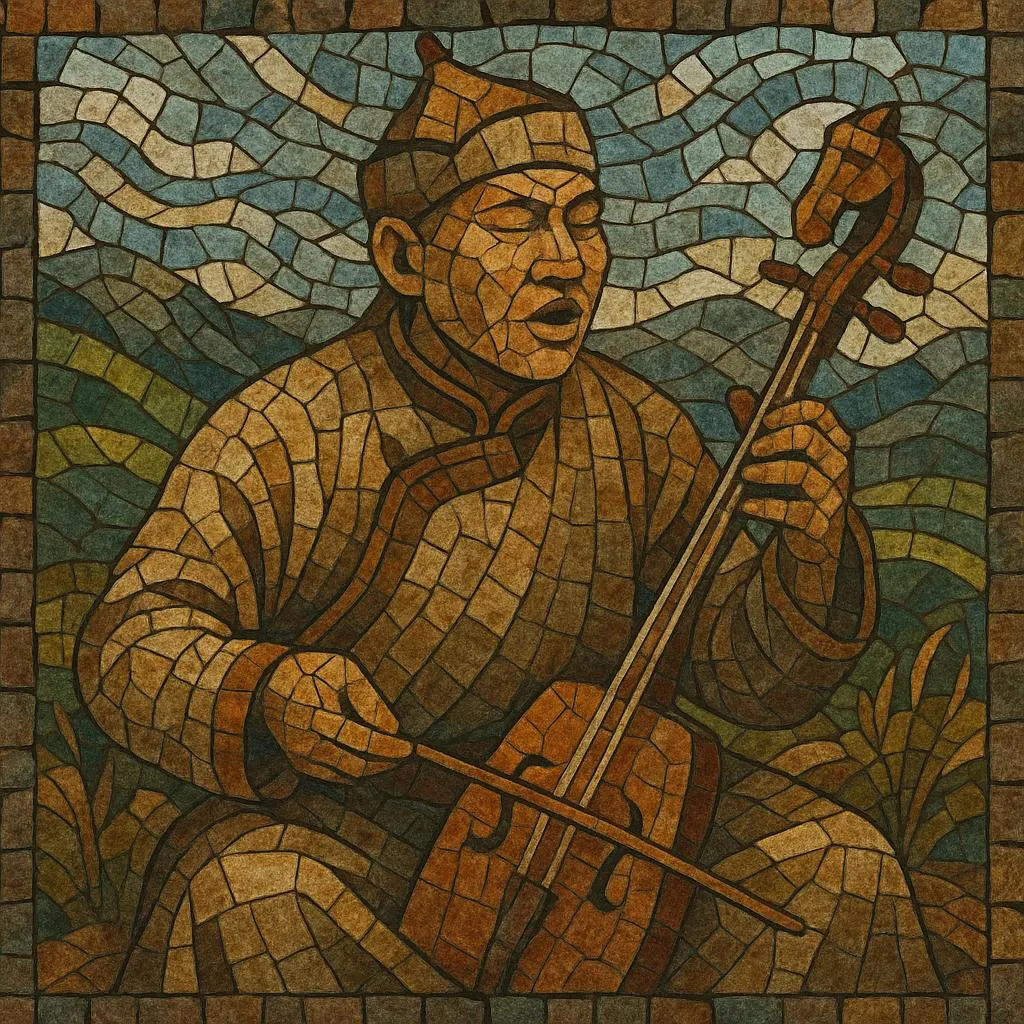
Distinctive vocal styles such as sygyt (whistle-like overtones), khoomei (soft, breathy overtone singing), and kargyraa (deep, growling undertones) mimic the sounds of wind, rivers, and animal calls, reflecting an animistic worldview and a close relationship with the steppe and mountain environment. Instrumentation commonly includes the igil (two‑string horsehead fiddle), doshpuluur (plucked lute), byzaanchy (spiked fiddle), shoor (end‑blown flute), and khomus (jaw harp), as well as frame and shamanic drums.
Musically, Tuvan folk emphasizes drones, sustained fundamentals with shifting overtones, pentatonic and modal melodies, and cyclical ostinatos. Performances range from solo singer‑instrumentalists to small ensembles and can accompany ritual, herding, storytelling, and celebration.
History
Tuvan folk music is rooted in pastoral lifeways and animistic/shamanistic practices on the Central Asian steppe. Overtone singing likely predates written records and was transmitted orally among herders and ritual specialists. Songs were used to communicate across distances, soothe herds, and engage spirits associated with mountains, rivers, and animals.
Russian explorers, missionaries, and early ethnographers documented Tuvan singing and instruments in the 1800s and early 1900s. Mechanical recordings from the early 20th century capture some of the first preserved examples, while local artisans continued refining lutes, fiddles, flutes, and jaw harps.
Under Soviet cultural policy, folklore was staged and standardized for ensembles and state festivals. While some ritual contexts diminished, professional folk groups emerged, regional conservatories cataloged styles, and overtone singing was promoted as emblematic of Tuvan identity. This period also fostered virtuoso performers who adapted traditional techniques to concert platforms.
After the USSR’s dissolution, ensembles like Huun-Huur-Tu and artists such as Kongar-ool Ondar toured internationally, sparking global interest. Collaborations with jazz, rock, ambient, and experimental musicians broadened Tuvan folk’s audience. Educational programs in Kyzyl (Tuva’s capital) and beyond now teach igil, khomus, and khöömei; women’s participation in throat singing—historically restricted in some contexts—has expanded notably. Today, Tuvan folk thrives both at home and on the world stage, influencing world fusion, ambient, and experimental scenes while remaining vital to local cultural life.