Your digging level

For this genre
0/8
🏆
Sign in, then listen to this genre to level up

Description

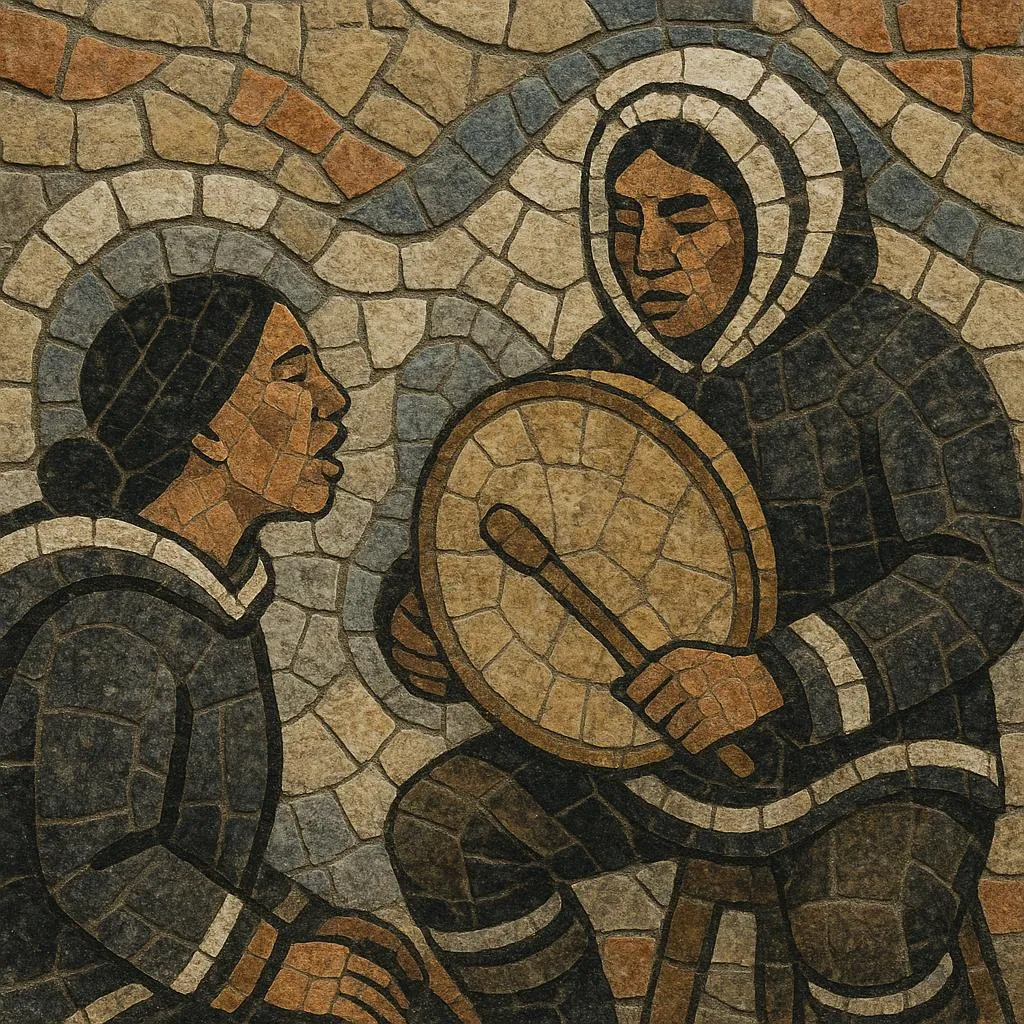
Inuit traditional is the ancestral music of the Inuit across the circumpolar Arctic (Nunavut, Nunavik, Nunatsiavut, NunatuKavut in Canada; Kalaallit Nunaat/Greenland; and Inupiaq/Yup'ik regions of Alaska). It centers on communal drum-dance songs (with the large frame drum called qilaat/killaaq), playful and competitive throat-singing duets (katajjaq/katajjaq; ayaya/ajaaja in some regions), lullabies, narrative chant-songs, and ritual pieces rooted in animist and shamanic worldviews.

The sound palette is predominantly vocal: tight, cyclical breathing patterns and rhythmic vocables in throat-singing; call-and-response refrains in drum-dances; and declamatory, story-like delivery in narrative songs. Drumming provides a strong, steady pulse that supports simple, memorable melodic cells and vocables rather than elaborate harmonic progressions. Music functions as social glue—marking seasons, hunts, games, welcoming/“inviting-in” ceremonies, and community celebration.


Sources: Spotify, Wikipedia, Discogs, RYM, MB, user feedback and other online sources

History

Origins and Functions

Inuit musical practices predate written history, emerging from subsistence lifeways and animist cosmology across the Arctic. Songs served practical and ceremonial roles: to welcome visitors, mock-play disputes, celebrate successful hunts, soothe infants, and accompany communal dance. The frame drum (qilaat/killaaq) and interlocking vocal games (throat-singing duets) formed core pillars of musical life.

Contact, Documentation, and Pressure (19th–mid-20th c.)

Missionaries, traders, and explorers began recording Inuit music in the 19th century. While this preserved key repertoires, colonization also constrained performance contexts; some ritual and shamanic practices were discouraged or suppressed. Nevertheless, household lullabies, game songs, and drum-dances endured in domestic and community settings.

Revival and Cultural Assertion (1970s–1990s)

Pan‑Arctic cultural movements, northern broadcasting, and community festivals fostered revitalization. Local elders mentored youth; regional styles (e.g., katajjaq in Nunavik/Nunavut, ajaaja/ayaya songs, Greenlandic drum-dance) were documented, taught, and showcased. The music became a medium for language retention and cultural sovereignty.

Global Visibility (2000s–present)

Throat-singing and drum-dance entered global stages through festivals, education, and collaborations. Artists integrated traditional forms with contemporary media while community groups sustained ceremonial and social functions at home. Today, Inuit traditional music thrives as both a living heritage and a source for new intercultural projects.

How to make a track in this genre

Core Forms and Structure
•   Drum-dance song: Build a steady pulse (often 2/4 or 4/4) on a large frame drum (qilaat/killaaq). Alternate verses with a short, memorable refrain; use vocables (e.g., “ai-ya-ya”) and plain-language lines in Inuktut (Inuktitut/Inuinnaqtun), Inupiaq, or Yup'ik. •   Throat-singing duet (katajjaq): Two vocalists face each other, trading short, percussive exhalations and inhalations. Use onomatopoeic motifs (imitations of wind, animals, walking) and interlock them so the composite rhythm “grooves.” The piece ends when one singer laughs, breaks pattern, or tires.
Melody, Rhythm, and Texture
•   Melody: Favor narrow ranges, pentatonic fragments, and repetitive cells. Ornament with glottal stops and micro-variations rather than Western harmonic progressions. •   Rhythm: Keep the drum pulse even; play with off‑beats and syncopated vocal entries. In katajjaq, think of call/response micro‑loops (1–2 bars) that gradually evolve. •   Texture: Heterophonic layering is natural—multiple voices can shadow the same line with slight differences. Duo textures in throat-singing create a composite, polyrhythmic feel.
Language and Text
•   Alternate vocables with concise textual lines—hunting scenes, weather, kinship, humor, welcome/inviting-in formulae, and place-names. Keep lines concrete and image-rich.
Instrumentation and Timbre
•   Primary: voice and frame drum. Optional: rattles, handclaps, stomps. Preserve dry, close-up vocal timbres to emphasize breath and consonants.
Performance Context and Ethics
•   Compose for gatherings: welcoming guests, seasonal feasts, friendly competitions. Seek guidance from elders and knowledge keepers; follow local protocol for sacred or clan-linked material. When recording, foreground community consent and language accuracy.

Top tracks

Locked
Share your favorite track to unlock other users’ top tracks

Upcoming concerts

in this genre
Influenced by
Has influenced

Download our mobile app

Get the Melodigging app and start digging for new genres on the go
© 2026 Melodigging
Melodding was created as a tribute to Every Noise at Once, which inspired us to help curious minds keep digging into music's ever-evolving genres.
Buy me a coffee for Melodigging