Your digging level
Description
Hausa music refers to the traditional and contemporary musical practices of the Hausa people of the central Sahel, especially in northern Nigeria and southern Niger.
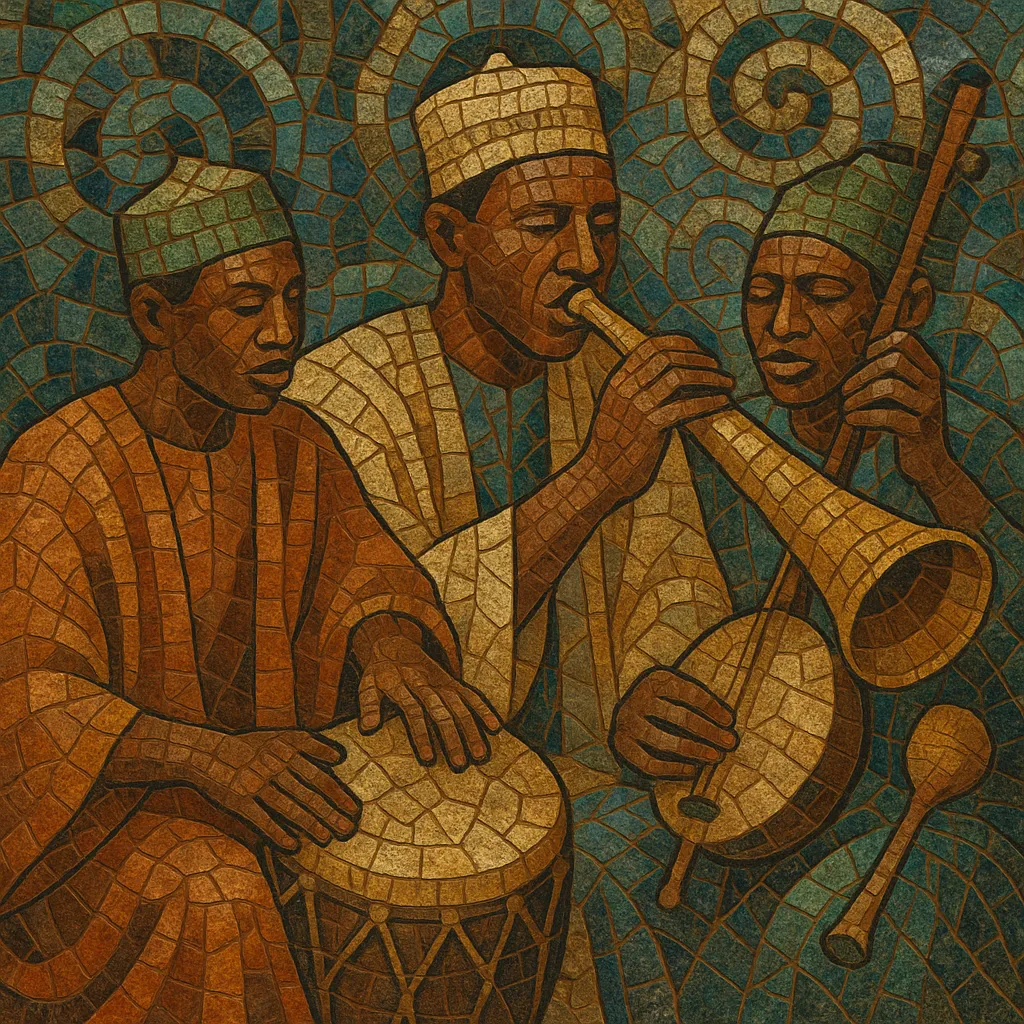
It blends pre-Islamic ritual and court repertoires with centuries of Islamic influence: long brass trumpets (kakaki) and double-reed shawms (algaita) sound at emirate courts, while the hourglass talking drum (kalangu), frame and barrel drums (ganga), and the one-string spike fiddle (goje) or gourd lute (kuntigi) anchor praise-singing, storytelling, and dance pieces. Melodies are often narrow-ranged and ornamented, with call-and-response vocals and cyclical polyrhythms in 6/8 or 12/8. Lyrics in Hausa celebrate lineage, leaders, and moral values (including Islamic devotion), and may also accompany spirit-possession (Bori) ceremonies.
Today, the tradition spans royal ceremonial ensembles, folk praise specialists (mawaka), Islamic devotional song (madahu), and vibrant Kannywood film-pop and Hausa-language hip hop/afropop, all retaining characteristic timbres, rhythms, and poetic devices (kirari—epithets/boasts).
History
Hausa musical life predates Islam and includes ritual repertoires tied to seasonal cycles, healing, and spirit-possession (Bori). Court patronage in the Hausa city-states (Kano, Katsina, Zaria, Gobir, Daura) established professional guilds of musicians who maintained dynastic praise repertories with drums, rattles, and fiddles.
As Islam spread across Hausaland via trade and scholarship, musical aesthetics fused with Islamic ceremonial sound. The kakaki (long metal trumpet) and algaita (shawm) became emblems of royal authority, used to mark prayers, processions, and audience with emirs. Modal thinking and devotional genres (madahu) took shape alongside older praise forms, while poetic meters and Quranic recitation practices shaped vocal phrasing.
Colonial-era touring troupes and early recordings documented praise specialists, while radio (notably Radio Kaduna) expanded regional circulation. Star singers like Alhaji Mamman Shata popularized waka (song) forms with kalangu and goje, bringing palace and village repertories into markets, weddings, and political rallies. Urban bands incorporated guitars and accordions, and studio production standardized ensemble formats.
The Hausa-language film industry (Kannywood) catalyzed a song-and-dance soundtrack style that merged Hausa melodic idioms with synthesizers, drum machines, and Bollywood-influenced orchestrations. Concurrently, Hausa-language hip hop, afropop, and, more recently, drill evolved in the North (“Arewa”), retaining call-and-response hooks, proverb-rich verses, and distinctive percussion grooves. Digital platforms and low-cost studios further diversified styles, while court and devotional ensembles continue to maintain ceremonial traditions.
Across ritual, court, pop, and diasporic scenes, hallmark features persist: the timbre of kalangu and goje, cyclic 6/8/12/8 grooves, praise-poetic devices (kirari), and a balance of Islamic decorum with indigenous aesthetics.