

Your digging level
Description
Music of Niger refers to the many traditional and modern styles that coexist across the country’s diverse societies.
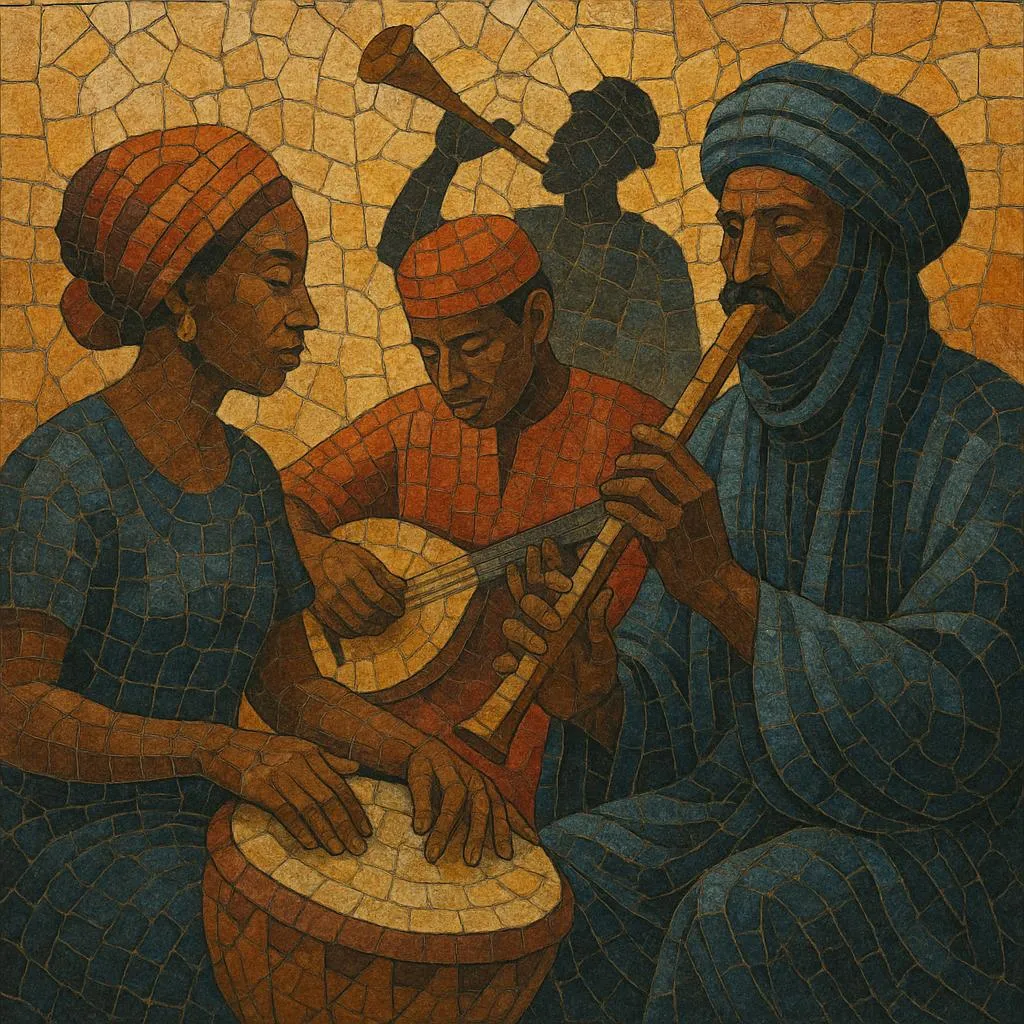
Rooted in the practices of Hausa, Zarma‑Songhai, Tuareg (Kel Tamasheq), Fula (Wodaabe/Fulani), Kanuri, Toubou, Diffa Arabs, Gurma and Boudouma peoples, it features distinctive song forms, dances and ceremonial repertoires. Typical timbres include plucked or bowed lutes (tahardent/tehardent, gurumi/kontigi/goje), single‑string fiddles (imzad/goje), calabash and frame drums (tende), talking drum (kalangu), long royal trumpets (kakaki), and shawm (algaita), often joined today by electric guitar, bass and drum kit.
Modern Nigerien sounds draw on traditional call‑and‑response, cyclical grooves and modal melodies, but are just as likely to intersect with Sahelian desert‑blues guitar idioms, urban Hausa pop influenced by film songs, Islamic chant aesthetics, and cosmopolitan Afropop and world‑fusion.
History
Across what is now Niger, long‑standing musical lineages developed among the Hausa, Zarma‑Songhai, Tuareg, Fula (Wodaabe), Kanuri, Toubou, Diffa Arabs, Gurma and Boudouma. Courtly instruments (kakaki trumpets, algaita shawms), praise‑singing griot traditions, trance/possession repertoires, and festival musics (including Wodaabe Gerewol polyphonic songs and dances) established the core instruments, rhythms and performance roles that still shape Nigerien music.
Following independence in 1960, national radio and cultural troupes helped circulate regional styles beyond their home areas. Field recordings and concert tours introduced takamba (Songhai/Tuareg calabash‑and‑lute music), Hausa praise and dance genres, and Tuareg imzad/tende traditions to wider audiences. Amplified bands began to incorporate guitar and drum kit while retaining cyclical grooves and call‑and‑response vocals.
Economic migration and periods of displacement fostered the emergence of Tuareg "guitar music"—a trance‑tinged, modal, riff‑driven idiom that fed directly into the broader desert‑blues wave. In parallel, urban Hausa scenes absorbed regional pop currents and film‑song influences, while fusion groups in Niamey and Agadez blended Songhai, Fulani and Hausa elements with jazz, rock and Afro‑pop instrumentation.
Low‑cost recording, mobile phones, and regional studios enabled a surge of cassette, CD and digital releases. Nigerien artists—especially Tuareg guitar bands and women‑led ensembles—reached international stages, while synthesizer‑led and beat‑driven projects reimagined calabash grooves, takamba vamps and Hausa melodic inflections in electronic settings. Today, the music of Niger is simultaneously local (grounded in language, lineage and ceremony) and global (shaping and shaped by desert blues, world jazz, Afropop and experimental electronics).


